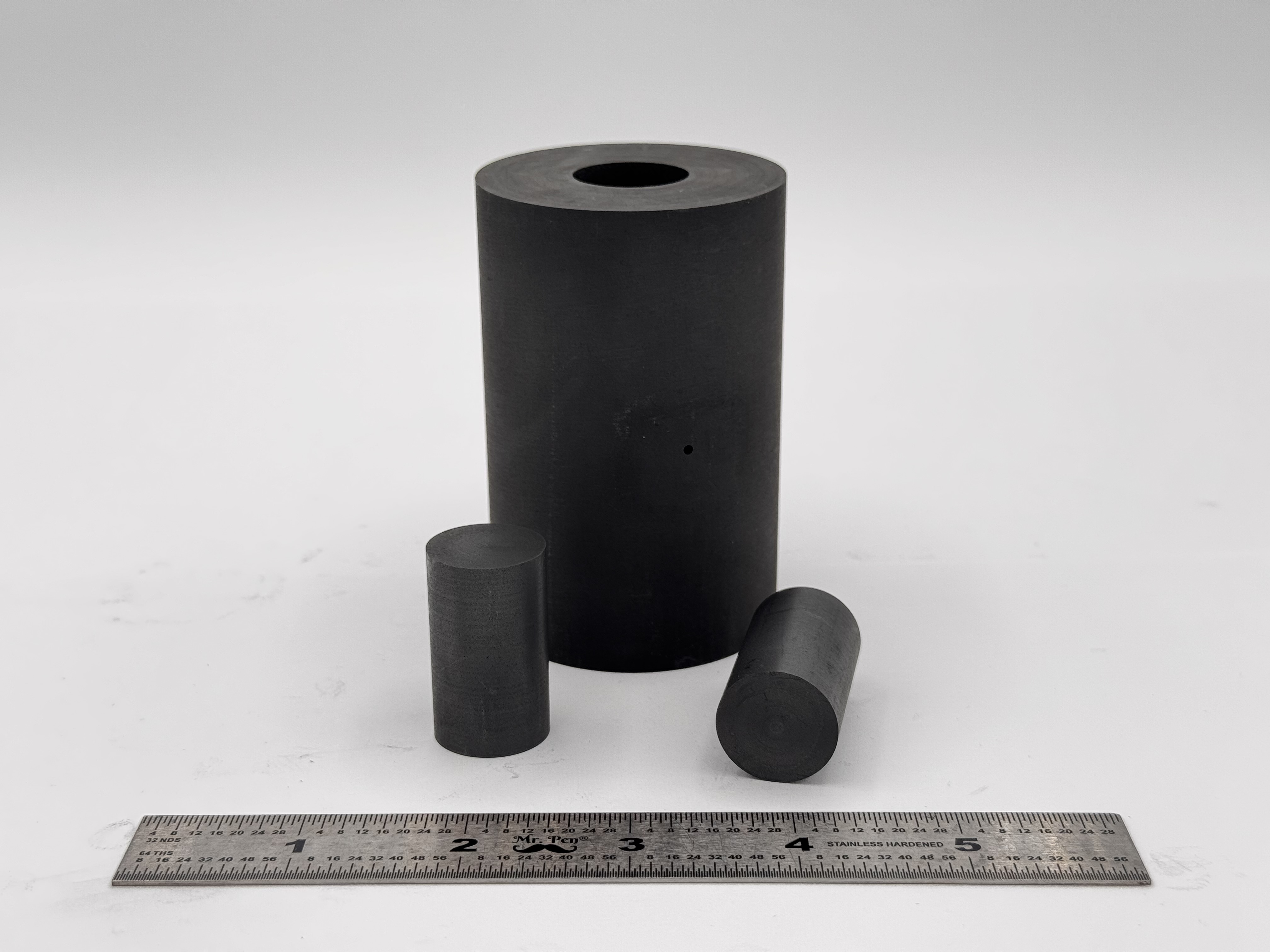
 High Strength SPS Graphite Tooling
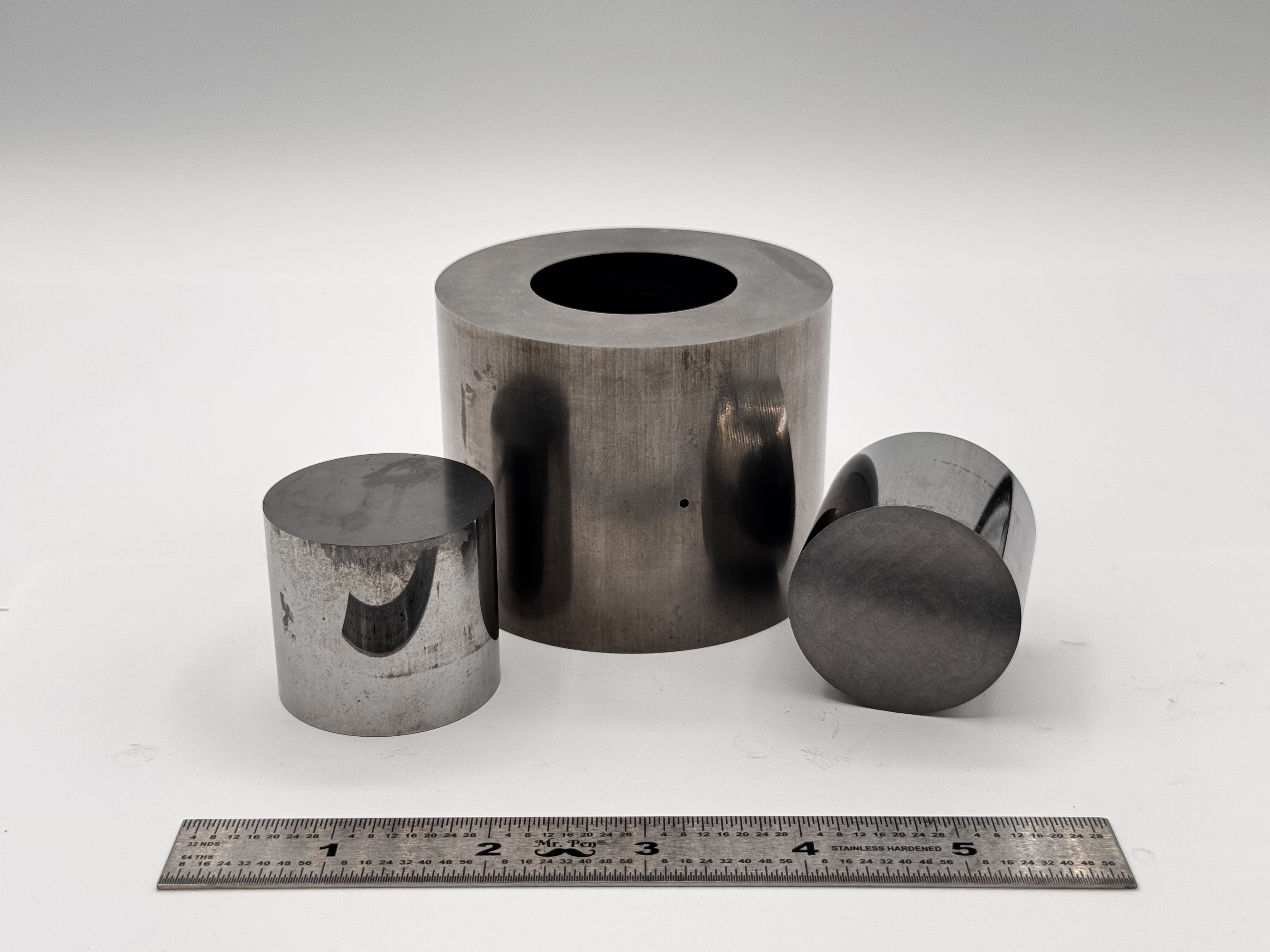 Tungsten Carbide Tooling
 Carbon Graphite Foil / Paper
 Carbon Felt and Yarn
 Spark Plasma Sintering Systems
 SPS/FAST Modeling Software
Cal Nano Services


Nuclear Materials & Reactor Components
DOMESTIC MANUFACTURING OF REACTOR-GRADE MATERIALS
Boron Carbide (B₄C), Advanced Ceramics, and Refractory Alloys Manufactured in the United States Using Spark Plasma Sintering (SPS) and Advanced Powder Processing
California Nanotechnologies (Cal Nano) supports advanced reactor developers, defense programs, and energy innovators with domestically manufactured nuclear-grade materials and components. We provide U.S.-based manufacturing designed to transition advanced materials from early-stage development through production-scale supply.
Our capabilities span rapid prototyping to multi-ton annual volumes, supported by secure domestic supply chain infrastructure and advanced densification through Spark Plasma Sintering (FAST/SPS) technology.
• U.S.-based manufacturing
• Rapid prototyping to production scale
• Secure domestic supply chain capability
• Advanced densification via SPS/FAST technology
BORON CARBIDE (B₄C) COMPONENTS
Cal Nano manufactures high-density boron carbide components engineered for neutron absorption, shielding, and structural nuclear applications.
Applications include:
• Control rod pellets
• Absorber rings
• Fixed absorber coins
• Shielding tiles
• Custom absorber geometries
Capabilities include:
• ASTM C750 / C751 compliant chemistries
• Enriched B₄C available
• Density range from approximately 70% to 98% theoretical (application-specific)
• Spark Plasma Sintering and pressure-assisted densification
• Near-net shape manufacturing
• Post-sinter machining and finishing
• Small-batch to production volumes
Our powder processing and densification expertise enables tailored density, microstructure, and geometry control to meet specific reactor performance requirements.
ADVANCED CERAMICS FOR NUCLEAR SYSTEMS
Cal Nano manufactures high-performance ceramic materials engineered for extreme operating environments found in advanced reactor systems.
Materials include:
• Silicon Carbide (SiC)
• Alumina (Al₂O₃)
• Zirconia (ZrO₂)
• Composite ceramic systems
• Multi-layer and diffusion-bonded structures
Typical applications include:
• High-temperature reactor components
• Radiation-tolerant structural elements
• Oxidation-resistant systems
• Shielding assemblies
• Structural ceramic components
Our Spark Plasma Sintering platform enables controlled densification, refined grain structures, and reduced processing times, resulting in durable, high-performance ceramic components.
REFRACTORY & SPECIALTY ALLOY SYSTEMS
Cal Nano supports advanced nuclear and defense programs with refractory and specialty alloy processing designed for extreme service conditions.
Materials and systems include:
• Molybdenum-based alloys
• Tungsten-based systems
• Refractory composites
• Metal-ceramic composites (MMCs)
• SPS-bonded and diffusion-bonded assemblies
These materials are engineered for high-temperature stability, thermal resistance, and demanding reactor and defense environments.
BUILT FOR ADVANCED REACTOR DEPLOYMENT
Cal Nano is structured to support next-generation reactor programs requiring secure domestic manufacturing and responsive production capability.
Why Cal Nano:
• U.S.-based production in California
• In-house powder processing and cryogenic attrition milling
• Large-format Spark Plasma Sintering systems
• Rapid design iteration capability
• Transition support from R&D to repeatable production
• Secure handling of sensitive and proprietary projects
Our quality systems are aligned with nuclear customer requirements, with a roadmap toward enhanced nuclear quality program frameworks as customer needs evolve.
SCALE & PRODUCTION CAPABILITY
We support prototype builds, pilot production programs, and multi-ton annual material supply.
Infrastructure includes:
• Large-capacity SPS systems
• High-energy cryogenic milling
• Graphite tooling development
• Precision machining partnerships
• Flexible batch sizing
Our objective is to move advanced nuclear materials from concept validation to stable, repeatable manufacturing without compromising performance integrity.
STRATEGIC NUCLEAR APPLICATIONS
Cal Nano supports programs across:
• Small Modular Reactors (SMRs)
• Microreactors
• Advanced gas-cooled reactors
• Molten salt reactor systems
• Defense nuclear programs
• Space nuclear systems
We work with reactor developers, defense primes, and energy integrators seeking dependable U.S.-based materials manufacturing capability.
PARTNER WITH A DOMESTIC REACTOR MATERIALS MANUFACTURER
Cal Nano provides secure, U.S.-based manufacturing of advanced nuclear materials and components for next-generation reactor programs.
To discuss your reactor materials requirements, contact our Nuclear Programs Team.