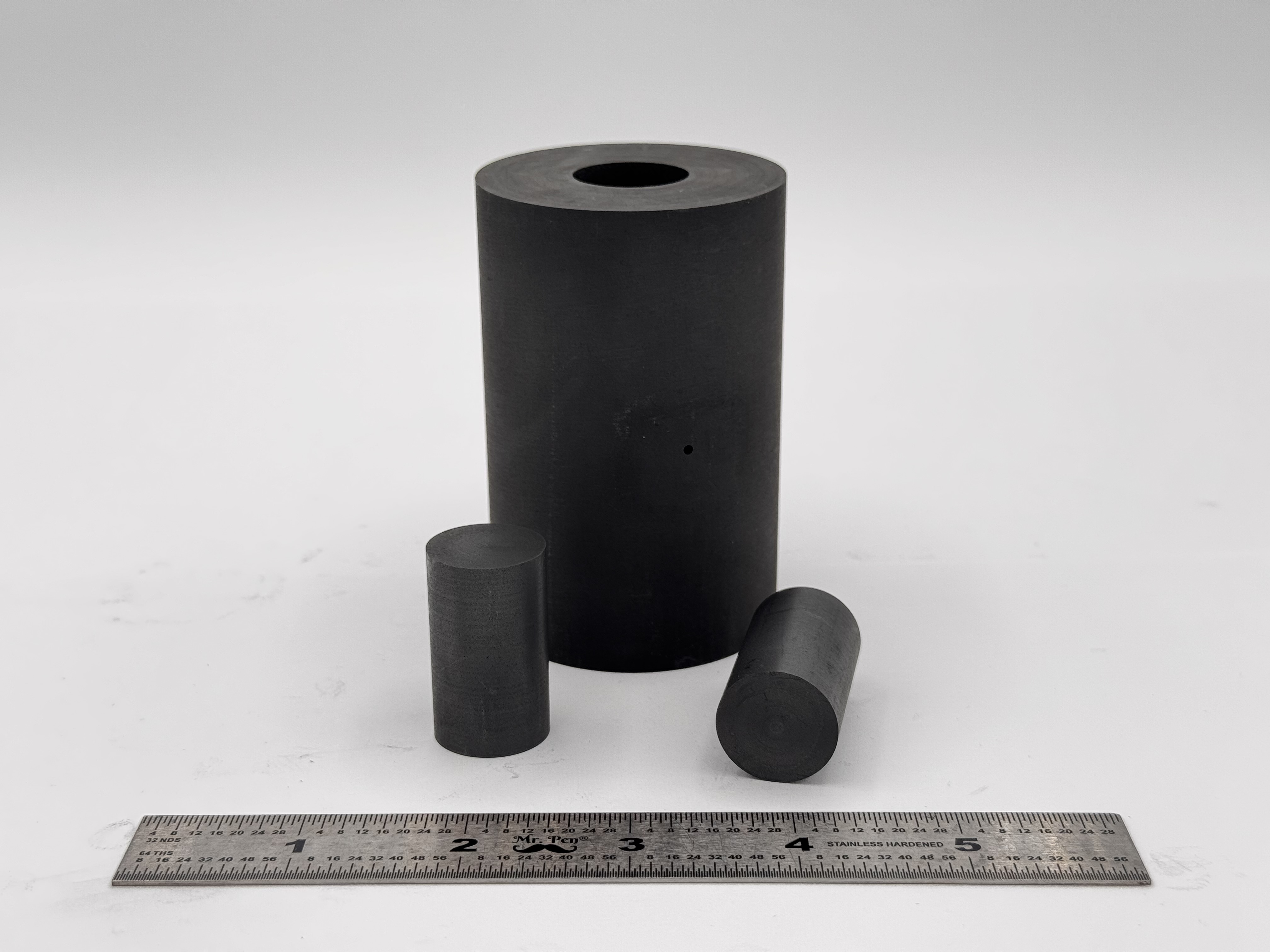
 High Strength SPS Graphite Tooling
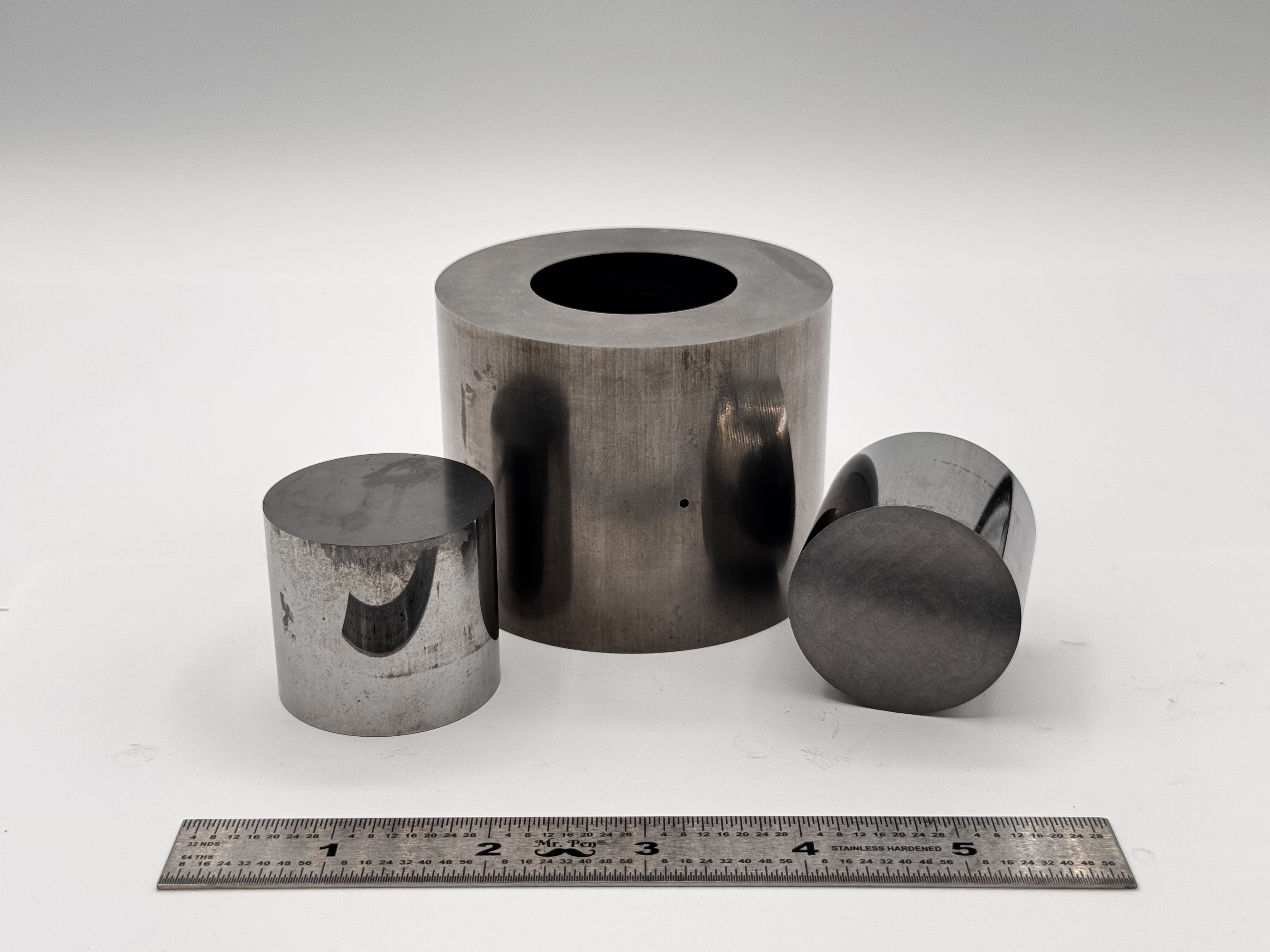 Tungsten Carbide Tooling
 Carbon Graphite Foil / Paper
 Carbon Felt and Yarn
 Spark Plasma Sintering Systems
 SPS/FAST Modeling Software
Cal Nano Services


Materials Synthesis & Model Validation
Experimental Validation for Computationally Designed Materials
You Designed the Material. We Help You Make It Real.
Computational modeling, artificial intelligence, and materials informatics can identify promising new materials faster than ever. But a predicted composition is only valuable if it can be physically produced, tested, reproduced, and scaled.
California Nanotechnologies helps computational materials companies, universities, national laboratories, and advanced technology developers turn modeled compositions into physical samples and application-relevant components.
Our team supports the complete experimental pathway from powder selection and custom material synthesis through cryogenic milling, Spark Plasma Sintering, machining, characterization, and manufacturing scale-up.
Bring us your target composition, predicted phases, and desired properties. We will help develop the path from model to material.
Model → Feedstock → Powder Processing → Consolidation → Testing → Scale-Up
From Computational Prediction to Physical Validation
Technical Review
We begin by reviewing the proposed composition, predicted phases, desired properties, sample geometry, intended application, and processing constraints.
Our team evaluates feedstock availability, material compatibility, synthesis challenges, and the most practical initial experimental approach.
Useful starting information may include:
- Target composition or composition range
- Predicted crystal structure or phase distribution
- Desired density and microstructure
- Target mechanical, thermal, magnetic, electrical, or nuclear properties
- Available or preferred powder feedstocks
- Required sample dimensions and quantities
- Testing and characterization requirements
Feedstock and Powder Development
Depending on the material system, Cal Nano can support elemental powder sourcing, custom powder blending, mechanical alloying, cryogenic milling, particle-size reduction, nanostructured powder development, and the incorporation of reinforcements, dispersoids, or secondary phases.
Cryogenic milling can be particularly useful for developing highly alloyed, nanostructured, metastable, or otherwise difficult-to-produce material systems.
Spark Plasma Sintering and Consolidation
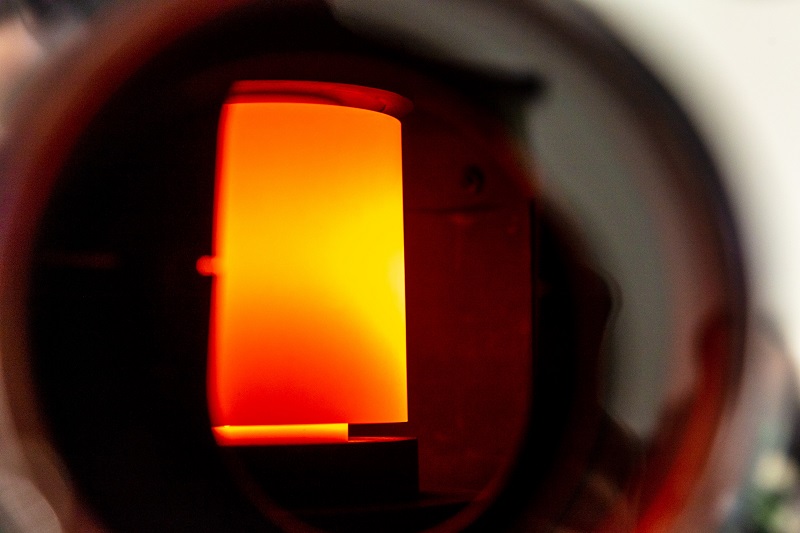
Cal Nano uses Spark Plasma Sintering and field-assisted sintering technology to rapidly consolidate powders into dense physical samples and components.
SPS enables researchers to evaluate novel materials using rapid heating rates, short processing cycles, applied uniaxial pressure, controlled thermal profiles, reduced grain growth, and flexible sample geometries.
Multiple processing conditions can be evaluated to understand how powder condition, temperature, pressure, heating rate, and dwell time affect phase structure, density, microstructure, and material properties.
Characterization and Model Correlation
Following consolidation, samples can be prepared for dimensional, physical, microstructural, and performance evaluation.
Depending on program requirements, testing may include:
- Density and porosity
- Dimensional inspection
- Microstructure and grain size
- Phase identification
- Hardness and mechanical properties
- Thermal or electrical properties
- Magnetic properties
- Oxidation or environmental performance
Cal Nano can perform selected evaluations internally and coordinate specialized third-party characterization when required.
The physical results can then be compared with computational predictions to confirm phase formation, identify unexpected phases, quantify achievable properties, improve model accuracy, and determine the next experimental candidates.
Iterative Materials Development
Experimental results can be returned to the customer’s computational team after each development round. The composition or processing route can then be adjusted based on actual material behavior.
This closed-loop approach helps computational teams generate high-quality physical data, refine thermodynamic or kinetic models, improve machine-learning training sets, and prioritize the most promising materials for continued development.
Scale-Up and Component Manufacturing
A successful laboratory coupon is only the beginning.
Cal Nano can help determine whether the material can be produced repeatably at larger scale and in application-relevant geometries.
Scale-up support may include:
- Larger powder batches
- Large-format SPS processing
- Near-net-shape consolidation
- Prototype components
- Machining and finishing
- Repeatability studies
- Pilot production
- Commercial manufacturing planning
Our objective is not simply to produce one successful sample. It is to help establish a practical and repeatable pathway from computational discovery to manufactured material.
Materials We Can Support
- High-entropy alloys
- Refractory high-entropy alloys
- Refractory metals and alloys
- Intermetallic compounds
- Metal-matrix composites
- Ceramic-matrix composites
- Ultra-high-temperature ceramics
- Borides, carbides, nitrides, and silicides
- Magnetic materials
- Thermoelectric materials
- Nuclear and neutron-absorbing materials
- Critical-mineral and rare-earth replacement materials
- Functionally graded materials
- Nanostructured metals and ceramics
- Custom research compositions
Each material system is reviewed individually for technical feasibility, safety, feedstock availability, and processing compatibility.
Who We Work With
Computational Materials and AI Companies
We serve as the experimental manufacturing partner for companies using materials informatics, artificial intelligence, atomistic simulation, thermodynamic modeling, or other computational approaches to identify new materials.
Universities and National Laboratories
We provide specialized powder-processing and consolidation capabilities for researchers who have promising calculations but lack the equipment, production bandwidth, or scale-up infrastructure required to physically synthesize the material.
Advanced Technology Companies
We support materials development for nuclear energy, fusion, aerospace, defense, semiconductors, industrial systems, transportation, and other demanding applications.
Government-Funded Programs
Cal Nano can participate as a synthesis, experimental validation, and manufacturing scale-up partner for programs involving computational materials design, domestic manufacturing, critical-material substitution, and advanced materials development.
Why Cal Nano
Integrated Powder-to-Part Capabilities
Cal Nano can support powder preparation, cryogenic milling, Spark Plasma Sintering, tooling, machining, inspection, and production planning within a coordinated development program.
Designed for Difficult Materials
Our processes are well suited for materials that are challenging to melt, cast, forge, or consolidate using conventional manufacturing methods.
Rapid Experimental Iteration
SPS and advanced powder processing allow multiple compositions and processing conditions to be evaluated without immediately committing to conventional production-scale manufacturing.
Development Through Scale-Up
Cal Nano operates equipment ranging from research-scale systems to large-format SPS production equipment, providing a pathway from initial validation to larger components and repeatable production.
Collaborative and Confidential
We regularly work with proprietary material compositions, emerging technologies, universities, national laboratories, and commercial development teams. Programs can be conducted under appropriate confidentiality and intellectual-property agreements.
Start a Materials Validation Project
To begin a technical discussion, send us as much of the following information as is available:
- Target composition or material family
- Predicted phases or microstructure
- Desired properties
- Intended application
- Preferred powder feedstock
- Required sample dimensions
- Number of compositions or samples
- Testing requirements
- Program schedule
- Relevant publications, calculations, or technical data
Complete information is not required for an initial discussion. Our team can help identify the remaining questions and build an appropriate experimental plan.
Turn computational discovery into physical results. Contact Cal Nano to discuss your modeled material, validation program, or scale-up requirements.