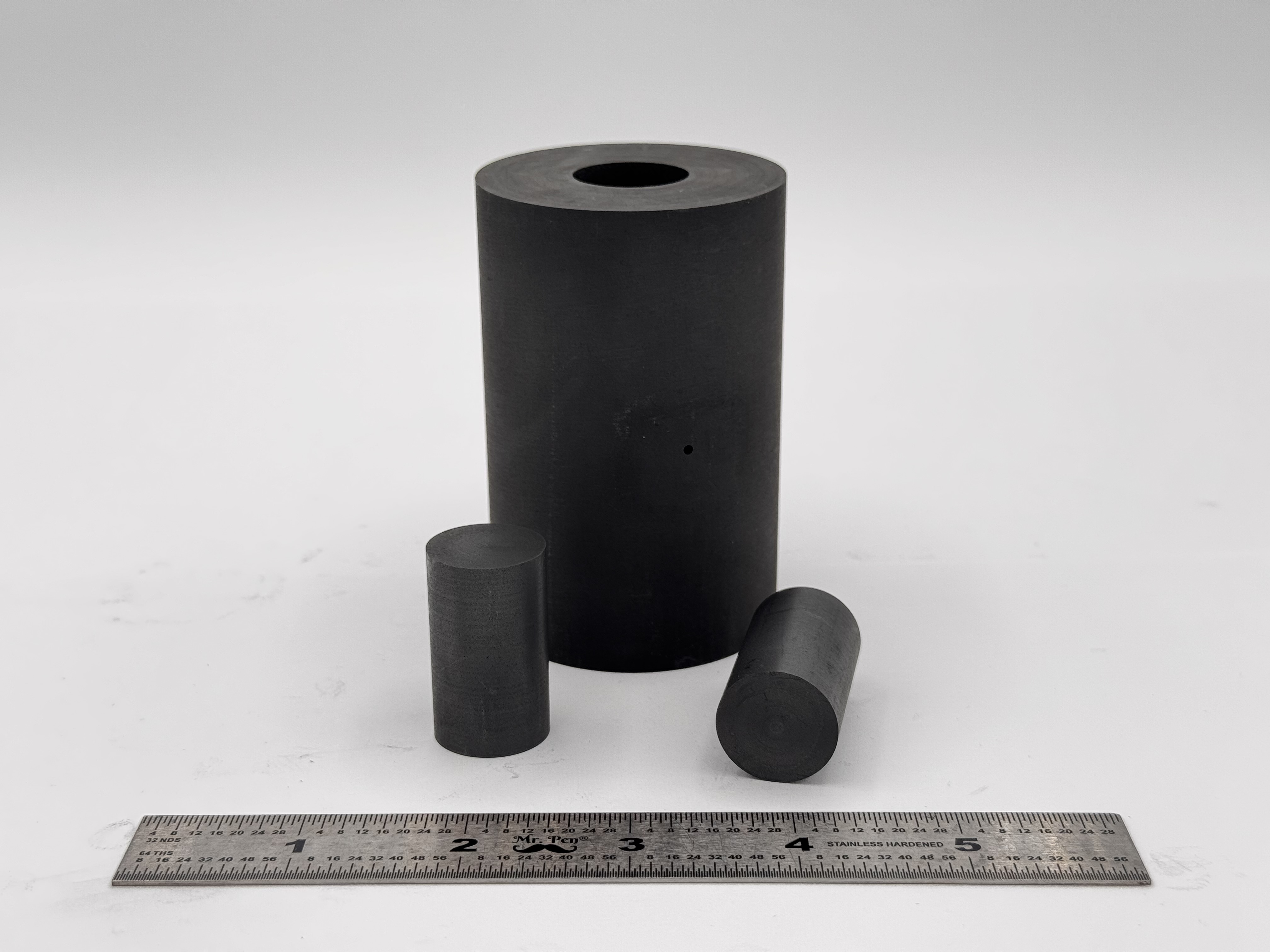
 High Strength SPS Graphite Tooling
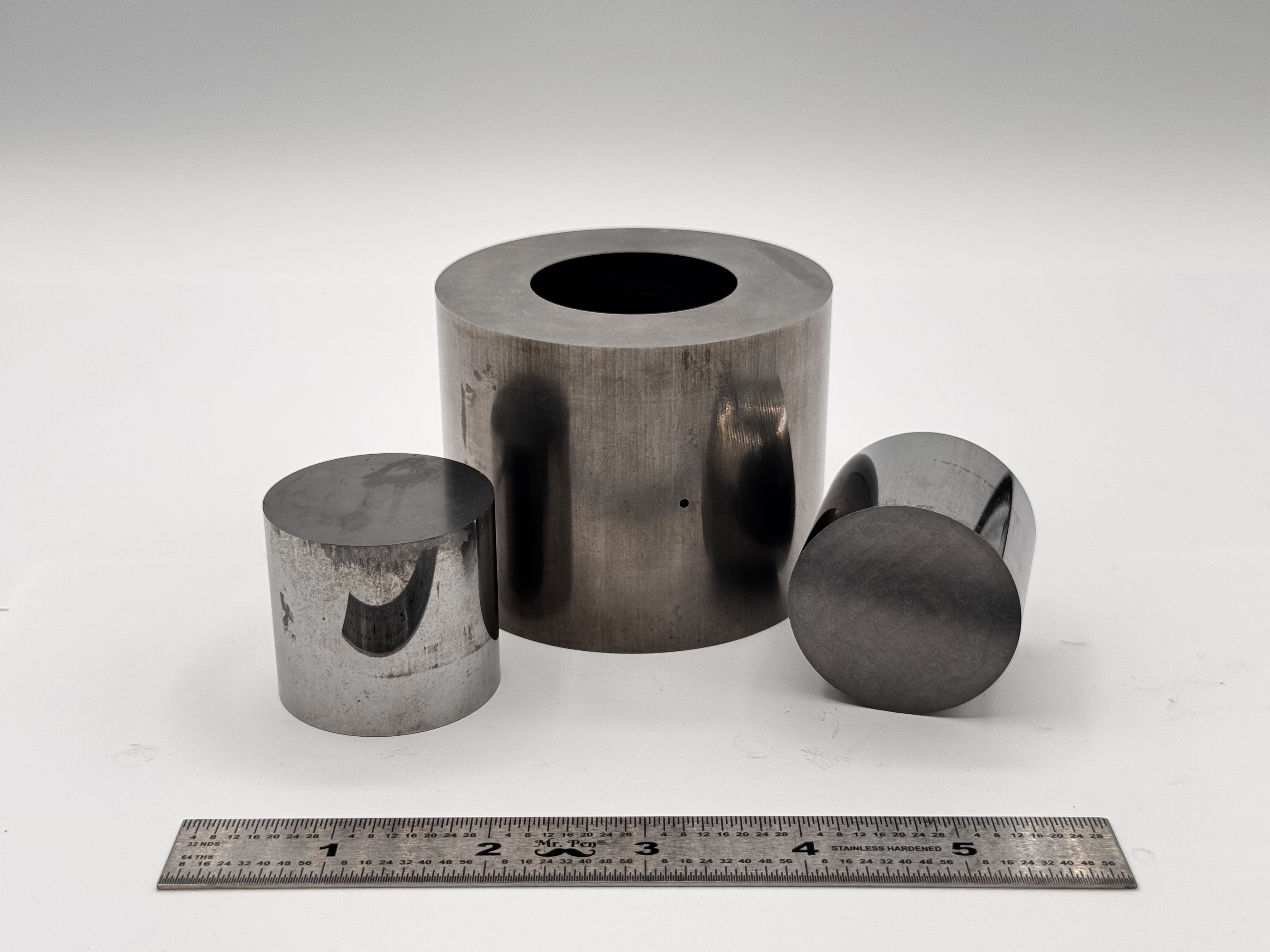 Tungsten Carbide Tooling
 Carbon Graphite Foil / Paper
 Carbon Felt and Yarn
 Spark Plasma Sintering Systems
 SPS/FAST Modeling Software
Advanced Hot Pressing: How Heat and Pressure Shape Today’s Most Advanced Materials
In modern manufacturing, the demand for materials that are stronger, lighter, more heat-resistant, and more precise than ever before has pushed traditional production methods to their limits. From aerospace components that must endure extreme temperatures to semiconductor materials requiring near-perfect density, not all materials can be shaped, bonded, or densified using conventional techniques. This is where advanced hot pressing steps in—a powerful process that combines high heat and mechanical pressure to create high-performance materials that would otherwise be impossible to produce.
Advanced hot pressing has evolved from traditional powder metallurgy into a highly controlled, highly effective method used across industries. By applying temperature and pressure simultaneously, the process drives particles together, eliminates porosity, and forms exceptionally dense, uniform parts. The result is superior mechanical strength, greater durability, and material performance that meets the most demanding engineering requirements.
What Is Advanced Hot Pressing?
At its core, advanced hot pressing is a sintering process in which powdered or pre-formed material is placed inside a die and subjected to both elevated temperatures (often above 1,000°C and sometimes exceeding 2,000°C) and high pressure. This combination dramatically accelerates diffusion, enabling particles to bond and consolidate into a fully dense, solid structure.
While traditional hot pressing has been used for decades, today’s “advanced” systems incorporate more precise temperature control, faster heating rates, vacuum or inert atmospheres, and improved pressure application. Some modern variants even integrate electrical current, such as in Spark Plasma Sintering (SPS), to achieve extremely rapid, uniform densification.
The result is a manufacturing method capable of producing materials with near-theoretical density, minimal grain growth, and exceptional mechanical properties.
Where Advanced Hot Pressing Excels
Because it surpasses the limitations of conventional forming, advanced hot pressing is used to create materials and components that must perform under conditions where failure is simply not acceptable.
Below are the major categories of materials produced using this method—along with why industries rely on them.
1. High-Performance Technical Ceramics
Advanced hot pressing is indispensable for manufacturing engineered ceramics, many of which cannot be densified adequately through standard sintering.
Materials such as:
- Silicon carbide (SiC)
- Boron carbide (B₄C)
- Aluminum oxide (Al₂O₃)
- Zirconia (ZrO₂)
become incredibly strong, hard, and thermally stable when processed under high heat and pressure.
Applications include:
- Personal and vehicle armor plates
- Semiconductor wafer materials
- Cutting and machining tools
- High-temperature furnace components
- Thermal protection systems for aerospace
Because these ceramics are notoriously difficult to densify, advanced hot pressing allows manufacturers to achieve exceptional strength, uniformity, and precision.
2. Hard Metals and Carbide Tooling
Powdered metallurgy materials like tungsten carbide (WC) and titanium carbide (TiC) are staples in industries where cutting, drilling, and wear resistance are critical.
Through advanced hot pressing, these carbides achieve the extreme hardness and toughness required for:
- Mining equipment
- Drill bits
- Cutting inserts
- Industrial machining tools
The superior density obtained through hot pressing directly translates into longer tool life and better performance in demanding environments.
3. Metal Matrix and Ceramic Matrix Composites (MMCs & CMCs)
Advanced hot pressing can bond dissimilar materials, creating lightweight but extraordinarily strong composites. By controlling heat, pressure, and atmosphere, manufacturers can produce complex composite structures that resist heat, corrosion, and mechanical stress.
Common applications include:
- Aerospace turbine components
- Structural parts for spacecraft
- High-temperature engine components
- Advanced armor systems
These composites combine the best characteristics of their constituent materials, resulting in unmatched durability and performance.
4. Specialty Metals and Superalloys
Some metals have such high melting points—or are so chemically reactive—that they cannot be formed effectively by melting or machining. Advanced hot pressing solves this problem by consolidating metal powders into near-net-shape parts.
Materials processed this way include:
- Refractory metals (tungsten, molybdenum)
- Nickel superalloys
- Rare earth metals
These metals are used in aerospace, nuclear power, defense, and energy systems where conventional metals simply cannot withstand the required conditions.
5. Semiconductor and Electronic Materials
Semiconductor manufacturing requires materials that are extremely uniform and dense, with precise microstructural control. Advanced hot pressing is commonly used to fabricate:
- Sputtering targets
- Piezoelectric materials
- Magnetic components
- Thermoelectric modules
In electronics, even minor variations in density or grain size can affect performance. Advanced hot pressing ensures consistency and reliability at the microscopic level.
6. Energy and Fuel Cell Components
Energy industries rely on materials capable of withstanding both high temperatures and corrosive environments. Advanced hot pressing is frequently used to produce:
- Solid oxide fuel cell electrolyte plates
- High-temperature battery components
- Heat-resistant insulation materials
The ability to fine-tune porosity and density is critical in these applications, where performance depends on controlled thermal and electrical behavior.
7. Research and Material Development
Finally, advanced hot pressing is a cornerstone of experimental materials science. Universities, laboratories, and advanced manufacturing companies use the process to:
- Develop ultra-high-temperature ceramics
- Prototype new alloys
- Create novel composite materials
- Study microstructure-property relationships
Because researchers can precisely control variables such as temperature, pressure, and sintering time, advanced hot pressing enables breakthroughs in material innovation.
Why Industries Choose Advanced Hot Pressing
The advantages of advanced hot pressing over traditional forming and sintering processes are substantial:
- Near-zero porosity: Achieves densities close to 100%.
- Superior mechanical properties: Increased strength, hardness, and toughness.
- Precision microstructure control: Finer grains and fewer defects.
- Ability to process difficult materials: Works with ceramics, composites, and refractory metals.
- Energy efficiency: Faster heating and shorter cycle times in modern systems.
For industries where performance and reliability are mission-critical, this level of control is invaluable.
Conclusion
Advanced hot pressing is far more than a manufacturing method—it is a gateway to materials that make today’s most ambitious technologies possible. From aerospace turbines and semiconductor electronics to advanced ceramics and cutting tools, the process enables the creation of high-density, high-performance materials that simply cannot be produced by other means.
As industries continue to push the boundaries of temperature, strength, and precision, advanced hot pressing stands at the forefront of material innovation. Whether developing next-generation composites or perfecting ultra-hard ceramics, this powerful combination of heat and pressure remains essential to shaping the future of manufacturing.