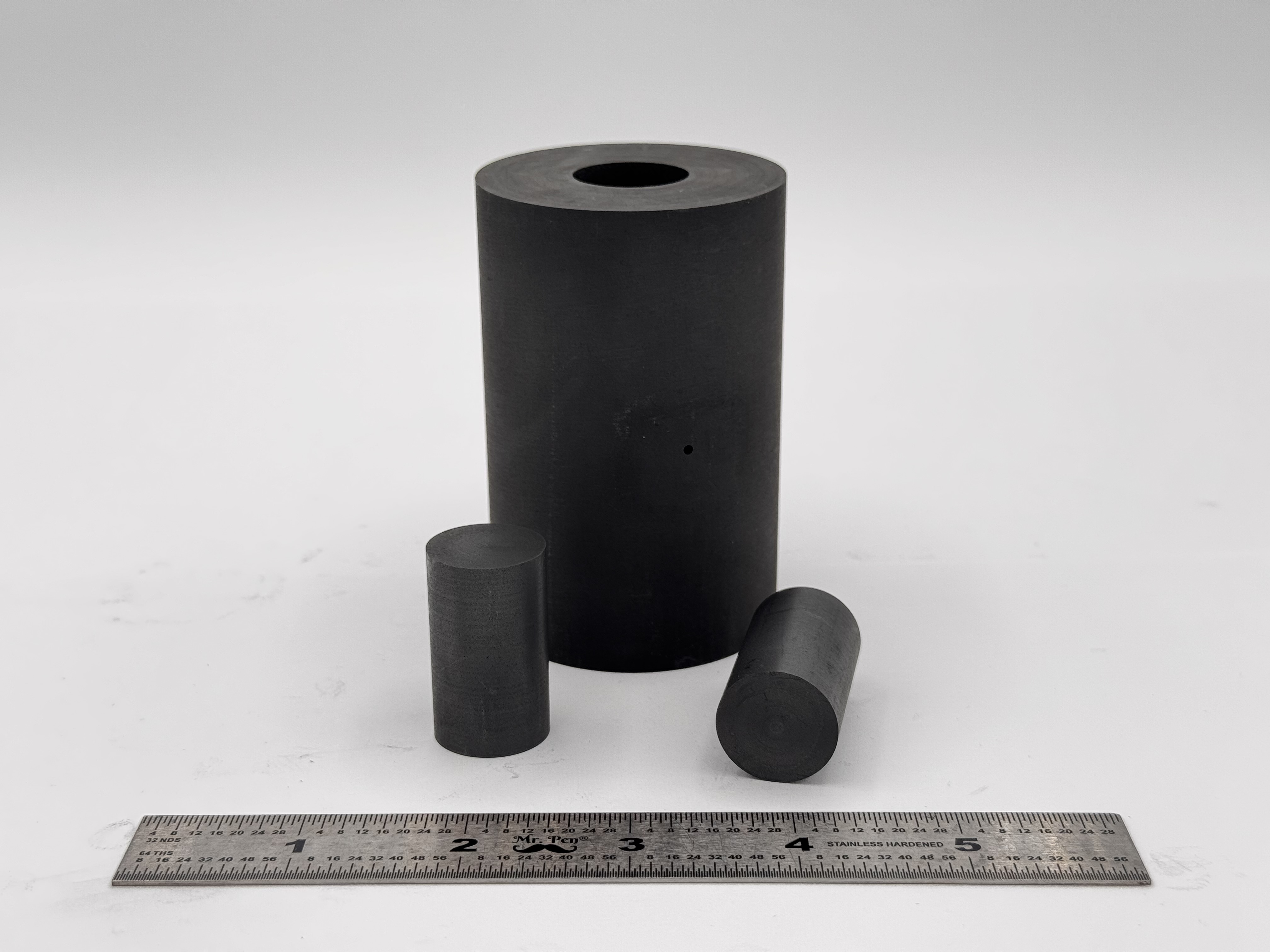
 High Strength SPS Graphite Tooling
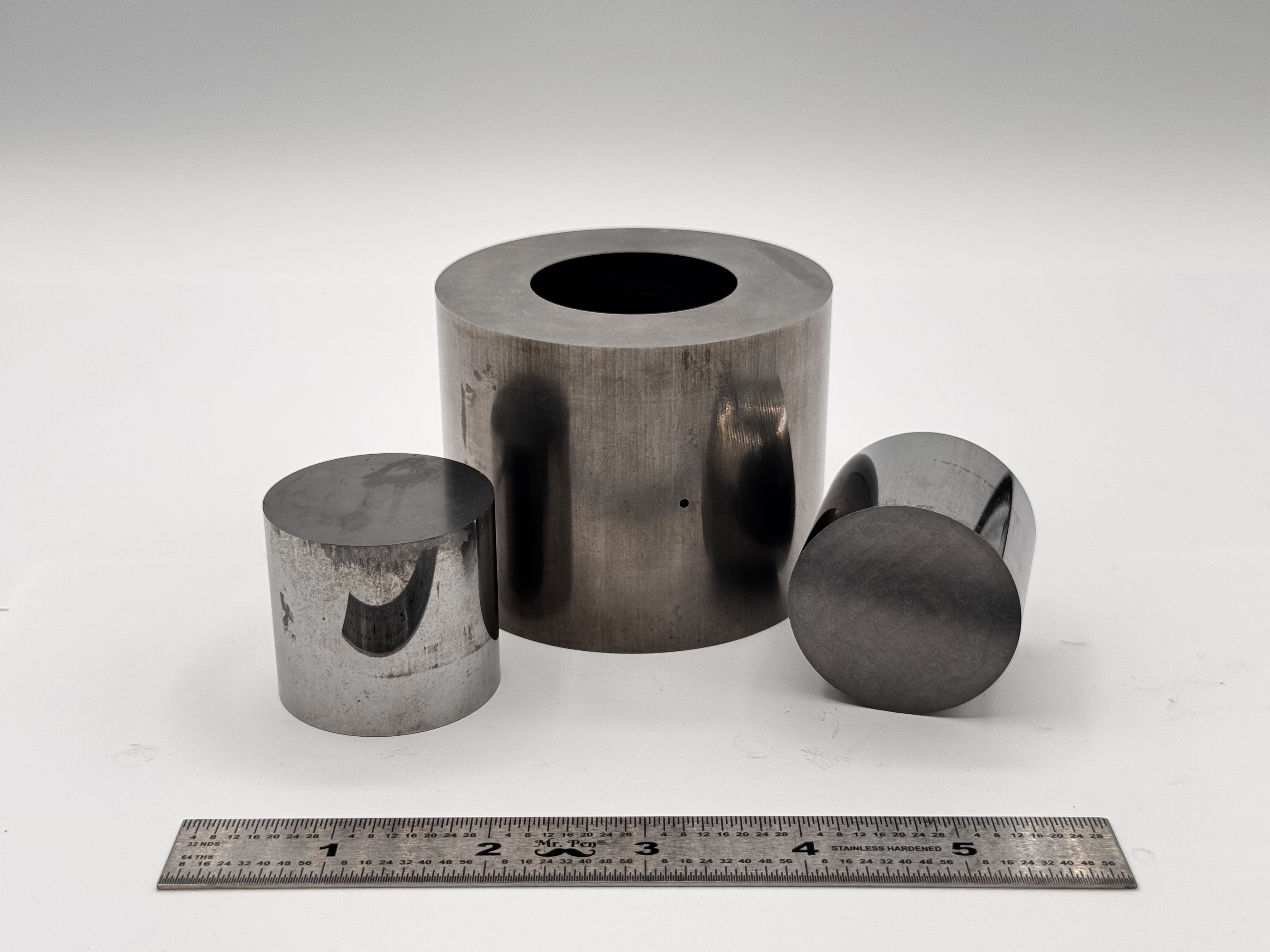 Tungsten Carbide Tooling
 Carbon Graphite Foil / Paper
 Carbon Felt and Yarn
 Spark Plasma Sintering Systems
 SPS/FAST Modeling Software
Vacuum Brazing and Nanomaterials: The Critical Link Between Sintering and High-Performance Assembly
Advanced materials manufacturing has entered a new era. From nano-engineered superalloys to field-assisted sintered components, today’s high-performance materials are designed at the micro- and nanoscale for extreme environments. But while much attention is given to how these materials are created, an equally important question remains:
How are they joined without compromising their structure?
That’s where vacuum brazing plays a crucial role.
In nanomaterials and sintering applications, vacuum brazing is more than just a joining method — it’s a precision-controlled, microstructure-preserving technology that enables advanced materials to function as complete systems.
Let’s explore how it works, how it relates to sintering, and why it has become essential in modern advanced manufacturing.
The Challenge of Joining Advanced Materials
Nanomaterials and sintered components are fundamentally different from conventional materials. They are engineered with:
- Ultra-fine grain structures
- High surface energy
- Controlled diffusion paths
- Precisely tailored microstructures
These characteristics give them exceptional properties — higher strength, improved conductivity, better thermal performance, or enhanced wear resistance.
But they also make them highly sensitive.
Even slight oxidation, contamination, or uncontrolled grain growth can degrade performance. Traditional joining methods like welding can introduce:
- Excessive localized heat
- Oxidation
- Thermal distortion
- Microstructural coarsening
For advanced materials, that’s unacceptable.
What Is Vacuum Brazing?
Vacuum brazing is a high-temperature metal joining process performed inside a vacuum furnace. It uses a filler metal that melts at a lower temperature than the base materials, flows into the joint by capillary action, and solidifies to form a strong metallurgical bond.
Key characteristics:
- Performed in a controlled vacuum environment
- No flux required
- Oxide-free joining
- Uniform heat distribution
- Precise temperature control
Because the atmosphere is evacuated, oxygen and contaminants are removed. This ensures clean interfaces — something that is absolutely critical when working with nano-engineered or sintered materials.
Why Vacuum Matters in Nanomaterials
Nanomaterials have extremely high surface area relative to their volume. This means:
- They react more easily with oxygen
- Surface chemistry is more sensitive
- Diffusion processes are more active
In air, oxidation occurs rapidly at elevated temperatures. Even microscopic oxide layers can prevent proper wetting or diffusion during joining.
A vacuum environment:
- Prevents oxidation
- Eliminates the need for corrosive flux
- Preserves surface chemistry
- Maintains clean grain boundaries
- Enables controlled diffusion
In short, vacuum brazing protects the very microstructure that gives nanomaterials their superior performance.
The Relationship Between Sintering and Vacuum Brazing
Although sintering and brazing are distinct processes, they are deeply connected in advanced manufacturing workflows.
Sintering: Building the Microstructure
Sintering — including methods like:
- Conventional vacuum sintering
- Hot pressing
- Spark plasma sintering (SPS)
- Field-assisted sintering (FAST)
— consolidates powder particles into dense solids through diffusion at elevated temperatures.
In nano-based sintering, powders with nanoscale grain sizes are bonded while preserving fine microstructures. The result is a high-performance component with enhanced mechanical or functional properties.
But sintering typically produces individual components.
To build functional systems, those components must be joined.
Vacuum Brazing: Completing the Assembly
Vacuum brazing is often used after sintering to:
- Attach sintered inserts to housings
- Join ceramic to metal
- Bond heat sinks to high-conductivity substrates
- Assemble multi-material systems
- Seal porous sintered structures
Because it occurs in a controlled vacuum furnace, vacuum brazing complements sintering processes. In many advanced facilities, both processes occur within similar controlled-atmosphere environments.
The synergy is clear:
- Sintering creates the advanced material.
- Vacuum brazing integrates it into a working system.
Where the Line Blurs: Transient Liquid Phase Bonding
In high-performance applications, the distinction between brazing and diffusion bonding sometimes disappears.
Transient Liquid Phase (TLP) bonding is a hybrid approach that:
- Uses a filler material that melts temporarily.
- Diffuses into the base materials.
- Solidifies isothermally as diffusion progresses.
The result is a joint that resembles a diffusion bond rather than a traditional brazed joint.
This method is widely used in:
- Aerospace turbine components
- High-temperature superalloys
- Ceramic-metal interfaces
- Energy systems exposed to extreme heat
In nanostructured materials, TLP bonding allows for diffusion-driven joining while maintaining structural integrity at the grain level.
Nano-Engineered Brazing Fillers
In cutting-edge applications, even the filler materials are engineered at the nanoscale.
Nano-enhanced brazing fillers may include:
- Nano-sized metal powders
- Reactive nano-interlayers
- Active brazing alloys for ceramics
- Nano-dispersed reinforcements
At the nanoscale, materials exhibit melting point depression — meaning smaller particles melt at lower temperatures. This enables:
- Lower joining temperatures
- Improved wetting behavior
- Enhanced diffusion rates
- Stronger joints with minimal thermal exposure
For sensitive sintered materials, reducing peak thermal exposure is critical to preserving microstructure.
Protecting Microstructure: The Core Advantage
The defining advantage of vacuum brazing in nano and sintering applications is microstructural control.
Without vacuum:
- Oxides form at grain boundaries
- Wetting is compromised
- Contaminants weaken diffusion
- Grain growth may accelerate
With vacuum:
- Grain boundaries remain clean
- Capillary flow is optimized
- Diffusion is controlled
- Mechanical integrity is preserved
This is especially important for nano-engineered alloys and ceramics, where performance is directly tied to grain size and interface quality.
Applications Driving Demand
Vacuum brazing plays a critical role in industries where failure is not an option:
Aerospace
- Turbine assemblies
- Heat exchangers
- High-temperature superalloy systems
Semiconductor and Electronics
- Heat spreaders
- Copper-based thermal management systems
- Hermetic packaging
Energy Systems
- High-efficiency heat exchangers
- Advanced fuel systems
- Thermal barrier assemblies
Medical Devices
- Precision implants
- Biocompatible metal-ceramic systems
In each case, the ability to preserve nanoscale properties while achieving structural integrity is what makes vacuum brazing indispensable.
The Bigger Picture: From Powder to Performance
In advanced manufacturing, performance begins at the powder level. Nano powders are engineered. Sintering consolidates them. Microstructures are refined.
But the material doesn’t reach its full potential until it becomes part of a functioning system.
Vacuum brazing is the bridge between material science and real-world application.
It enables:
- Clean integration
- High-temperature stability
- Structural reliability
- Multi-material assembly
- Preservation of nanoscale engineering
As nanomaterials and field-assisted sintering technologies continue to evolve, vacuum brazing will remain a foundational technology — quietly ensuring that revolutionary materials can perform under real-world demands.
Final Thoughts
In the world of nanomaterials and sintering, manufacturing is no longer just about shaping metal or consolidating powder. It is about controlling matter at the smallest scales.
Vacuum brazing is essential because it respects that scale.
It provides the clean environment, controlled diffusion, and thermal precision required to join advanced materials without sacrificing the very characteristics that make them exceptional.
In advanced materials engineering, the difference between success and failure often lies at the grain boundary.
And vacuum brazing ensures that boundary remains exactly where it should be.