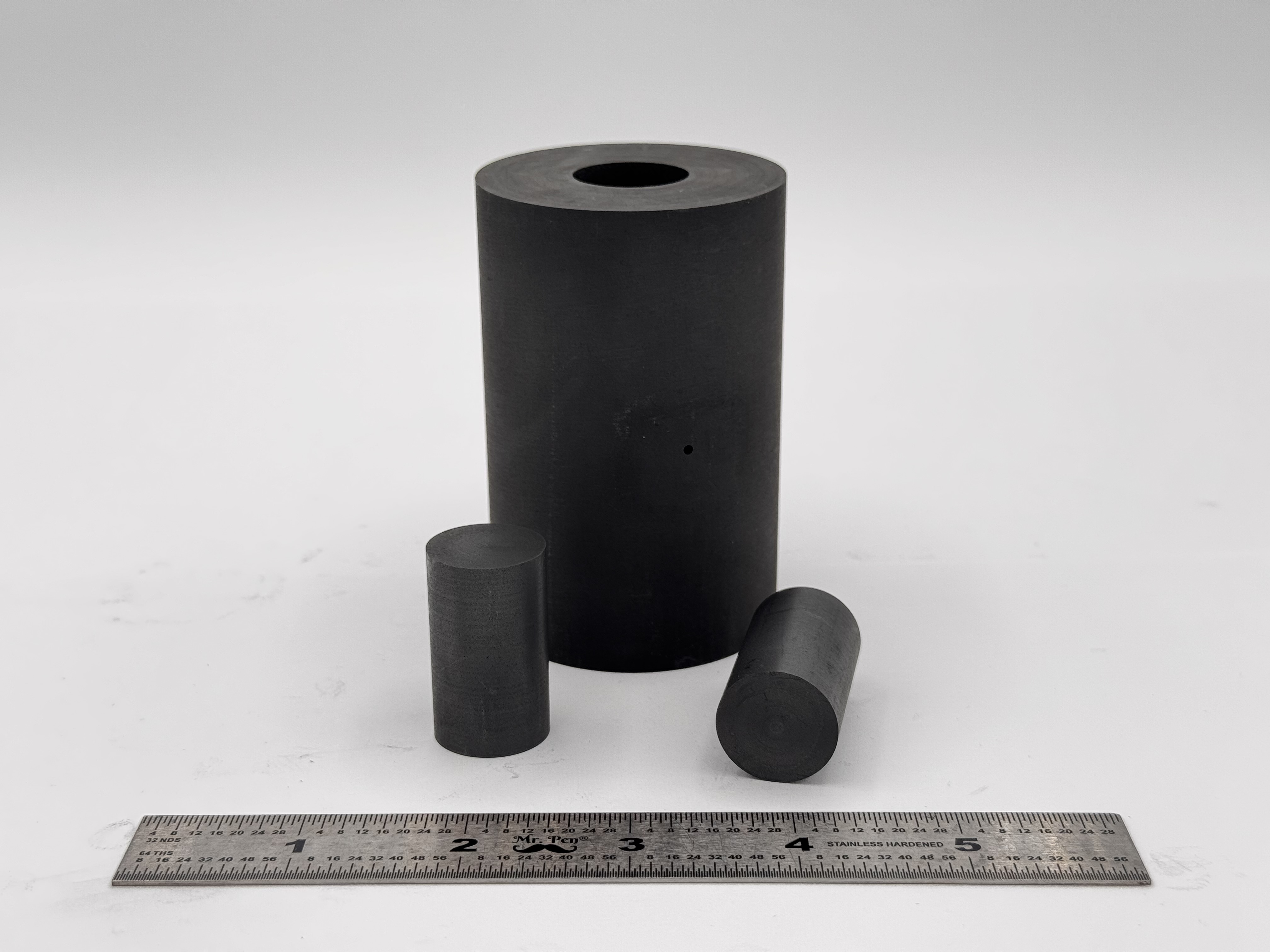
 High Strength SPS Graphite Tooling
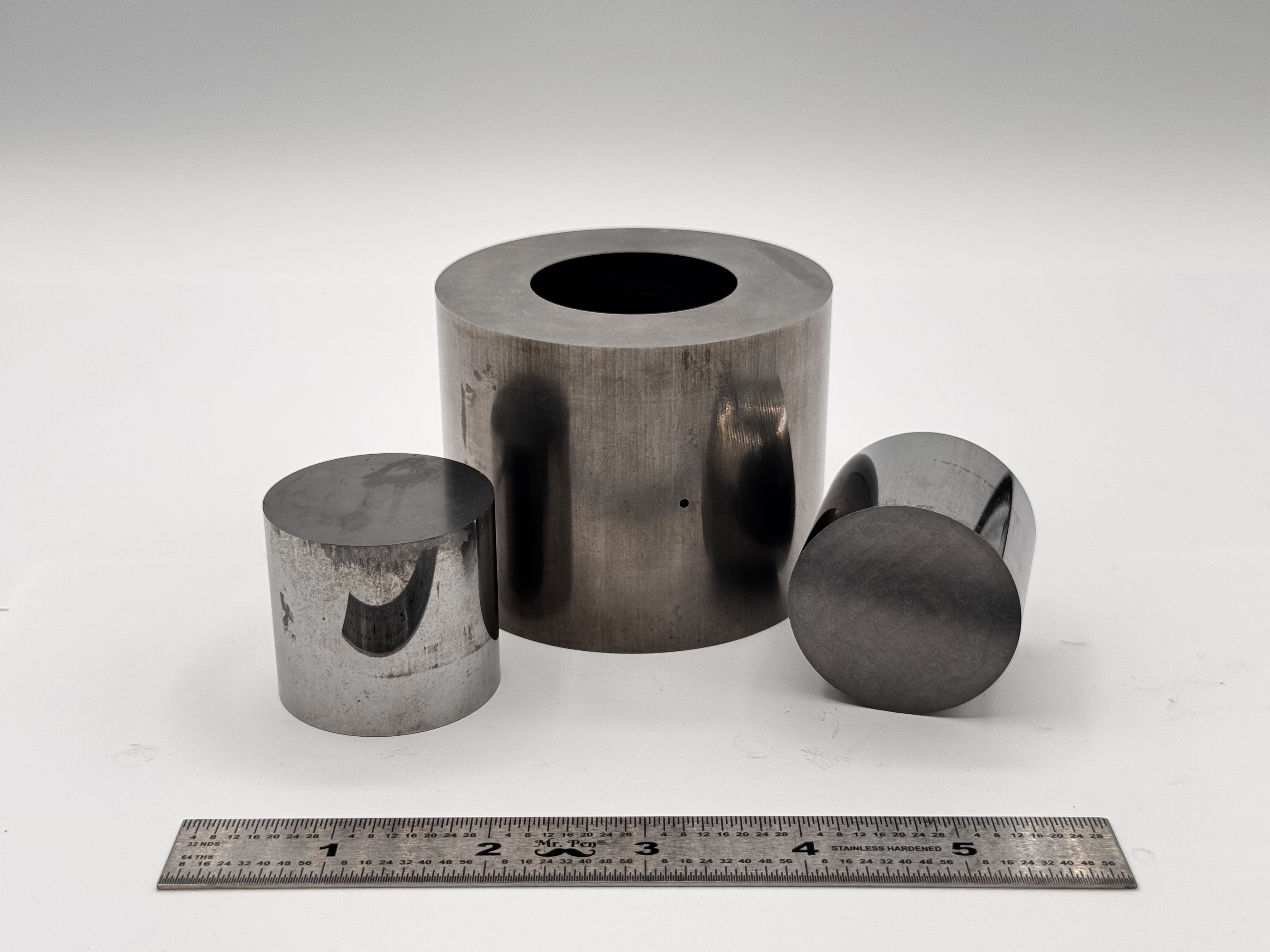 Tungsten Carbide Tooling
 Carbon Graphite Foil / Paper
 Carbon Felt and Yarn
 Spark Plasma Sintering Systems
 SPS/FAST Modeling Software
High Entropy Alloys in Aerospace: The Future of Extreme-Performance Materials
Modern aerospace engineering pushes materials to their limits. Turbine engines operate at temperatures approaching the melting point of their components. Hypersonic vehicles endure violent thermal shock. Rockets store cryogenic fuels at temperatures cold enough to make most metals brittle. All of this happens under relentless mechanical stress, vibration, oxidation, and fatigue.
For decades, aerospace has relied on a handful of elite materials: nickel-based superalloys for turbines, titanium alloys for strength-to-weight performance, aluminum for structural efficiency, and specialized steels for critical components. These materials are mature, optimized, and deeply integrated into aerospace certification systems.
But a new class of materials is emerging—one that challenges traditional alloy design philosophy and may reshape how we engineer components for extreme environments.
They are called High Entropy Alloys (HEAs).
Rethinking Alloy Design
Traditional alloys are built around one primary element. Steel is mostly iron. Superalloys are mostly nickel. Titanium alloys are predominantly titanium with small additions to tweak performance.
High Entropy Alloys flip this model on its head.
Instead of one dominant element, HEAs are typically composed of five or more elements in roughly equal proportions. Rather than a single base metal with minor additions, HEAs are multi-principal-element systems. This compositional balance creates high configurational entropy—essentially atomic-level disorder—that stabilizes simple crystal structures such as face-centered cubic (FCC) or body-centered cubic (BCC).
The result? Unexpected combinations of strength, toughness, temperature stability, and environmental resistance.
For aerospace engineers, that combination is compelling.
Why Aerospace Is Interested
Aerospace materials must perform across some of the most extreme operating conditions of any industry:
- Temperatures ranging from cryogenic (liquid hydrogen at -253°C) to above 1000°C in turbine engines
- Severe cyclic loading and vibration
- Oxidizing, corrosive, and erosive environments
- Strict weight limitations
- Long service life with predictable fatigue behavior
HEAs have demonstrated several properties that directly address these challenges:
- High strength retention at elevated temperatures
- Exceptional toughness at cryogenic temperatures
- Good fatigue resistance
- Oxidation and corrosion resistance
- Microstructural stability under thermal cycling
- Potential radiation resistance for space systems
While still emerging, these properties position HEAs as candidates for some of aerospace’s most demanding components.
Turbine Engines: Competing with Superalloys
Jet engines are among the harshest environments any material must survive. Turbine blades, vanes, combustor liners, and exhaust components operate at temperatures that can exceed 1000°C while enduring rotational stress, creep, and oxidation.
Nickel-based superalloys have dominated this space for decades. They are extraordinarily refined and benefit from generations of research and field data. Any new material must not just match but exceed their performance to justify adoption.
This is where
refractory High Entropy Alloys enter the conversation.
Refractory HEAs often contain elements like niobium (Nb), tantalum (Ta), molybdenum (Mo), tungsten (W), and titanium (Ti). These systems show:
- Strong high-temperature strength retention
- Resistance to creep deformation
- Slower atomic diffusion at elevated temperatures
- Stable microstructures under heat
Some experimental refractory HEAs have demonstrated strength levels that rival or surpass certain superalloys at extreme temperatures.
However, challenges remain. Density can be high, oxidation resistance must be optimized, and long-term creep data is still being developed. As of today, HEAs in turbine engines are largely at the prototype and research stage—but the trajectory is promising.
Cryogenic Systems: Where HEAs Truly Shine
While much attention focuses on high-temperature performance, some HEAs demonstrate something equally valuable: extraordinary behavior at extremely low temperatures.
The well-known Cantor alloy (Fe–Mn–Ni–Cr–Co) has shown exceptional fracture toughness at cryogenic temperatures. Unlike many steels that become brittle in extreme cold, certain HEAs become stronger while maintaining ductility.
This makes them attractive for:
- Liquid hydrogen storage tanks
- Cryogenic fuel lines
- Valve components
- Structural supports within propellant tanks
- Rocket engine fuel system hardware
Space launch systems and reusable rockets rely heavily on cryogenic fuels. Materials that resist brittle fracture in these environments offer significant safety and reliability advantages.
In this domain, HEAs may find adoption sooner than in turbine engines because their cryogenic toughness provides a clearer performance advantage over conventional alloys.
Hypersonic Vehicles: Surviving Aerodynamic Hell
Hypersonic flight—typically defined as speeds greater than Mach 5—introduces extreme aerodynamic heating. Leading edges, nose cones, and engine flow paths experience rapid thermal cycling and surface temperatures that challenge even advanced materials.
Refractory HEAs are being studied for:
- Leading edge structures
- Engine internal components
- Thermal protection support structures
- High-temperature brackets and connectors
Their multi-element composition can slow diffusion, enhance thermal stability, and potentially improve oxidation resistance compared to traditional refractory metals.
In defense and advanced aerospace research programs, HEAs are being evaluated as next-generation materials for sustained hypersonic operation.
Wear-Resistant Coatings: A Near-Term Commercial Opportunity
While bulk structural adoption may take years, one of the most realistic near-term aerospace applications of HEAs is in coatings.
HEAs can be applied through:
- Thermal spray processes
- Laser cladding
- Directed energy deposition
- Additive manufacturing overlays
These coatings can provide:
- High hardness
- Excellent wear resistance
- Improved corrosion resistance
- Resistance to erosion
Potential aerospace applications include:
- Landing gear components
- Engine shafts
- Bearings
- Actuation systems
- Turbine hardware
Coatings require less material volume and face fewer certification barriers than bulk structural components, making them an attractive entry point for commercial aerospace use.
Additive Manufacturing: Accelerating HEA Adoption
Additive manufacturing (AM) is particularly well suited for High Entropy Alloys.
AM enables:
- Rapid experimentation with new alloy compositions
- Complex geometries common in aerospace components
- Functionally graded materials
- Lightweight lattice structures
Because HEAs are compositionally tunable, additive manufacturing allows engineers to tailor materials for specific stress profiles or temperature gradients within a part.
Small, high-performance brackets, internal flow components, and experimental propulsion hardware are prime candidates for additively manufactured HEA parts.
Radiation Resistance for Deep Space
Long-duration space missions introduce another challenge: radiation damage.
Cosmic radiation and energetic particles can cause swelling, embrittlement, and microstructural degradation in conventional alloys.
Some HEAs demonstrate improved radiation tolerance because:
- Atomic disorder can absorb defect formation
- Complex chemistry slows defect mobility
- Damage accumulation may be reduced
This makes HEAs attractive for:
- Deep space structural components
- Nuclear thermal propulsion systems
- Radiation-exposed brackets and housings
While still largely in the research phase, this application could become significant as space exploration expands.
Why HEAs Aren’t Everywhere Yet
Despite their promise, High Entropy Alloys are not yet widely used in commercial aircraft or spacecraft primary structures.
There are several reasons:
- Long-term creep and fatigue databases are still developing
- Aerospace certification cycles can span 10–20 years
- Raw material costs can be high
- Manufacturing consistency at scale is still being optimized
- Existing materials like nickel superalloys and titanium alloys are deeply entrenched
Aerospace is inherently conservative. Materials must demonstrate not just performance but reliability over decades.
The Most Likely Path Forward
Based on current research and industry trends, HEAs are most likely to enter aerospace through:
- Wear-resistant coatings
- Cryogenic fuel system components
- Hypersonic vehicle structures
- Additively manufactured niche components
- Advanced propulsion systems
Large airframe structures made entirely from HEAs remain unlikely in the near term due to cost and weight optimization factors compared to aluminum and composites.
However, aerospace history shows that once a material proves itself in extreme environments, broader adoption often follows.
A Material Class Designed for Extremes
High Entropy Alloys represent a fundamental shift in how we design metals. Instead of fine-tuning a single dominant element, engineers are designing complex, multi-element systems to unlock new combinations of properties.
In aerospace—where extremes define performance—this approach makes sense.
HEAs may not replace nickel superalloys or titanium tomorrow. But in the niches where performance margins are razor-thin and environments are unforgiving, they offer something compelling:
A material system engineered not around convention, but around possibility.
As hypersonic travel, deep-space missions, and next-generation propulsion systems advance, High Entropy Alloys may move from laboratory curiosity to critical aerospace infrastructure.
The aerospace industry has always demanded more from materials.
HEAs may be one of the next answers to that demand.