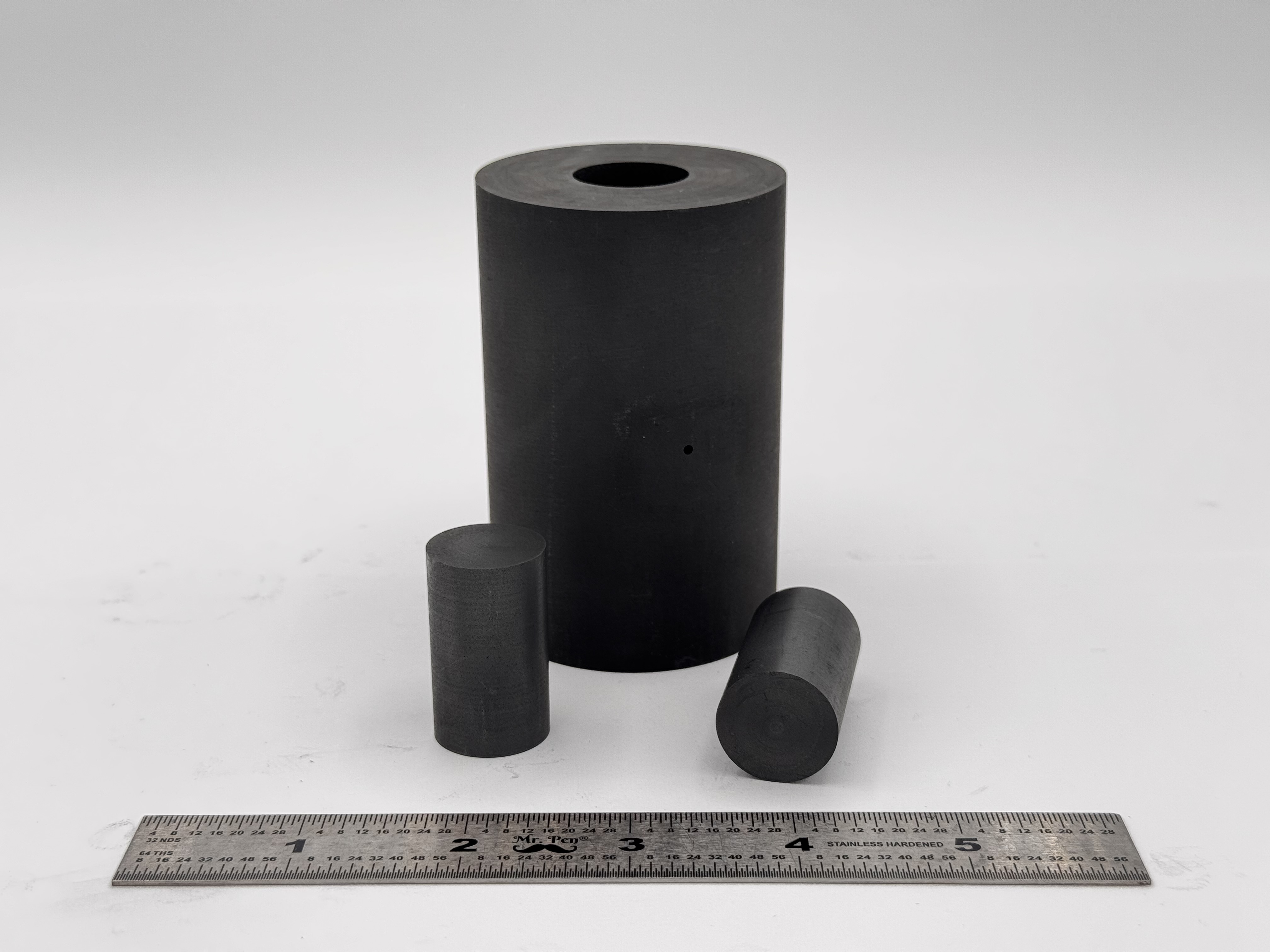
 High Strength SPS Graphite Tooling
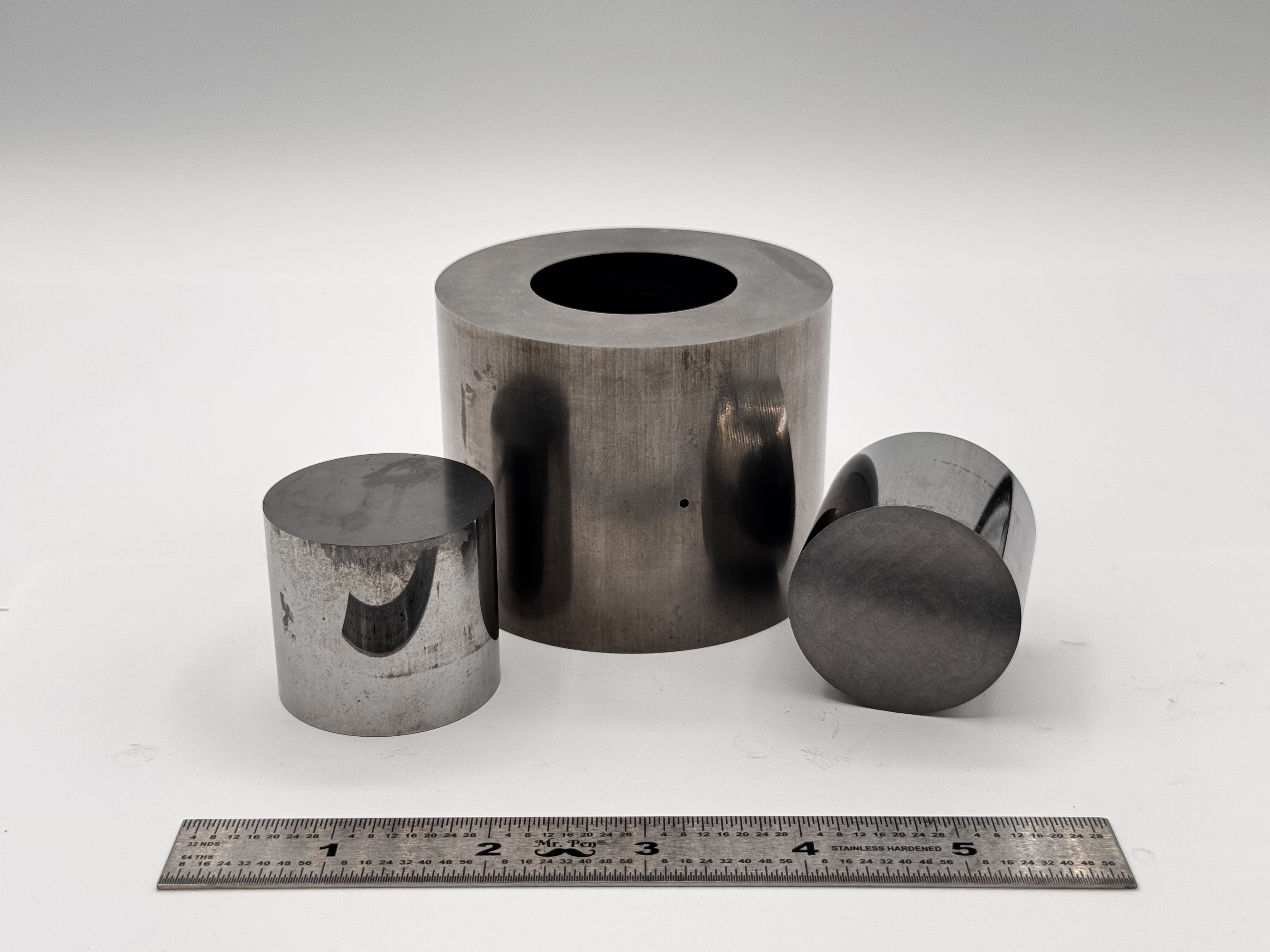 Tungsten Carbide Tooling
 Carbon Graphite Foil / Paper
 Carbon Felt and Yarn
 Spark Plasma Sintering Systems
 SPS/FAST Modeling Software
Diffusion Bonding: The Science of Joining Without Melting
In the world of advanced manufacturing, joining methods often determine the limits of what engineers can design. Welding, brazing, and soldering have long been trusted techniques, but each introduces compromises—heat-affected zones, filler materials, distortion, or reduced material integrity. Diffusion bonding stands apart as a process that quietly solves many of these challenges, enabling the creation of complex, high-performance components without ever melting the base materials.
Used extensively in aerospace, nuclear, medical, and high-tech industrial applications, diffusion bonding is less about brute force and more about atomic precision. It is a joining process rooted in materials science, where time, temperature, and pressure allow atoms to migrate across an interface and form a bond as strong as the parent material itself.
What Is Diffusion Bonding?
Diffusion bonding is a solid-state joining process that fuses two or more materials together by applying heat and pressure over an extended period of time, typically in a controlled atmosphere or vacuum. Unlike welding, the materials never reach their melting point. Instead, the elevated temperature increases atomic mobility, allowing atoms to diffuse across the mating surfaces and eliminate the original interface.
The result is a joint with no filler material, no visible seam, and mechanical properties that often match—or exceed—those of the base materials.
At the microscopic level, diffusion bonding essentially causes the boundary between two components to disappear. Grain structures grow across the joint, creating a unified, continuous material.
How the Diffusion Bonding Process Works
While the underlying physics is complex, the process itself follows a clear sequence:
- Surface Preparation
The mating surfaces must be extremely flat, clean, and free of oxides or contaminants. Any surface imperfection can inhibit atomic diffusion and weaken the bond. - Assembly and Fixturing
The components are precisely aligned and held together using tooling designed to apply uniform pressure. - Controlled Heating
The assembly is heated to a temperature typically between 50% and 80% of the material’s melting point (in absolute temperature terms). This level of heat promotes atomic movement without causing melting. - Pressure Application
Constant, carefully controlled pressure is applied to bring the surfaces into intimate contact, eliminating microscopic voids. - Time at Temperature
Depending on the material and joint design, the bonding cycle can last from minutes to several hours, allowing diffusion to fully occur. - Cooling
The bonded assembly is cooled in a controlled manner to prevent thermal stress or distortion.
Materials Commonly Joined by Diffusion Bonding
One of diffusion bonding’s greatest strengths is its versatility across a wide range of materials, including combinations that are difficult or impossible to weld.
Common materials include:
- Titanium and titanium alloys
- Stainless steels and tool steels
- Nickel-based superalloys
- Aluminum alloys
- Copper and copper alloys
- Refractory metals such as molybdenum and tungsten
- Ceramic-to-metal combinations (with interlayers)
This capability makes diffusion bonding especially valuable in multi-material designs where thermal expansion, corrosion resistance, or strength requirements vary across a single component.
Why Engineers Choose Diffusion Bonding
Diffusion bonding is not the fastest or cheapest joining method—but it is often the best when performance cannot be compromised.
Key advantages include:
- No Heat-Affected Zone (HAZ)
Because there is no melting, the base material’s microstructure remains intact, preserving mechanical properties. - Exceptional Joint Strength
Bonds can approach 100% of the parent material’s strength, making them suitable for critical load-bearing applications. - No Filler Materials
Eliminates concerns about contamination, galvanic corrosion, or mismatched material properties. - Dimensional Stability
Minimal distortion makes diffusion bonding ideal for tight-tolerance components. - Complex Internal Geometries
Enables the creation of internal channels, lattices, and multi-layer structures that would be impossible to machine conventionally.
Key Industries That Rely on Diffusion Bonding
Aerospace and Defense
Diffusion bonding is widely used in aircraft engines, heat exchangers, fuel systems, and structural components—particularly those made from titanium. The process allows lightweight designs with exceptional fatigue resistance and thermal performance.
Nuclear and Power Generation
In high-temperature and high-radiation environments, reliability is paramount. Diffusion bonding produces joints that resist creep, corrosion, and thermal cycling, making it ideal for heat exchangers and fuel assemblies.
Medical Devices
Medical implants and surgical tools benefit from diffusion bonding’s cleanliness and precision. The absence of filler materials and minimal distortion are critical for biocompatibility and dimensional accuracy.
Advanced Heat Exchangers
Compact, high-efficiency heat exchangers often rely on diffusion-bonded plate stacks with intricate internal flow channels. These designs maximize surface area while maintaining structural integrity under extreme pressure and temperature.
Diffusion Bonding vs. Traditional Joining Methods
Compared to welding or brazing, diffusion bonding is slower and requires specialized equipment such as vacuum furnaces or hot isostatic pressing (HIP) systems. However, the tradeoff is superior performance.
Where welding may introduce residual stress, porosity, or metallurgical changes, diffusion bonding produces joints that behave like monolithic material. For mission-critical applications, this reliability justifies the additional cost and process time.
Design Considerations and Challenges
Despite its advantages, diffusion bonding is not a universal solution.
Engineers must consider:
- Surface finish and flatness requirements
- Precise temperature and pressure control
- Longer cycle times
- Higher upfront tooling and equipment costs
- Limitations on part size depending on furnace capacity
Successful diffusion bonding often requires close collaboration between design engineers and manufacturing specialists early in the development process.
The Future of Diffusion Bonding
As industries push toward lighter, stronger, and more efficient designs, diffusion bonding is becoming increasingly relevant. The rise of additive manufacturing has further expanded its potential, with diffusion bonding being used to join printed components or seal internal channels created through 3D printing.
Advances in modeling, process control, and hybrid manufacturing techniques are making diffusion bonding more accessible and repeatable than ever before.
Conclusion
Diffusion bonding is a quiet powerhouse in modern manufacturing—a process that operates at the atomic level to unlock macroscopic performance gains. By eliminating filler materials, minimizing distortion, and preserving material integrity, it enables designs that would otherwise be impossible.
While not suitable for every application, diffusion bonding remains an essential tool for engineers and manufacturers working at the cutting edge of technology, where strength, precision, and reliability are non-negotiable.