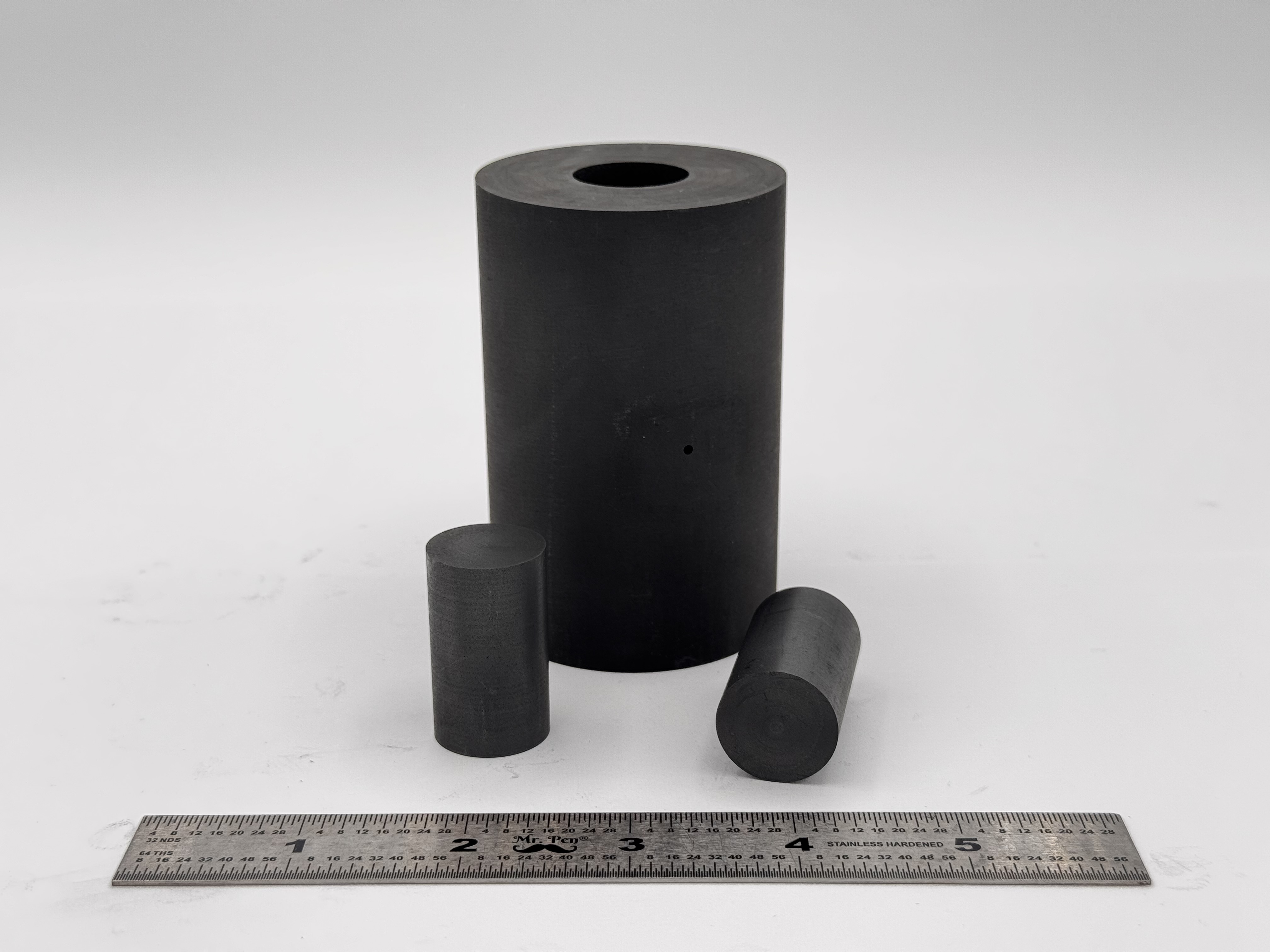
 High Strength SPS Graphite Tooling
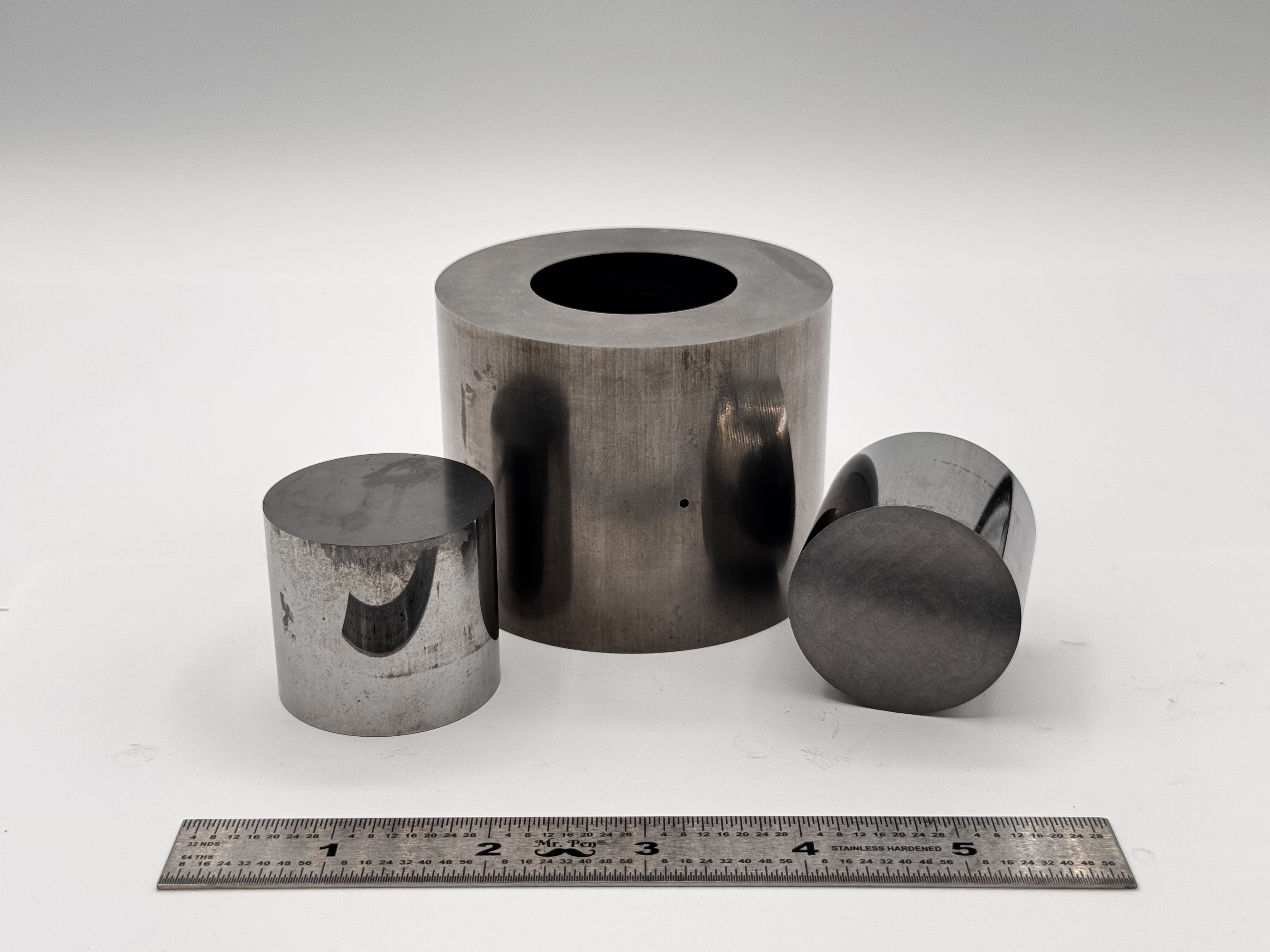 Tungsten Carbide Tooling
 Carbon Graphite Foil / Paper
 Carbon Felt and Yarn
 Spark Plasma Sintering Systems
 SPS/FAST Modeling Software
Direct Current Sintering: Revolutionizing Materials Processing
In the ever-evolving field of materials science, innovations that reduce processing time, improve material performance, and allow precise control over microstructure are highly sought after. One such breakthrough technology is Direct Current Sintering (DCS), a rapid sintering method that leverages the power of electricity to transform powdered materials into dense, solid components. This technique is increasingly gaining attention for its efficiency, versatility, and ability to create advanced materials for industries ranging from aerospace to biomedical engineering.
Understanding Sintering
Sintering is the process of fusing powdered materials into a solid mass through heating, without fully melting the substance. Traditionally, sintering has been performed in furnaces over long periods, often requiring hours to achieve the desired density and mechanical properties. While effective, conventional sintering has several limitations, such as high energy consumption, long processing times, and unwanted grain growth, which can compromise the final material properties.
Direct Current Sintering addresses many of these limitations by employing electric current as a rapid, localized heat source, dramatically reducing processing time while preserving the fine microstructures that are crucial for high-performance applications.
What is Direct Current Sintering (DCS)?
At its core, DCS is a materials processing technique in which a direct electric current (DC) is passed through a powder compact, generating heat internally via Joule heating. This heat causes the powder particles to bond and densify, forming a solid, often highly dense material. In some cases, mechanical pressure is applied simultaneously to further enhance densification and improve structural integrity.
Unlike conventional furnace sintering, where heat is applied externally, DCS heats the material from the inside out. This internal heating is highly efficient, allowing temperatures to reach sintering thresholds much faster than traditional methods, often in seconds to minutes instead of hours.
The Mechanism of DCS
The DCS process is elegant in its simplicity yet sophisticated in its effects. It begins with fine powdered material, which may include ceramics, metals, or composites. Optional additives, such as binders or sintering aids, are sometimes included to improve densification. The powder is then placed into a conductive die or mold, typically made from graphite or other electrically conductive materials, and sandwiched between electrodes.
When a direct current is applied:
- The powder compact resists the current flow, producing heat (Joule heating) internally.
- The temperature rises rapidly, reaching sintering levels appropriate for the material.
- Powder particles bond at contact points, reducing porosity and increasing density.
- If pressure is applied, the densification process is enhanced, resulting in a solid material with excellent mechanical properties.
This rapid, localized heating minimizes grain growth, preserving the fine microstructures that are often crucial for advanced ceramics and high-performance metals. The process ends with cooling and removal from the die, producing a solid component ready for post-processing or direct application.
Advantages of Direct Current Sintering
The unique mechanism of DCS offers several compelling advantages:
- Rapid Sintering: Processing times are drastically reduced compared to conventional furnace methods. Some materials can be fully densified in minutes rather than hours.
- Energy Efficiency: Since heat is generated internally within the powder, energy losses are minimized, making the process more sustainable.
- Fine Microstructure Preservation: Fast heating and short sintering times reduce grain growth, resulting in improved mechanical, thermal, and electrical properties.
- Lower Sintering Temperatures: Many materials can be densified at temperatures lower than those required in traditional sintering, further reducing energy consumption and limiting thermal stress.
- Versatility: DCS can process a wide range of materials, including ceramics, metals, composites, and even functionally graded materials, which have varying properties across a single component.
Applications of DCS
Direct Current Sintering is particularly valuable in high-performance material applications, where traditional sintering techniques may fall short. Some key applications include:
- Advanced Ceramics: Materials such as alumina (Al₂O₃), zirconia (ZrO₂), and silicon carbide (SiC) can be rapidly densified using DCS. These ceramics are used in electronics, cutting tools, aerospace components, and biomedical implants.
- Metal Components: Metals like titanium, tungsten, and their alloys can be processed into dense, mechanically robust components, suitable for aerospace and defense applications.
- Composites and Metal Matrix Materials: DCS can create composites with enhanced properties, such as improved hardness, wear resistance, or thermal stability.
- Functionally Graded Materials (FGMs): By controlling the powder composition and sintering parameters, DCS can produce materials with property gradients tailored to specific applications, such as aerospace or biomedical implants.
- Rapid Prototyping: The speed and precision of DCS make it ideal for small-scale production and prototyping of complex, high-performance components.
DCS vs Conventional Sintering
Direct Current Sintering differs from conventional furnace sintering in several important ways. Unlike traditional methods, which rely on external furnace heating, DCS heats the material from within. The direct current passes through the powder compact, generating heat precisely where it is needed through resistive, or Joule, heating. In contrast, conventional sintering requires heat to travel from the furnace walls through the material, making the process slower and less efficient.
Because DCS targets the powder directly, it can reach sintering temperatures in minutes or even seconds, whereas conventional sintering often takes several hours. This rapid heating also helps to preserve the fine microstructure of the material, minimizing grain growth and resulting in superior mechanical and thermal properties. Traditional furnace sintering, with its prolonged exposure to high temperatures, can lead to unwanted grain coarsening, reducing the performance of the final product.
DCS often achieves densification at lower temperatures than conventional methods, which reduces thermal stress and energy consumption. It is also far more energy-efficient, as heat is generated only where it is needed, rather than warming the entire furnace environment. Moreover, DCS is highly versatile, capable of processing ceramics, metals, composites, and even functionally graded materials—something conventional sintering struggles to do effectively. While furnace sintering can handle larger components, it is slower, less precise, and generally better suited to simpler materials like basic ceramics or metals.
In short, Direct Current Sintering offers a faster, more efficient, and highly precise alternative to traditional sintering. Its ability to control microstructure, reduce processing times, and expand material versatility makes it particularly valuable for high-performance applications in aerospace, electronics, biomedical engineering, and other cutting-edge industries.
Challenges and Considerations
While DCS offers many benefits, it is not without challenges:
- Equipment Cost: High-current power supplies and conductive dies can be expensive.
- Scale Limitations: DCS is often more suitable for small- to medium-sized components rather than large-scale industrial production.
- Uniformity: Achieving uniform heating in complex shapes requires careful design of dies and current paths.
- Material Limitations: Non-conductive powders require specialized approaches, such as conductive additives or conductive dies.
Despite these challenges, ongoing research and engineering advancements are expanding the applicability of DCS to a wider range of materials and component sizes.
The Future of Direct Current Sintering
The future of DCS is promising. Its ability to rapidly produce dense, high-performance materials with controlled microstructures aligns perfectly with the demands of modern industries, including aerospace, automotive, electronics, and biomedical engineering. As research continues, DCS could evolve into a standard method for producing next-generation materials, especially where speed, precision, and performance are critical.
Innovations in die design, current control, and hybrid processing (combining DCS with other techniques) are likely to enhance its versatility. Furthermore, the integration of DCS with additive manufacturing could open the door to producing complex, high-performance parts layer by layer, combining the strengths of both technologies.
Conclusion
Direct Current Sintering represents a significant advancement in materials processing, offering rapid, energy-efficient densification with excellent control over microstructure. By leveraging the simple but powerful principle of Joule heating via direct current, DCS enables the creation of ceramics, metals, and composites that meet the rigorous demands of modern technology.
With its combination of speed, efficiency, and precision, DCS is poised to become an increasingly important tool for researchers, engineers, and manufacturers seeking to push the boundaries of material performance. Whether it’s producing cutting-edge ceramics for aerospace or dense metal components for medical implants, DCS is proving that sometimes, electricity really is the key to transforming materials science.