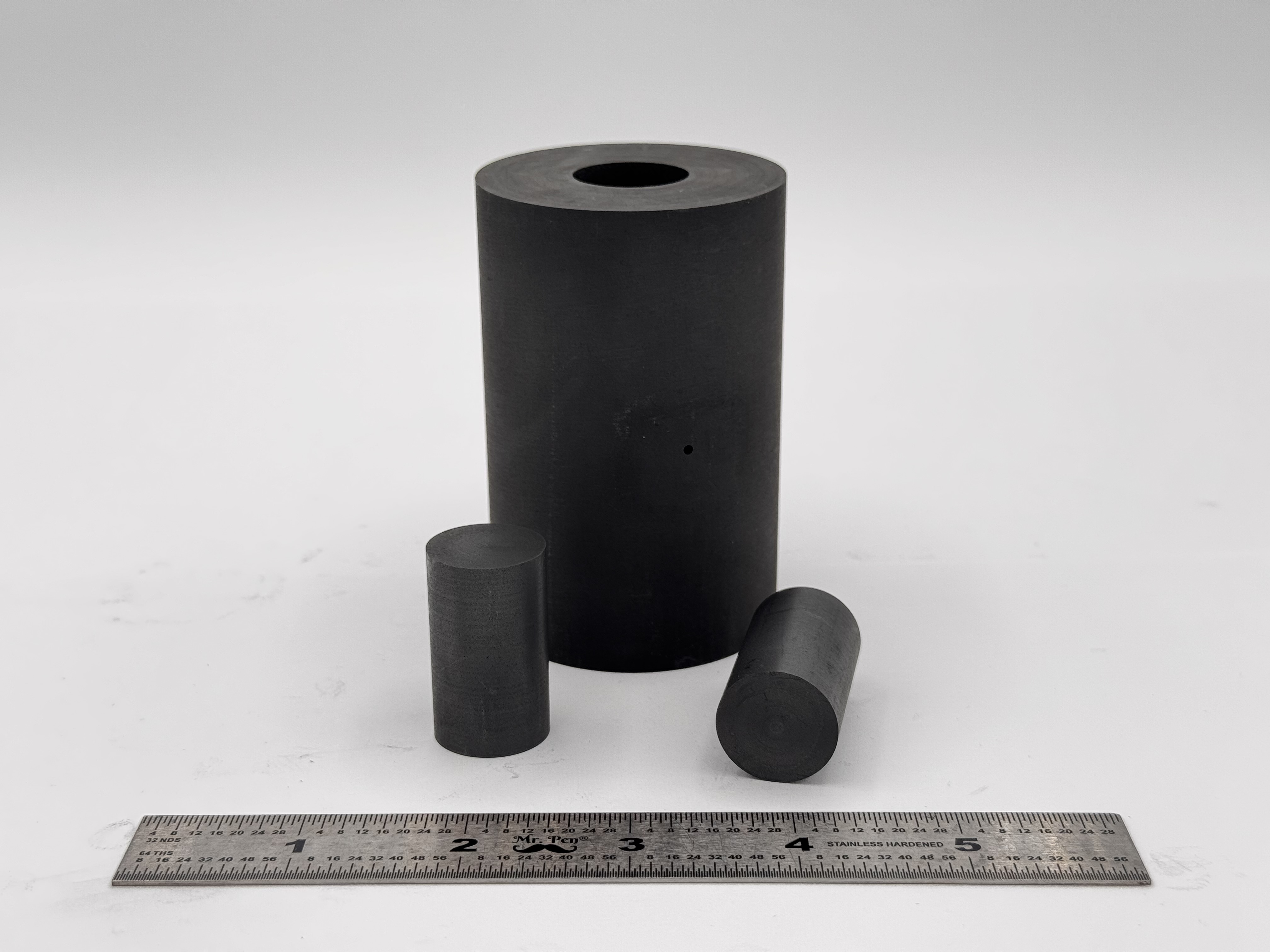
 High Strength SPS Graphite Tooling
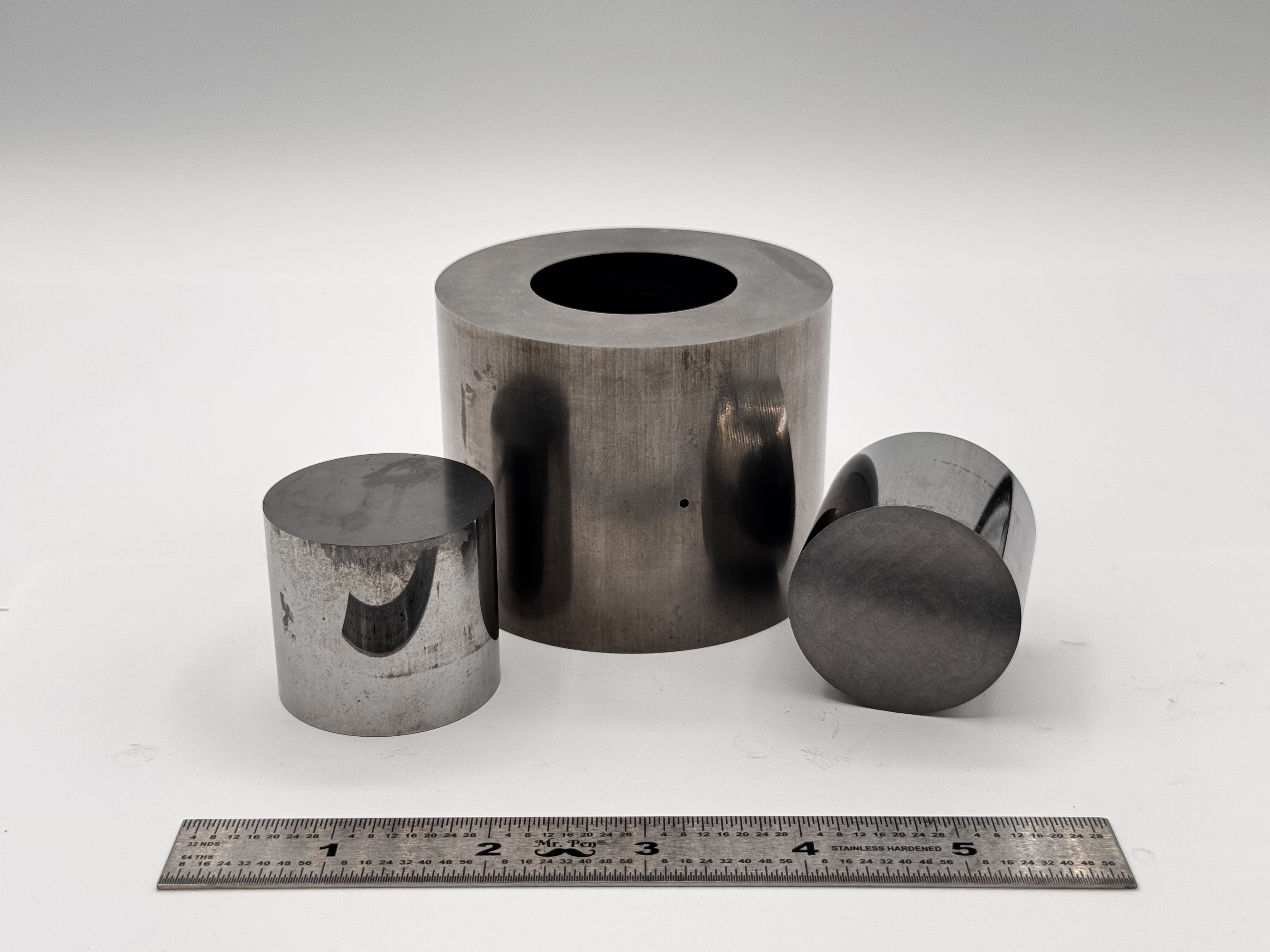 Tungsten Carbide Tooling
 Carbon Graphite Foil / Paper
 Carbon Felt and Yarn
 Spark Plasma Sintering Systems
 SPS/FAST Modeling Software
Unlocking Material Performance: The Science and Advantages of Hot Isostatic Pressing (HIP)
In advanced manufacturing, quality, performance, and reliability are no longer aspirational—they are expected. Whether producing next-generation aerospace components, medical implants, 3D-printed metal parts, or high-performance energy system hardware, manufacturers face mounting pressure to deliver flawless results. As the demand for stronger, lighter, and more precise materials grows, many industries have turned to one powerful technology to elevate material performance: Hot Isostatic Pressing (HIP).
HIP is not new, but its significance has increased dramatically as additive manufacturing, high-performance materials, and mission-critical applications become more mainstream. This article looks at what HIP is, how it works, and why it has become an indispensable tool for modern manufacturing.
What Is Hot Isostatic Pressing (HIP)?
Hot Isostatic Pressing is a thermal manufacturing process that enhances the density and structural integrity of metal, ceramic, and composite components. It works by applying high temperature and isostatic (equal from all directions) pressure using an inert gas—typically argon—to eliminate internal voids, porosity, and defects within a material.
Imagine placing a component inside a high-pressure “pressure cooker” for metals. As heat softens the material and pressure pushes uniformly across every surface, even microscopic internal pores collapse, leaving behind a fully dense, strengthened structure.
The result? Components with improved mechanical properties, extended fatigue life, and exceptional performance in demanding environments.
How the HIP Process Works
At the heart of HIP is a robust, specially engineered pressure vessel designed to withstand immense temperature and pressure. While specific parameters vary by material, the general process follows these stages:
1. Loading the Vessel
Components—as-manufactured, cast, sintered, or 3D printed—are placed inside a sealed HIP chamber. Some parts may be encased in a sealed container, especially in powder metallurgy applications.
2. Pressurization with an Inert Gas
The vessel is filled with argon. Using gas ensures pressure applies evenly in every direction, making it possible to densify highly intricate or irregularly shaped parts without distortion.
3. Heating
Temperatures typically range from:
- 900–2,000°C for metals
- 1,000–2,200°C for ceramics
The heat reduces material yield strength, allowing internal pores to collapse more easily under pressure.
4. Application of Pressure
Pressures often reach:
- 10,000–30,000 psi (70–200 MPa)
This simultaneous force and heat cause pores to close, atoms to diffuse, and material to densify into an almost pore-free state.
5. Controlled Cooling
After reaching full densification, the system cools before depressurization. The part emerges significantly stronger, more uniform, and more stable than before.
This combination of heat and pressure is what makes HIP so unique. Unlike forging or pressing, the isostatic nature ensures that even the most complex geometries are densified evenly, without introducing new stresses or deformations.
Materials That Benefit from HIP
One of the key advantages of HIP is its versatility across material types. It is widely used for:
Metals
- Titanium and titanium alloys
- Stainless steels
- Tool steels
- Nickel-based superalloys
- Cobalt-chromium alloys
These metals are commonly used in high-performance applications ranging from jet engines to surgical implants.
Ceramics
- Alumina
- Zirconia
- Silicon nitride
In ceramics, HIP dramatically increases toughness and strength, enabling components that withstand extreme environments.
Powder Metallurgy Components
HIP enhances density and reduces flaws in parts formed from metal powders, improving performance and lifespan.
Additively Manufactured (3D-Printed) Metals
Perhaps the fastest growing HIP application, additive manufacturing often introduces micro-porosity. HIP eliminates these defects and helps parts meet aerospace-grade quality standards.
The Advantages of HIP: Why Industries Rely on It
HIP has become essential in industries where failure is not an option. Its benefits span both material science and practical engineering advantages.
1. Near-Perfect Density
No other process eliminates internal porosity as effectively as HIP. Fully dense components exhibit:
- Superior mechanical strength
- Improved fatigue resistance
- Greater fracture toughness
These are critical advantages for high-stress components such as turbine blades or orthopedic implants.
2. Enhanced Mechanical Properties
Pore elimination leads to:
- Higher tensile and yield strength
- Improved ductility
- Greater resistance to thermal fatigue
For aerospace, where a single micro-defect can trigger catastrophic failure, HIP is a crucial safeguard.
3. Microstructural Uniformity
HIP creates consistent grain structure throughout a component. This uniformity:
- Improves predictability of performance
- Reduces quality variability
- Enables more accurate engineering calculations
For industries bound by strict certifications, consistency is key.
4. Ability to Repair Defects
Unlike other strengthening processes, HIP can repair internal flaws formed during:
- Casting
- Powder metallurgy
- Additive manufacturing
This makes it possible to salvage expensive components that might otherwise be scrapped.
5. Greater Design Freedom
Because HIP makes materials stronger and more reliable, engineers can:
- Reduce component weight
- Use thinner walls or reduced cross-sections
- Design more complex geometries
This often leads to improved fuel efficiency, longer service life, and lower material costs.
Where HIP Is Used: Key Industries
The demand for stronger, lighter, and more durable parts has pushed HIP into nearly every advanced manufacturing sector.
Aerospace & Defense
Few industries benefit more from HIP than aerospace. Jet engine components, turbine housings, exhaust systems, and rocket propulsion parts often undergo HIP to ensure flawless performance.
Benefits include:
- Increased fatigue life
- Higher temperature stability
- Reduced risk of in-flight failure
In defense, armor systems and precision components also benefit from the process.
Medical Devices
Titanium and cobalt-chromium implants—such as hip stems, dental implants, and spinal cages—are commonly HIP processed to ensure:
- Biomechanical strength
- Long-term durability
- Structural uniformity
Because implants remain inside the human body for decades, reliability is critical.
Energy Sector
From nuclear components to high-temperature heat exchangers, HIP provides the structural integrity needed to withstand harsh environments, including:
- High radiation
- Extreme temperatures
- Continuous mechanical stress
HIP also supports oil & gas, where downhole tools face severe wear and pressure.
Automotive and Motorsport
Performance engines, turbocharger parts, and high-stress structural components rely on HIP to deliver higher power with reduced weight. As automotive trends push toward efficiency and electrification, HIP-strengthened materials are becoming increasingly important.
Additive Manufacturing (3D Printing)
Perhaps the most transformative use of HIP today is in additive manufacturing—especially metal 3D printing. While AM enables revolutionary design freedom, it also introduces micro-porosity and inconsistent bonding.
HIP resolves these challenges by:
- Eliminating voids
- Increasing fatigue resistance
- Improving dimensional stability
- Helping printed parts meet certification standards
Without HIP, many AM components could not be used in mission-critical applications.
HIP vs. Other Manufacturing Processes
It's easy to confuse HIP with standard heat treating or mechanical pressing, but the differences are significant. Heat treating alters a material’s hardness and strength but applies no pressure, so it cannot remove porosity. Forging strengthens materials through mechanical deformation, yet because the force is not applied isostatically, it comes with shape and geometry limitations. Sintering fuses powder particles together, but HIP provides significantly higher density and improved uniformity. Pressure sintering combines heat with mechanical force; however, HIP relies on gas pressure, which ensures truly uniform densification even on complex shapes. Essentially, HIP is the only process that achieves full densification while preserving complex geometries.
The Future of HIP Technology
As industries demand higher performance from smaller, lighter, and more efficient components, HIP's importance will continue to grow. Future developments include:
- Integrated HIP + Heat Treat Systems: Reducing cycle times and increasing throughput.
- Larger HIP vessels: Enabling processing of bigger and more complex structures.
- HIP for advanced composites: Including ceramic matrix composites (CMCs).
- Automation & AI-driven quality control: Improving repeatability and reducing cost.
With additive manufacturing pushing the boundaries of design, HIP becomes an essential finishing step to ensure those designs are structurally sound and production-ready.
Conclusion
Hot Isostatic Pressing is a cornerstone technology in the world of high-performance manufacturing. By combining extreme heat with uniform, high-pressure inert gas, HIP eliminates porosity, repairs internal defects, and delivers unparalleled material performance. Its ability to transform the structure and durability of metals, ceramics, and composites makes it indispensable across aerospace, medical, energy, defense, and rapidly growing additive manufacturing markets.
As manufacturing challenges intensify and industries push for greater reliability, the role of HIP will only expand. Whether enabling lighter aircraft engines, more durable medical implants, or flawless 3D-printed components, HIP stands at the forefront of modern material science—helping engineers achieve the impossible.