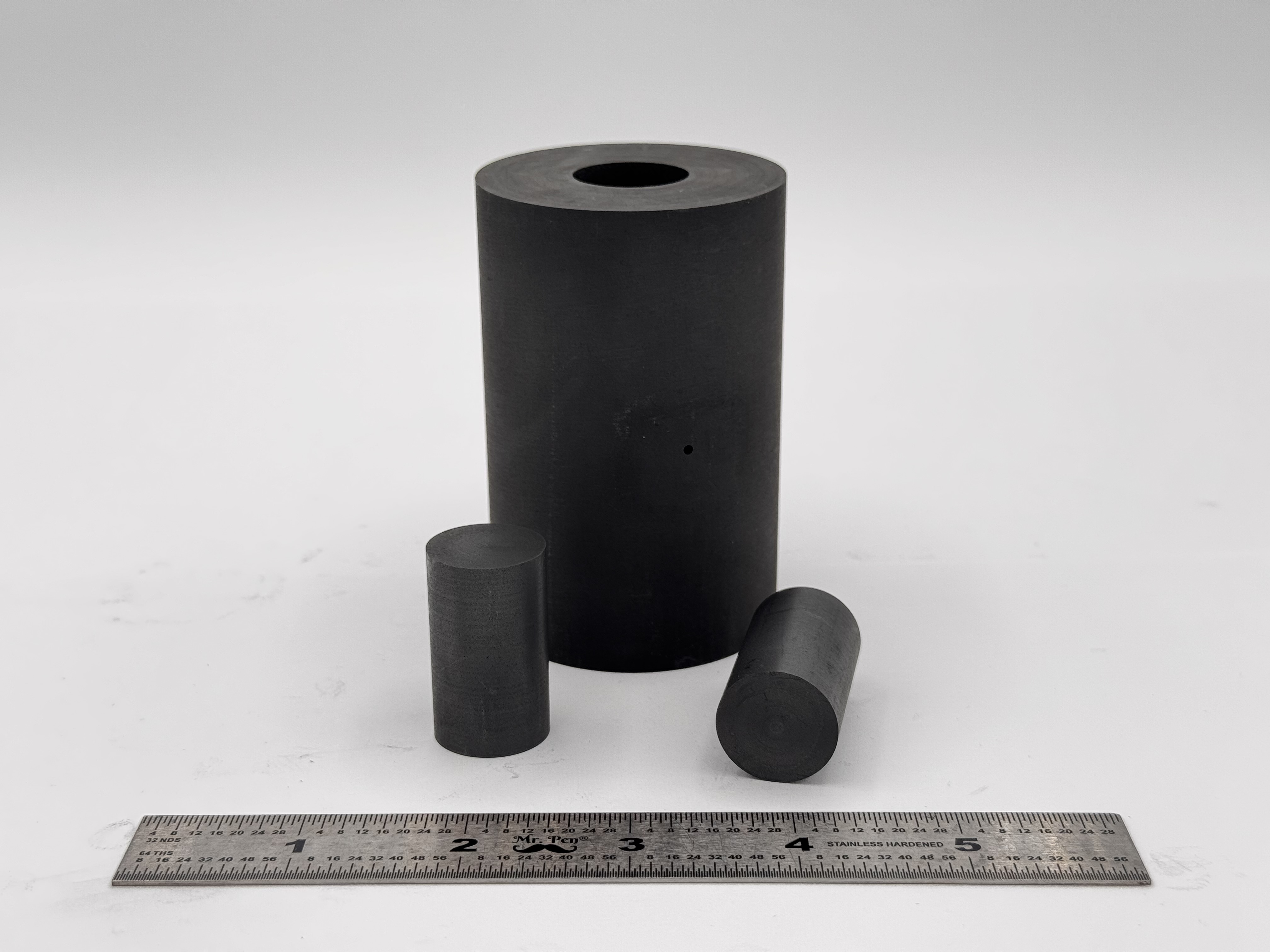
 High Strength SPS Graphite Tooling
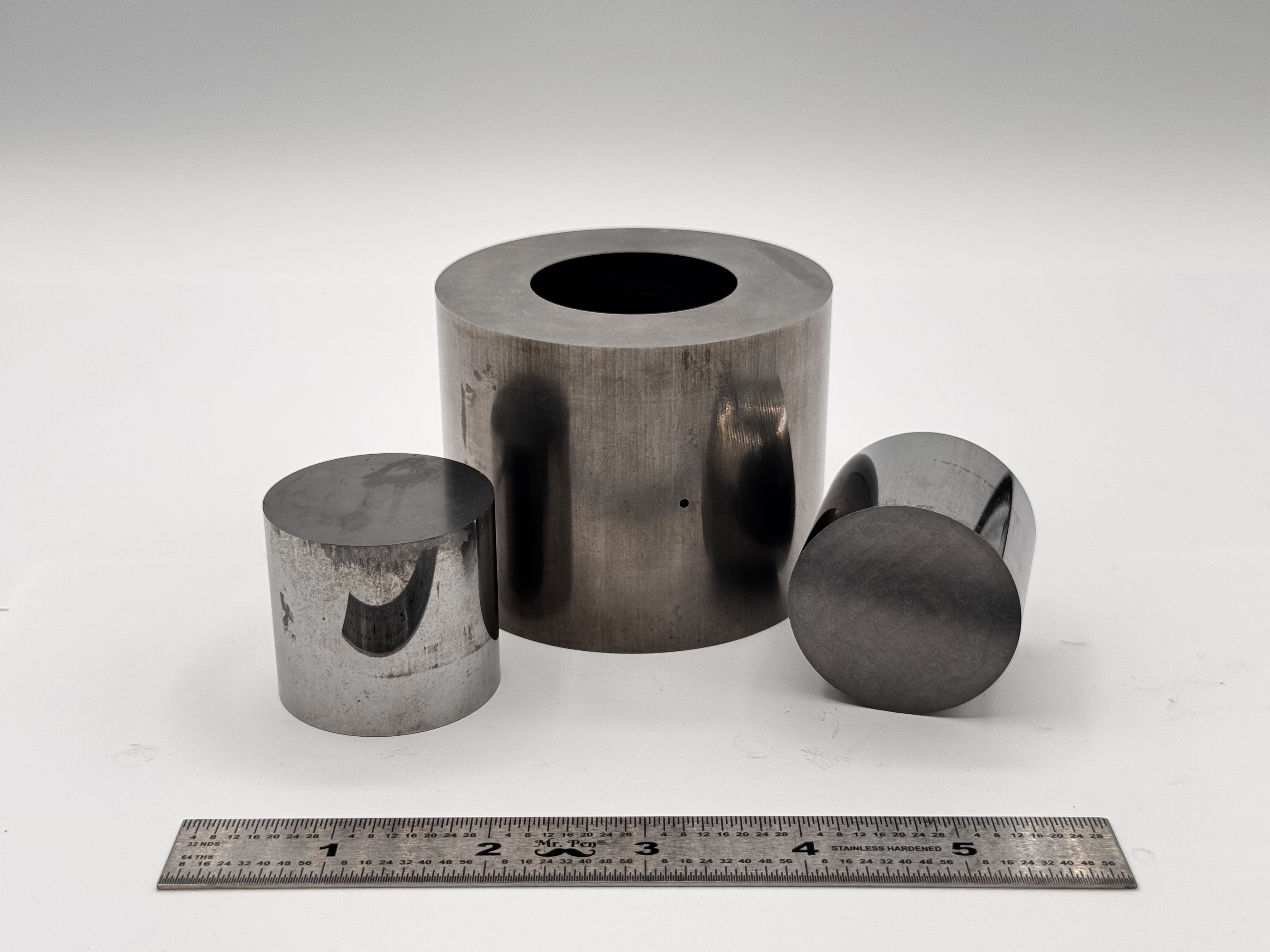 Tungsten Carbide Tooling
 Carbon Graphite Foil / Paper
 Carbon Felt and Yarn
 Spark Plasma Sintering Systems
 SPS/FAST Modeling Software
Advancing Materials Performance with FAST/SPS and HIP: A Strategic Approach
As modern industries continue to demand higher performance, tighter tolerances, and greater reliability from engineered materials, traditional manufacturing processes are increasingly being pushed to their limits. Aerospace systems must withstand extreme temperatures and stresses. Energy infrastructure requires long-term durability in harsh environments. Defense applications demand materials that offer both strength and resilience under dynamic loading conditions.
Meeting these challenges requires more than incremental improvements—it requires a fundamental shift in how materials are processed and optimized.
At the forefront of this evolution is the strategic integration of Field-Assisted Sintering Technology (FAST/SPS) and Hot Isostatic Pressing (HIP). At California Nanotechnologies (Cal Nano), these two advanced processes are combined to deliver materials with engineered microstructures, near-theoretical density, and exceptional mechanical performance.
This hybrid approach enables manufacturers to achieve a level of control and reliability that is not possible with conventional processing methods alone.
Understanding the Technologies
Field-Assisted Sintering Technology (FAST/SPS)
Field-Assisted Sintering Technology, commonly referred to as FAST or Spark Plasma Sintering (SPS), is an advanced powder consolidation process that utilizes a combination of pulsed direct electrical current and uniaxial mechanical pressure to rapidly densify materials.
Unlike conventional sintering, which relies on slow external heating, FAST generates heat internally within the material and tooling. This results in extremely high heating rates—often hundreds of degrees Celsius per minute—and dramatically reduced cycle times.
The key advantages of FAST/SPS include:
- Rapid densification in minutes rather than hours
- Preservation of fine grain structures and nanostructured materials
- Precise control over microstructure and phase composition
- Ability to process difficult or unconventional materials
- Near-net shape manufacturing with minimal post-processing
Because of these capabilities, FAST is particularly well-suited for advanced materials such as ceramics, refractory metals, intermetallics, and metal matrix composites. It is also an ideal platform for developing novel material systems where microstructure plays a critical role in performance.
However, while FAST can achieve high levels of densification—typically in the range of 95–99%—it may leave behind small amounts of residual porosity or localized density variations, particularly in thicker or more complex geometries.
Hot Isostatic Pressing (HIP)
Hot Isostatic Pressing is a complementary process that applies high temperature and high-pressure inert gas, typically argon, to a component within a sealed pressure vessel. Unlike uniaxial pressing methods, HIP applies pressure uniformly in all directions, ensuring consistent densification throughout the entire part.
Typical HIP conditions include temperatures ranging from 900°C to over 2,000°C and pressures between 10,000 and 30,000 psi. Under these conditions, materials undergo plastic deformation and diffusion processes that eliminate internal defects.
The primary benefits of HIP include:
- Removal of internal porosity and voids
- Healing of microcracks and defects
- Achievement of near 100% theoretical density
- Improved fatigue life and fracture resistance
- Enhanced structural integrity and reliability
HIP is widely used as a post-processing step for castings, powder metallurgy components, and additively manufactured parts. It is especially valuable in applications where internal defects cannot be tolerated, such as aerospace and medical components.
However, HIP is not typically used for primary shaping due to its longer cycle times and lack of microstructural control compared to processes like FAST.
The Strategic Advantage of Combining FAST and HIP
Individually, FAST/SPS and HIP are powerful tools. When used together, they create a highly effective and synergistic manufacturing workflow.
At California Nanotechnologies, this combined approach is used to achieve both microstructural precision and full material densification, delivering superior performance in demanding applications.
The concept is straightforward: FAST creates the structure, and HIP perfects the material.
Process Workflow
Step 1: FAST/SPS – Rapid Formation and Microstructure Engineering
The process begins with FAST/SPS, where powder materials are consolidated into a near-net shape under controlled temperature and pressure conditions.
During this stage:
- Materials are densified rapidly to approximately 95–99% of theoretical density
- Grain growth is minimized due to short processing times
- Unique microstructures, including fine grains and metastable phases, can be preserved
- Complex material systems can be engineered with precision
This step establishes the fundamental structure and properties of the material.
Step 2: HIP – Final Densification and Defect Elimination
Following FAST processing, the component undergoes Hot Isostatic Pressing.
During HIP:
- Residual porosity is eliminated
- Internal defects and microvoids are healed
- Material density approaches 100%
- Mechanical properties such as fatigue strength and fracture toughness are significantly enhanced
Because pressure is applied isotropically, HIP improves internal quality without introducing distortion or compromising the part’s geometry.
Key Benefits of the Hybrid Approach
Engineered Microstructures with Full Density
One of the most significant advantages of combining FAST and HIP is the ability to achieve both precise microstructural control and complete densification.
FAST enables the formation of fine-grained and nanostructured materials that are often difficult to achieve through traditional processing. HIP then ensures that these materials are fully dense and free of internal defects.
This dual capability is critical for applications where both microstructure and integrity directly influence performance.
Superior Mechanical Performance
Materials processed using the FAST + HIP approach exhibit enhanced mechanical properties compared to those processed using either method alone.
These improvements include:
- Increased fatigue resistance
- Higher fracture toughness
- Greater tensile strength
- Improved consistency and reliability
The fine microstructures produced by FAST contribute to strength and hardness, while HIP eliminates internal flaws that could lead to failure under cyclic or high-stress conditions.
Enabling Advanced and Difficult Materials
Many high-performance materials present significant challenges during manufacturing due to their high melting points, brittleness, or sensitivity to processing conditions.
The combined FAST + HIP approach is particularly effective for:
- Refractory metals such as tungsten, molybdenum, and tantalum
- Advanced ceramics including alumina and silicon carbide
- Metal matrix composites
- Functionally graded materials
FAST allows these materials to be formed quickly and efficiently, while HIP ensures they meet the structural and performance requirements of demanding applications.
Near-Net Shape Manufacturing with High Integrity
FAST enables near-net shape production, reducing the need for extensive machining and minimizing material waste. This is particularly valuable when working with expensive or difficult-to-machine materials.
HIP enhances the internal quality of these components without altering their external geometry, resulting in parts that are both dimensionally accurate and structurally sound.
Applications Across Critical Industries
The combination of FAST and HIP supports a wide range of high-performance applications across multiple industries.
Aerospace
In aerospace applications, materials must withstand extreme temperatures, mechanical loads, and cyclic stresses. The FAST + HIP approach enables the production of components with superior fatigue resistance and structural integrity, making it ideal for turbine systems, propulsion components, and lightweight structural elements.
Defense
Defense applications often require materials that can perform reliably under extreme conditions, including high impact and thermal stress. The ability to engineer microstructures and eliminate internal defects makes this approach well-suited for advanced armor systems and high-performance structural components.
Energy
In the energy sector, materials are exposed to harsh environments, including high temperatures, pressure, and corrosive conditions. FAST and HIP enable the production of durable components for nuclear systems, heat exchangers, and thermal management applications.
Advanced Manufacturing
For companies developing next-generation materials, the ability to precisely control microstructure while ensuring full densification is essential. The FAST + HIP approach provides a platform for innovation, enabling the creation of custom materials tailored to specific performance requirements.
Process Optimization: A Critical Capability
Successfully integrating FAST and HIP requires more than simply applying two processes in sequence. It demands a deep understanding of material behavior, thermodynamics, and process interactions.
At California Nanotechnologies, process optimization focuses on:
- Controlling HIP temperature and cycle duration to minimize grain growth
- Selecting appropriate powder materials and compositions
- Fine-tuning FAST processing parameters to achieve desired microstructures
- Ensuring compatibility between the two processes to preserve material properties
This expertise allows Cal Nano to deliver materials that are not only fully dense but also engineered for optimal performance in their intended applications.
Addressing Challenges
While the benefits of the FAST + HIP approach are significant, there are challenges that must be managed effectively.
One of the primary concerns is grain growth during HIP, which can reduce the advantages gained during FAST processing. This is addressed through careful control of temperature and processing time.
Additionally, the use of two processing steps increases complexity and cost. However, for high-value applications where performance and reliability are critical, the benefits far outweigh these considerations.
The Future of Materials Processing
As industries continue to evolve, the demand for advanced materials will only increase. Traditional manufacturing methods alone cannot meet the growing need for materials that combine strength, durability, and precision.
The integration of FAST/SPS and HIP represents a forward-looking approach that addresses these challenges. By combining rapid processing with comprehensive defect elimination, this hybrid method enables the production of materials that meet the highest standards of performance and reliability.
At California Nanotechnologies, this capability positions customers at the leading edge of innovation. Whether developing new materials or improving existing ones, the ability to control both microstructure and density provides a powerful advantage in today’s competitive landscape.
Conclusion
The combination of Field-Assisted Sintering Technology and Hot Isostatic Pressing is transforming how advanced materials are manufactured. By leveraging the strengths of both processes, California Nanotechnologies delivers materials that are not only high-performing but also consistent and reliable.
FAST enables rapid consolidation and precise microstructure control. HIP ensures complete densification and structural integrity. Together, they form a comprehensive solution for producing next-generation materials.
For industries where failure is not an option and performance is paramount, this integrated approach offers a clear path forward—one defined by innovation, precision, and excellence.