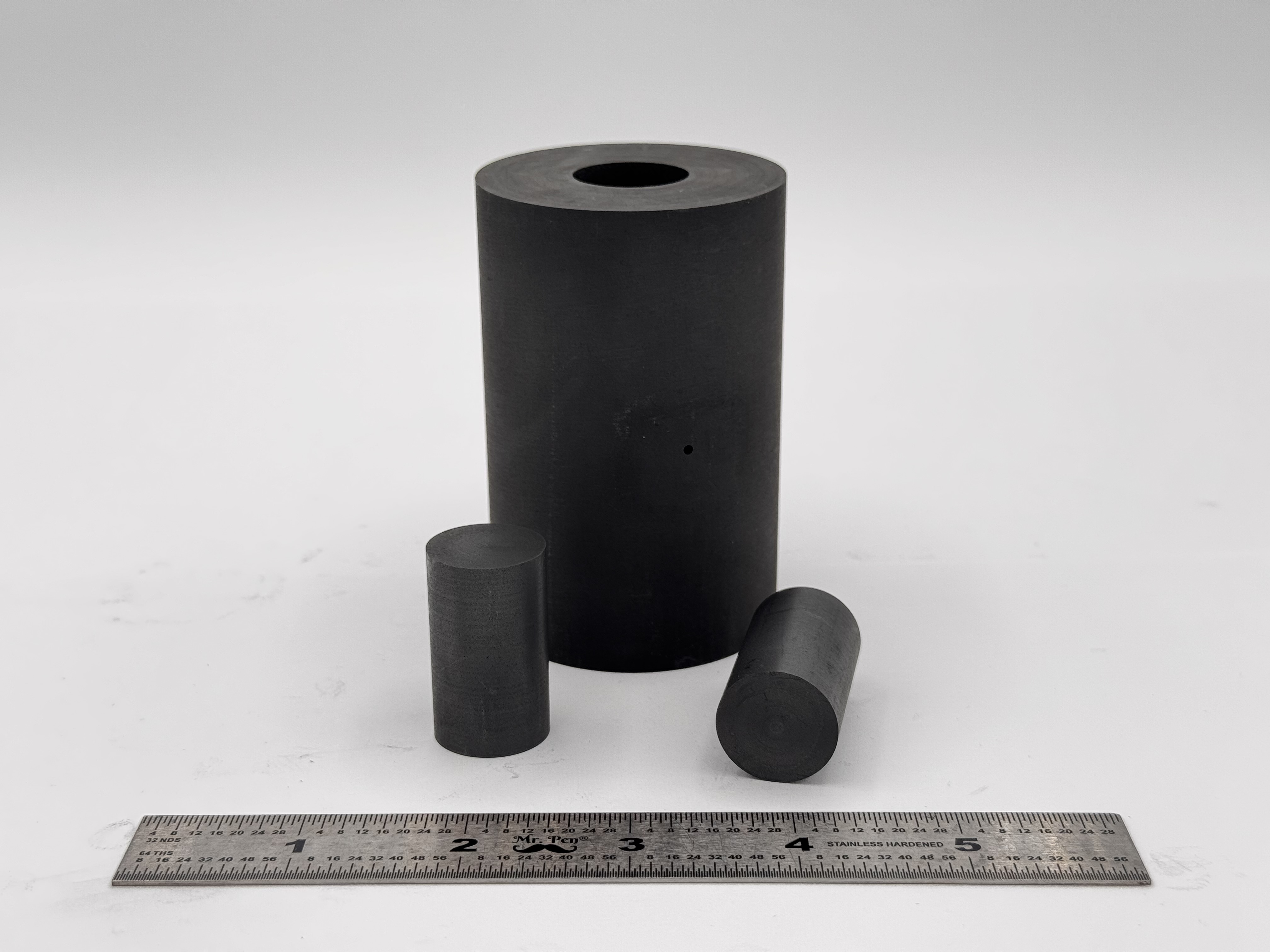
 High Strength SPS Graphite Tooling
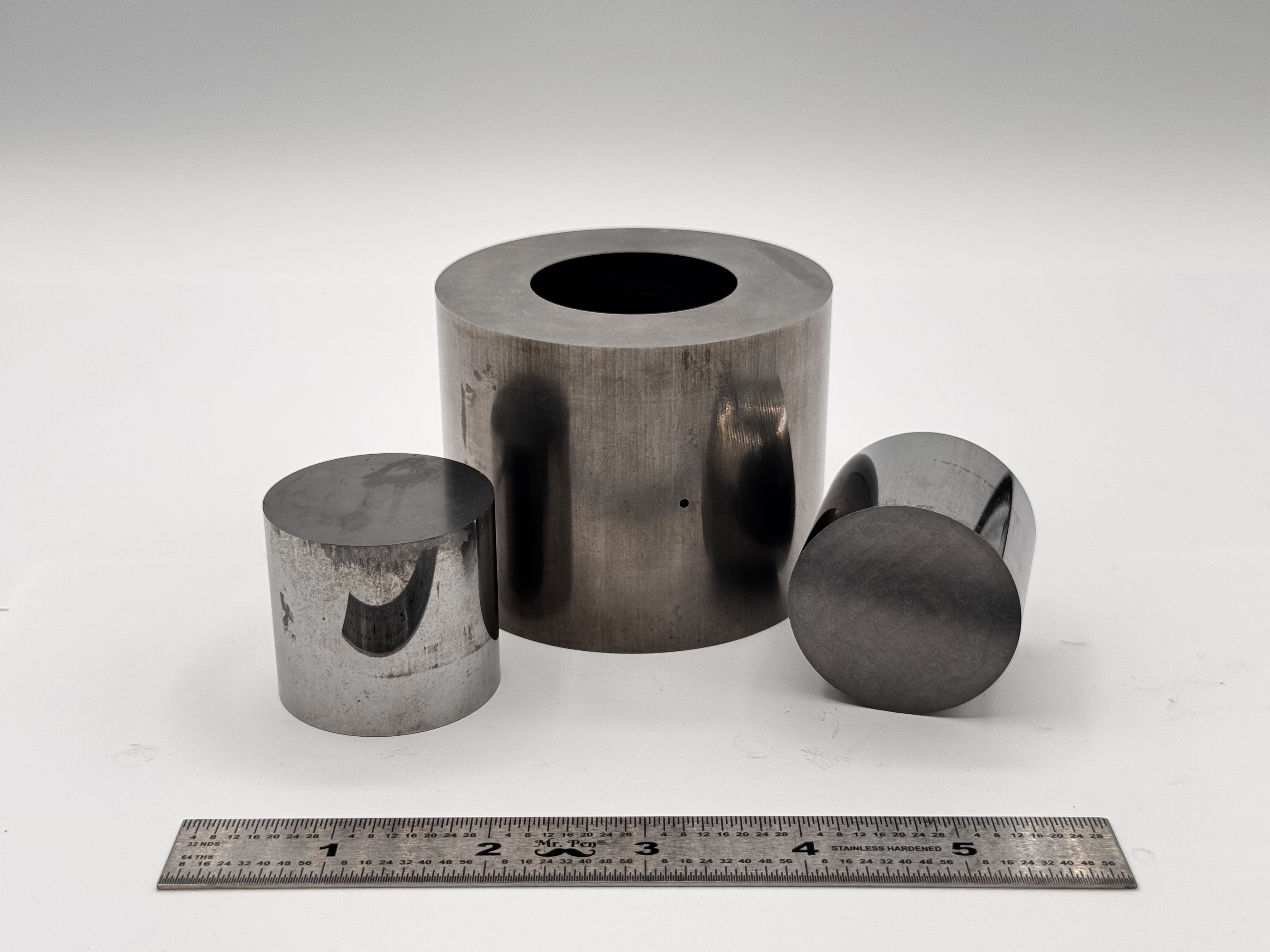 Tungsten Carbide Tooling
 Carbon Graphite Foil / Paper
 Carbon Felt and Yarn
 Spark Plasma Sintering Systems
 SPS/FAST Modeling Software
Advancing U.S. Nuclear Capabilities Through Domestic Production of Boron Carbide (B₄C)
As the United States accelerates its push toward energy independence and carbon reduction, nuclear power is once again taking center stage. Advanced reactor designs, small modular reactors (SMRs), and life extensions of existing plants are all gaining momentum. But behind this resurgence lies a critical question: can the U.S. reliably source the specialized materials required to support it?
One material in particular—nuclear-grade boron carbide (B₄C)—is emerging as a strategic linchpin.
The Quiet Backbone of Nuclear Safety
Boron carbide is not a household name, but in the nuclear world, it plays a vital role. Known for its exceptional hardness and neutron absorption capabilities, B₄C is widely used in control rods and shielding systems. These components regulate the nuclear fission process, ensuring reactors operate safely and efficiently.
However, not all boron carbide is created equal. For nuclear applications, it must meet stringent standards such as ASTM C750 and C751, which govern everything from chemical purity to density and performance under extreme conditions. These standards ensure the material can withstand the intense environment inside a reactor while performing its safety-critical function without failure.
Why Domestic Production Matters
For years, much of the global supply of nuclear-grade B₄C has been sourced internationally. While this may have once been sufficient, today’s geopolitical and economic realities are shifting the equation.
1. Accelerating Reactor Deployment
The U.S. is investing heavily in next-generation nuclear technologies, including SMRs and advanced reactors. These systems require highly specialized materials with consistent quality and traceability. Domestic production of ASTM-compliant B₄C reduces lead times, eliminates logistical bottlenecks, and supports faster deployment timelines.
2. Strengthening Supply Chain Security
Global supply chains are increasingly vulnerable to disruption—whether from geopolitical tensions, trade restrictions, or transportation challenges. Relying on foreign sources for a critical nuclear material introduces risk. By producing nuclear-grade boron carbide domestically, the U.S. gains greater control, transparency, and resilience in its supply chain.
3. Enhancing National Energy Resilience
Energy security is national security. A robust domestic nuclear sector requires a stable and dependable materials base. U.S.-based manufacturing of B₄C ensures continuity in reactor operations and maintenance, even during global uncertainty. This is especially important as nuclear energy plays a growing role in balancing intermittent renewable sources like wind and solar.
The Role of Field-Assisted Sintering (FAST) in Modern B₄C Production
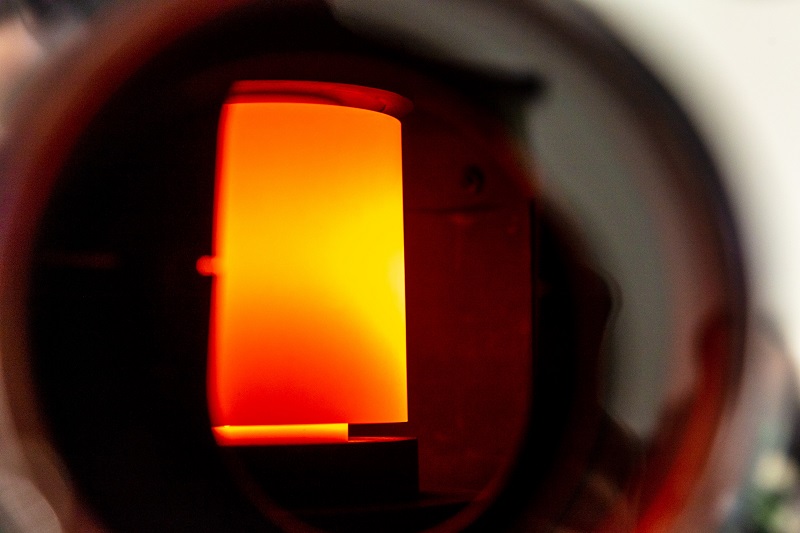
While supply chain strategy is critical, how nuclear-grade boron carbide is manufactured is just as important as where it is produced. This is where field-assisted sintering (FAST)—also known as spark plasma sintering (SPS)—becomes a game-changing technology.
Unlike conventional sintering methods that rely solely on prolonged high temperatures, FAST uses a combination of electric current, pressure, and rapid heating to densify powders into solid components. This advanced approach offers several key advantages for B₄C production:
Achieving High Density in a Difficult Material
Boron carbide is notoriously challenging to densify due to its strong covalent bonding and resistance to diffusion. FAST enables near-theoretical density with minimal porosity, which is essential for:
- Structural integrity in reactor environments
- Consistent neutron absorption performance
Improved Microstructural Control
FAST allows precise control over grain size and uniformity, resulting in:
- More predictable mechanical properties
- Enhanced reliability under extreme conditions
- Greater consistency required for ASTM C750/C751 compliance
Faster, More Efficient Manufacturing
Traditional sintering cycles can take many hours at extremely high temperatures. FAST can achieve comparable—or superior—results in a fraction of the time. This translates to:
- Shorter production cycles
- Lower energy consumption
- Greater scalability for domestic manufacturing
Technical Excellence Meets Strategic Necessity
The integration of advanced processing technologies like FAST is helping redefine what’s possible in U.S.-based materials manufacturing. Producing nuclear-grade boron carbide is no longer just about meeting specifications—it’s about doing so with precision, repeatability, and efficiency.
Domestic manufacturers leveraging FAST are not only capable of meeting ASTM standards but are also positioned to:
- Innovate faster
- Customize materials for next-generation reactor designs
- Compete globally in high-performance ceramics
A Timely Opportunity
The convergence of policy support, technological innovation, and market demand has created a unique moment for domestic manufacturing. Federal initiatives aimed at strengthening critical supply chains, combined with increased investment in nuclear energy, are opening the door for U.S.-based producers to step in and lead.
For companies with advanced materials capabilities—particularly those experienced in field-assisted sintering and high-performance ceramics processing—nuclear-grade boron carbide represents both a challenge and a significant opportunity.
Looking Ahead
As the nuclear industry evolves, so too must the infrastructure that supports it. Materials like boron carbide may operate behind the scenes, but their importance cannot be overstated. Ensuring a reliable, domestic supply of ASTM-compliant B₄C—produced using advanced methods like field-assisted sintering—is not just a technical consideration, but a strategic imperative.
In a world where energy demands are rising and global uncertainty persists, investing in the domestic production of critical nuclear materials is a step toward a more secure, resilient, and sustainable future.