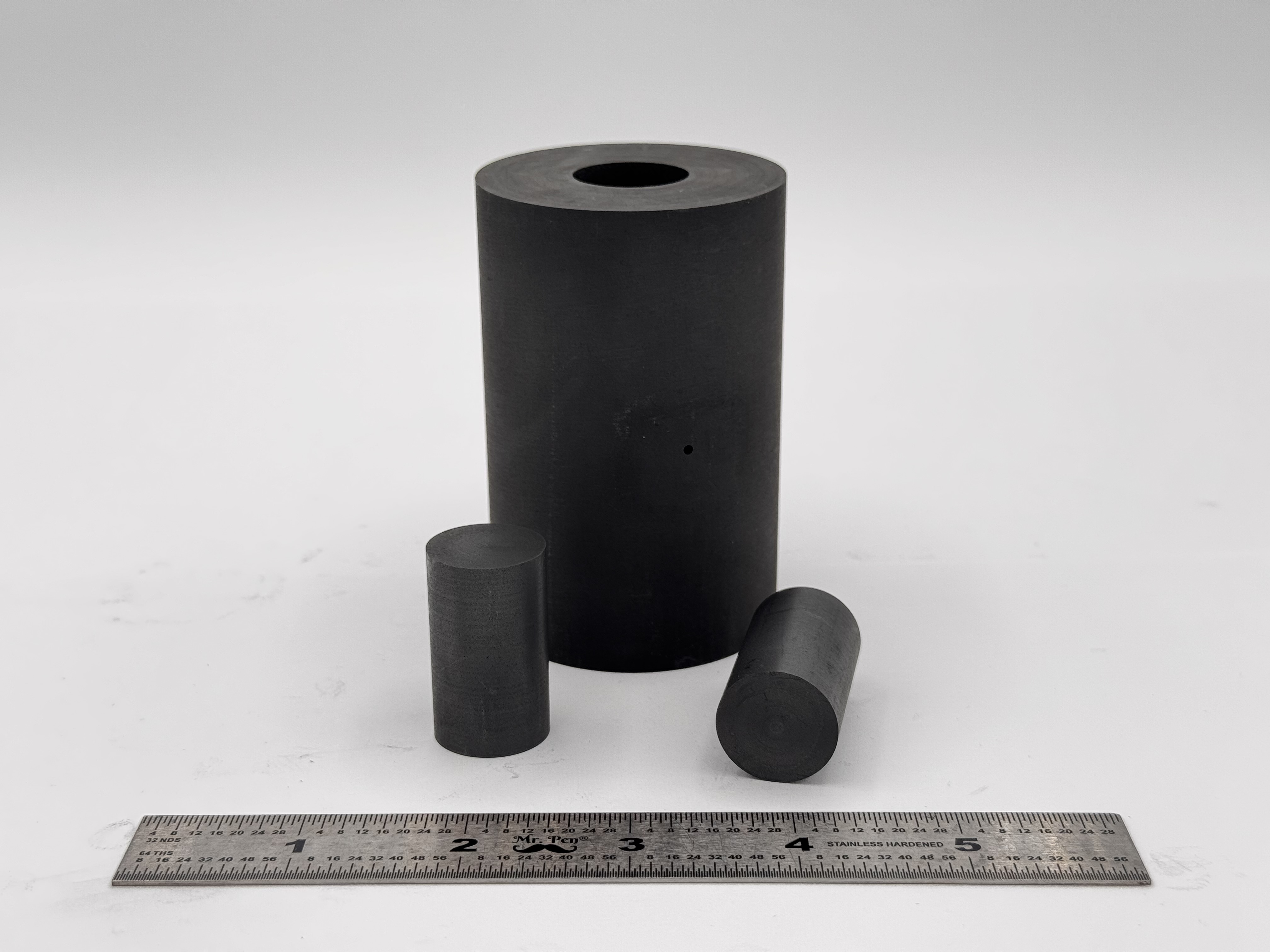
 High Strength SPS Graphite Tooling
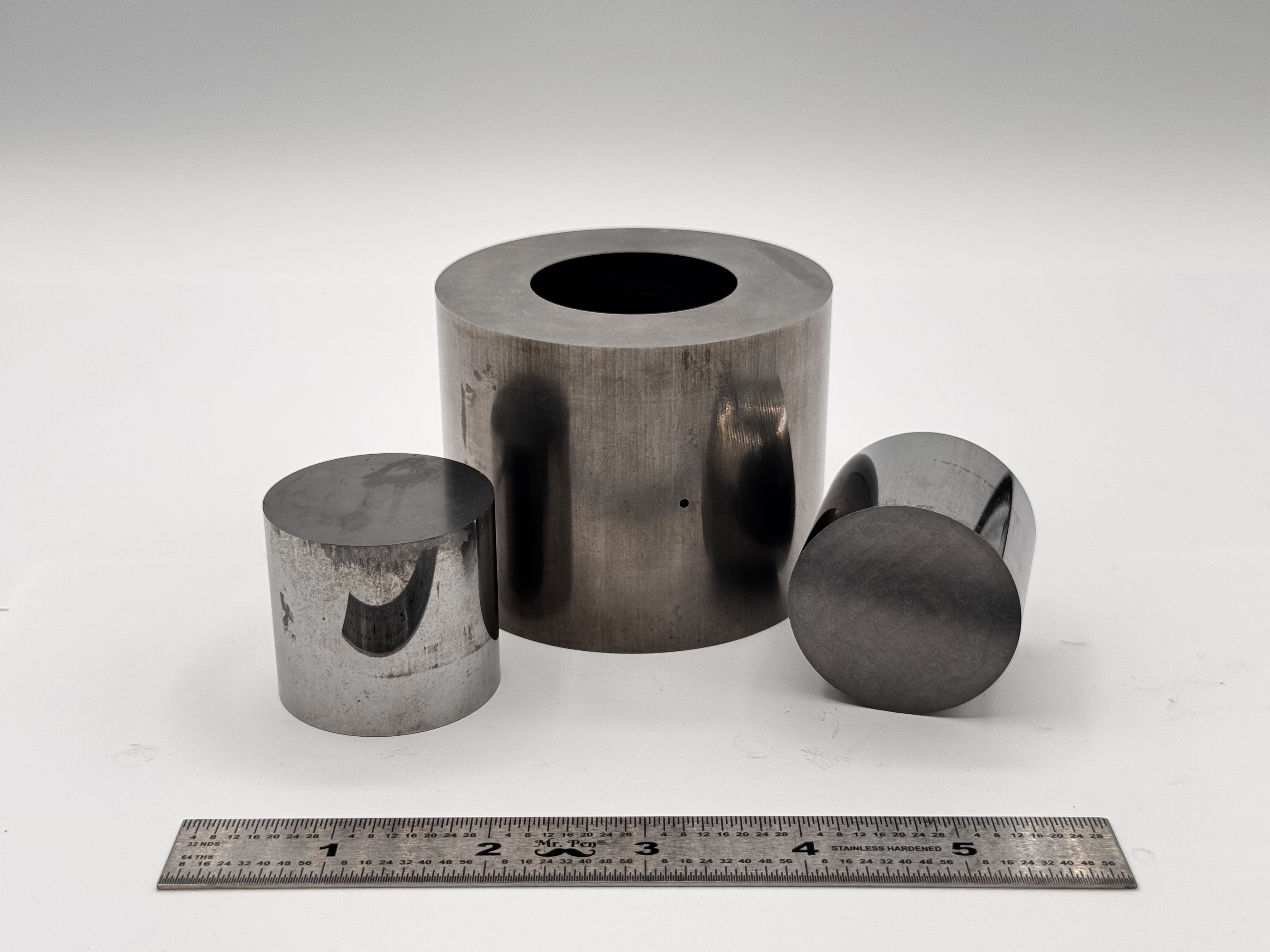 Tungsten Carbide Tooling
 Carbon Graphite Foil / Paper
 Carbon Felt and Yarn
 Spark Plasma Sintering Systems
 SPS/FAST Modeling Software
Advanced Hot Pressing: Engineering Materials That Conventional Manufacturing Can't Deliver
Modern manufacturing is pushing materials to their limits. Aerospace components must withstand extreme temperatures, electronic systems require precise thermal management, and industrial equipment must perform reliably under increasingly demanding conditions. As performance expectations rise, traditional manufacturing methods cannot always deliver the material properties required for these applications.
This is where advanced hot pressing offers a powerful solution.
By combining carefully controlled heat and mechanical pressure, advanced hot pressing enables manufacturers to consolidate challenging materials, reduce porosity, and engineer specialized microstructures. For companies developing next-generation ceramics, composites, and high-performance materials, this technology can help bridge the gap between material potential and real-world performance.
Why Are Some Advanced Materials So Difficult to Manufacture?
Not all materials respond well to conventional manufacturing techniques. Some ceramics require extremely high temperatures to achieve sufficient density, while certain metal powders and composites present challenges related to porosity, grain growth, or inconsistent consolidation.
Traditional pressureless sintering relies primarily on thermal energy to bond particles together. Although effective for many materials, it may not produce the desired density or microstructure in more demanding applications.
Manufacturers working with advanced materials frequently encounter challenges such as:
Residual porosity: Microscopic voids that can compromise strength, thermal conductivity, or other performance characteristics.
Excessive grain growth: High processing temperatures that can alter microstructure and negatively affect certain material properties.
Difficult-to-densify materials: Ceramics and refractory materials that resist consolidation using conventional methods.
Material incompatibility: Composite systems containing constituents with different thermal or mechanical characteristics.
Processing limitations: Materials that require a carefully controlled combination of temperature, pressure, and atmosphere to achieve desired results.
These challenges are particularly significant when components must operate under extreme thermal, mechanical, or environmental conditions.
Advanced hot pressing provides an additional level of processing control that can help manufacturers overcome many of these obstacles.
What Makes Advanced Hot Pressing Different?
Advanced hot pressing is a powder consolidation process that applies elevated temperatures and mechanical pressure simultaneously. Unlike conventional pressureless sintering, which depends on heat alone, hot pressing uses external pressure to promote particle rearrangement, deformation, and densification.
The combination of heat and pressure can accelerate consolidation, enabling certain materials to achieve high density at lower temperatures or shorter processing times than would otherwise be required.
The process generally involves placing powder or a prepared material compact into a suitable die assembly, applying a controlled load, and heating the material according to a carefully developed processing cycle.
Several variables influence the outcome, including temperature, pressure, dwell time, heating rate, material composition, and processing atmosphere.
The real advantage of advanced hot pressing is not simply achieving greater density. It is the ability to influence how a material's internal structure develops during manufacturing.
This distinction is particularly important for high-performance applications where microstructure directly affects component behavior.
Beyond Density: Engineering Materials from the Inside Out
A material's chemical composition is only part of what determines its performance. Its microstructure—including grain size, grain boundaries, phase distribution, and residual porosity—can significantly influence how it behaves under stress, heat, and other operating conditions.
Advanced hot pressing provides manufacturers with a valuable tool for controlling these characteristics.
Reducing Porosity for Improved Material Integrity
Porosity can create weak points within a material, potentially reducing mechanical strength or disrupting heat transfer.
By applying mechanical pressure during consolidation, advanced hot pressing promotes particle contact and reduces internal voids. Depending on the material and processing conditions, the result can be a denser, more uniform structure.
This is particularly valuable for advanced ceramics, where residual porosity can significantly influence mechanical and thermal properties.
Managing Grain Growth
Grain size plays an important role in determining material behavior. Depending on the application, smaller or more controlled grain structures may improve certain mechanical properties.
Because applied pressure can assist densification, advanced hot pressing may allow some materials to reach target densities with reduced thermal exposure compared with pressureless sintering.
This creates opportunities to limit unwanted grain growth while achieving the consolidation required for demanding applications.
Supporting Complex Material Systems
Advanced hot pressing is also useful for developing composite materials that combine multiple constituents to achieve specific properties.
Examples include ceramic-matrix composites, metal-matrix composites, and other engineered powder systems.
Successful processing requires careful consideration of material compatibility, thermal expansion, phase stability, and possible reactions between constituents.
With appropriate process development, hot pressing can help produce consolidated structures that would be difficult to manufacture through conventional routes.
Where Advanced Hot Pressing Makes the Greatest Impact
The value of advanced hot pressing becomes especially apparent in industries where material performance directly affects equipment reliability, efficiency, or service life.
Aerospace and Defense: Materials for Extreme Conditions
Aerospace and defense applications frequently require materials capable of tolerating high temperatures, mechanical stresses, and demanding environmental conditions.
Advanced ceramics, refractory materials, and specialized composites are attractive because of their potential combinations of thermal stability, hardness, wear resistance, and other properties.
Advanced hot pressing can support the development and manufacturing of materials for applications such as thermal management systems, wear-resistant components, and high-temperature assemblies.
The ability to achieve controlled density and microstructure can be especially important when component performance must remain consistent under demanding operating conditions.
Electronics: Supporting Better Thermal Management
As electronic devices and power systems become more powerful and compact, managing heat becomes increasingly important.
Materials used for thermal management must often combine high thermal conductivity with suitable electrical, mechanical, and dimensional properties.
Advanced hot pressing can be used to consolidate certain ceramic and composite materials intended for electronic packaging, heat spreaders, and related applications.
Reducing porosity and controlling microstructure may help improve thermal transport in suitable material systems, although final performance depends heavily on composition and processing conditions.
Energy: Advancing Materials for Demanding Operating Environments
Energy technologies increasingly depend on materials that can operate under high temperatures, corrosive environments, or significant mechanical loads.
Advanced hot pressing supports research and manufacturing involving specialized ceramics, refractory compounds, and engineered composites.
Potential applications include high-temperature structural materials, wear-resistant components, and materials developed for advanced energy conversion systems.
For emerging energy technologies, the ability to consolidate experimental powder formulations can also accelerate material evaluation and development.
Industrial Manufacturing: Improving Wear and Performance Characteristics
Cutting tools, industrial dies, wear components, and other demanding applications often rely on materials with carefully engineered hardness, toughness, and thermal properties.
Advanced hot pressing is used in the processing of various hard materials and ceramic systems where density and microstructure influence performance.
By developing appropriate processing parameters, manufacturers can pursue improved material consistency and application-specific properties.
When Conventional Sintering Is Not Enough
Advanced hot pressing is not necessarily the best solution for every material or component. Conventional sintering remains highly effective and economical for many manufacturing applications.
However, hot pressing becomes particularly attractive when material requirements exceed what pressureless processing can readily achieve.
For example, a manufacturer may need to produce a ceramic component with very low residual porosity while limiting the grain growth associated with prolonged high-temperature exposure.
Another manufacturer may be developing a novel composite that requires pressure-assisted consolidation to achieve sufficient particle bonding.
In these situations, advanced hot pressing offers an alternative processing route.
The decision often depends on several considerations:
Required final density and material properties
Sensitivity to grain growth or phase transformations
Material composition and consolidation behavior
Component geometry and dimensional requirements
Production volume and processing economics
Because conventional hot pressing typically applies pressure along one primary axis, component geometry and tooling design can influence process suitability.
Understanding these tradeoffs is essential when selecting the most effective manufacturing approach.
The Importance of Process Development in Advanced Hot Pressing
Achieving successful consolidation requires more than selecting a temperature and applying pressure.
Two materials with similar compositions may behave differently because of variations in powder particle size, particle distribution, purity, surface chemistry, or initial packing density.
Even relatively small processing changes can influence final density, microstructure, and material properties.
For this reason, advanced hot pressing often involves a systematic process-development approach.
Engineers must evaluate how temperature, pressure, heating rates, hold times, and atmosphere interact with the characteristics of a specific material.
A successful processing cycle must balance several competing objectives: achieving sufficient densification, preserving desirable microstructural characteristics, limiting unwanted reactions, and maintaining practical manufacturing efficiency.
This is where specialized advanced materials expertise becomes just as important as the processing equipment itself.
From Material Research to Real-World Manufacturing
One of the most exciting aspects of advanced hot pressing is its role in helping new materials move beyond the laboratory.
Researchers continually develop promising ceramic compositions, engineered composites, and novel powder systems. However, demonstrating desirable properties in a small experimental sample is only the beginning.
To become commercially useful, these materials must be manufactured with repeatable properties and practical processing requirements.
Advanced hot pressing can play an important role in this transition by providing a controlled method for evaluating consolidation behavior and producing samples for further characterization.
For manufacturers, this creates opportunities to investigate materials that may offer improved thermal performance, greater wear resistance, or other specialized characteristics.
For researchers, it provides a pathway to study the relationship between processing conditions, microstructure, and material performance.
And for industries seeking increasingly capable components, it expands the range of materials that can be considered for demanding applications.
Why Specialized Advanced Hot Pressing Services Matter
Advanced materials manufacturing rarely follows a universal formula. Each material system presents its own challenges, and successful consolidation often requires carefully developed processing conditions.
Working with a specialized processing partner can help manufacturers and research organizations evaluate material behavior, identify suitable consolidation strategies, and address technical challenges during development.
Cal Nano supports advanced materials innovation through specialized processing technologies and expertise in material consolidation.
For organizations investigating difficult-to-densify materials, the right processing approach can be critical to achieving the density, microstructure, and performance characteristics required for their applications.
Rather than treating consolidation as simply another manufacturing step, advanced materials developers increasingly recognize it as an essential part of material engineering.
Advanced Hot Pressing Is Expanding What's Possible in Materials Manufacturing
The future of advanced manufacturing depends on more than developing new material compositions. It also requires the ability to transform those materials into reliable, functional components.
Advanced hot pressing helps address this challenge by combining thermal energy and mechanical pressure to consolidate materials that may be difficult to process through conventional methods.
From high-performance ceramics and engineered composites to specialized materials for aerospace, electronics, and energy applications, the technology offers opportunities to improve densification and influence material microstructure.
As manufacturers continue pursuing stronger, more thermally capable, and more reliable materials, advanced hot pressing will remain an important tool in the development of next-generation material solutions.
Explore advanced material processing solutions with Cal Nano to learn how specialized consolidation technologies can support your material development and manufacturing goals.