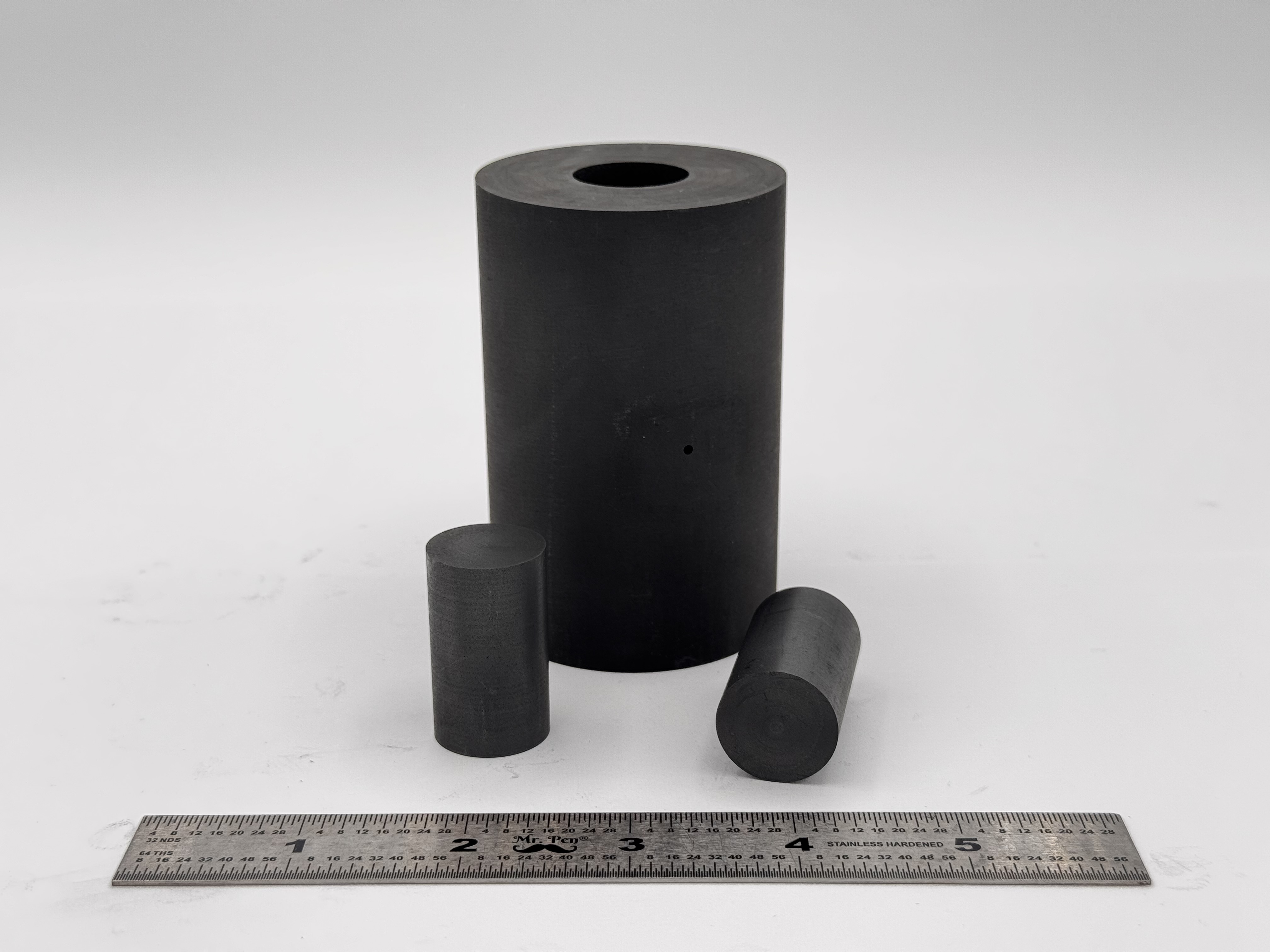
 High Strength SPS Graphite Tooling
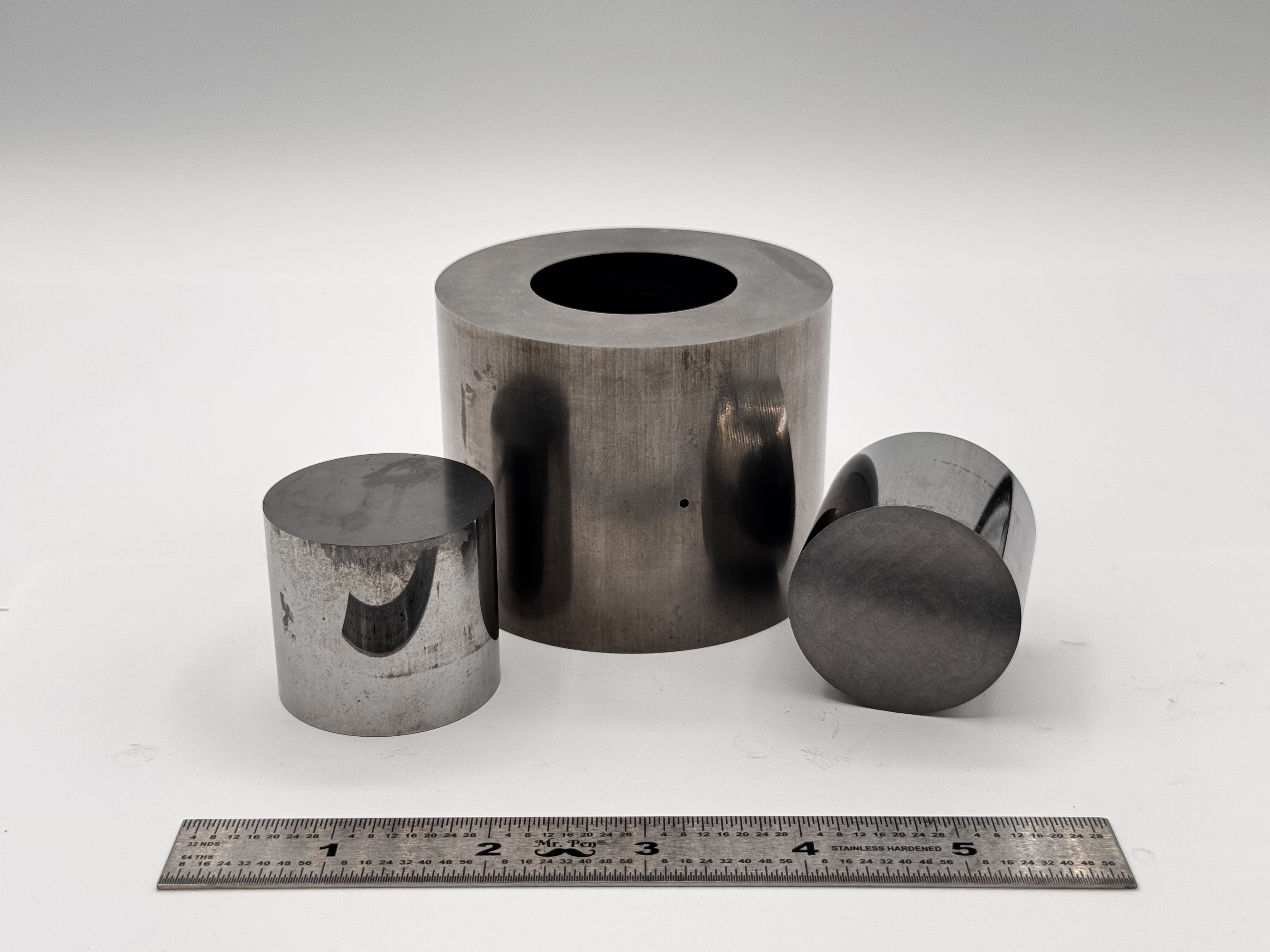 Tungsten Carbide Tooling
 Carbon Graphite Foil / Paper
 Carbon Felt and Yarn
 Spark Plasma Sintering Systems
 SPS/FAST Modeling Software
From Laboratory Breakthrough to Production-Ready Material: Why Field Assisted Sintering Services Matter
Developing an innovative material is one thing. Transforming that material into a reliable, high-performance component that can be manufactured consistently is an entirely different challenge.
Across industries such as aerospace, defense, energy, electronics, and advanced manufacturing, researchers are developing materials with extraordinary potential. High-entropy alloys promise new combinations of strength and durability. Advanced ceramics offer exceptional thermal and wear resistance. Nanostructured materials open the door to improved mechanical, electrical, and thermal properties.
But even the most promising material discovery faces a critical question: Can it be manufactured without losing the properties that make it valuable?
This is where field assisted sintering services become an important part of the innovation process.
By providing a pathway from experimental powders to dense, functional materials, Field Assisted Sintering Technology (FAST), also commonly associated with Spark Plasma Sintering (SPS), helps researchers and manufacturers address one of the biggest obstacles in advanced materials development: moving beyond the laboratory.
The Hidden Challenge in Advanced Materials Development
Materials science is advancing rapidly, but developing a promising formulation does not automatically mean that it can be manufactured into a useful component.
A researcher might develop a new alloy with exceptional theoretical strength. A manufacturer might identify a ceramic composition capable of surviving extreme temperatures. An engineering team might discover that a nanostructured material offers superior thermal conductivity.
Yet these discoveries often encounter significant challenges during consolidation and manufacturing.
Powdered materials must be transformed into solid components while maintaining the characteristics responsible for their performance.
Unfortunately, conventional manufacturing processes can introduce unwanted changes.
Extended exposure to elevated temperatures may cause excessive grain growth, alter phase distributions, or promote undesirable chemical reactions. Incomplete consolidation can leave residual porosity that compromises strength, conductivity, or durability.
Even when a material performs exceptionally well in a small laboratory sample, reproducing those results in larger components can introduce new complications.
This creates what is often described as the gap between material discovery and manufacturing readiness.
Field assisted sintering services can help bridge that gap by giving researchers and manufacturers greater control over how advanced powders become solid materials.
Why Manufacturing Readiness Begins with the Right Consolidation Process
The properties of an advanced material depend on much more than its chemical composition.
Its microstructure, density, grain boundaries, phase distribution, and internal defects all influence how it performs.
Two components manufactured from the same powder can exhibit significantly different properties depending on how they were processed.
That makes powder consolidation a critical stage in material development.
Field Assisted Sintering Technology combines electrical resistance heating with applied mechanical pressure to consolidate powders into dense solid materials.
Unlike traditional furnace sintering, FAST typically uses electrically conductive tooling to generate rapid heating while simultaneously applying uniaxial pressure.
This combination can significantly shorten processing cycles and reduce the thermal exposure required for densification.
For material developers, the advantages extend beyond processing speed.
FAST provides an opportunity to investigate how carefully controlled processing conditions influence the final properties of a material.
Rather than simply determining whether a powder can be consolidated, researchers can begin identifying the conditions that produce the most desirable results.
That distinction is essential when moving toward manufacturing readiness.
How Field Assisted Sintering Services Help Move Materials Beyond the Laboratory
Professional field assisted sintering services can support several stages of advanced material development, from early feasibility studies to process optimization and prototype production.
1. Turning Experimental Powders into Testable Materials
Many advanced materials begin as small quantities of specially formulated powder.
Before engineers can evaluate mechanical strength, thermal conductivity, hardness, or other properties, that powder must be consolidated into a form suitable for testing.
FAST offers a method for producing dense samples from a variety of metallic, ceramic, and composite powders.
This is particularly valuable when working with novel materials for which established manufacturing procedures do not yet exist.
Instead of investing immediately in conventional production tooling or extensive furnace processing, researchers can use field assisted sintering to investigate whether a material can be consolidated successfully.
The resulting samples provide a foundation for further testing and development.
2. Preserving the Properties That Make a Material Innovative
One of the greatest concerns in advanced material development is preserving the microstructure responsible for desirable performance characteristics.
Consider nanostructured materials.
Their extremely fine grain sizes can contribute to improved strength, hardness, and other properties. However, prolonged heating can cause those grains to grow, potentially reducing the benefits of the original structure.
The rapid heating and relatively short dwell times possible with FAST can help limit grain growth during consolidation.
This capability is also relevant to certain high-entropy alloys, specialty ceramics, and engineered composites whose performance depends on carefully controlled microstructures.
Although results vary by material, the ability to reduce unnecessary thermal exposure gives engineers another tool for protecting valuable material characteristics.
3. Optimizing Materials for Real-World Performance
Producing a dense sample is only the beginning.
A material intended for aerospace components may need to demonstrate exceptional strength at elevated temperatures. An electronic material may require precise electrical conductivity. An industrial wear component may need to withstand repeated mechanical loading.
Achieving these properties often requires adjustments to the consolidation process.
Field assisted sintering services can support process development by evaluating variables such as:
Heating rates and peak processing temperatures.
Applied pressure and pressure timing.
Dwell time at the consolidation temperature.
Processing atmosphere and cooling conditions.
Powder characteristics and tooling configurations.
By systematically adjusting these variables, engineers can investigate how processing conditions affect density, microstructure, and functional performance.
This information helps establish a more reliable foundation for future manufacturing.
The Difference Between Making One Successful Sample and Making a Repeatable Product
A successful laboratory experiment demonstrates possibility.
A repeatable manufacturing process demonstrates something much more valuable: consistency.
This distinction is particularly important for organizations considering the commercial potential of a new material.
Imagine a research team develops a specialized ceramic with outstanding wear resistance. The first consolidated sample performs exceptionally well.
But what happens when the team needs ten samples? Or fifty? What happens when the component dimensions increase?
Will each sample exhibit comparable density, hardness, and microstructure?
Can the process maintain consistent results across multiple production cycles?
These are the questions that determine whether an innovative material can progress toward commercial use.
Professional field assisted sintering services help address these challenges by connecting material development with process engineering.
Through documented processing parameters, repeatability studies, and material characterization, manufacturers can begin evaluating whether laboratory results can be reproduced consistently.
This does not mean every FAST process can be scaled directly to high-volume manufacturing. Equipment capacity, tooling geometry, temperature uniformity, and production economics must all be considered.
However, establishing a repeatable consolidation process is an important step toward determining a material's commercial viability.
Why FAST Is Especially Valuable for Emerging Material Technologies
Some of the most exciting developments in materials science involve compositions that are difficult to manufacture using established techniques.
These emerging materials often require specialized processing strategies before their full potential can be evaluated.
High-Entropy Alloys: From Novel Compositions to Functional Components
High-entropy alloys contain multiple principal elements and can exhibit unusual combinations of mechanical and physical properties.
Researchers are investigating these materials for applications involving high temperatures, wear resistance, corrosion resistance, and demanding mechanical environments.
However, achieving the desired phase composition and microstructure can be challenging.
Field assisted sintering provides a powder consolidation approach that can help researchers evaluate these alloys while limiting prolonged high-temperature exposure.
For organizations developing new alloy systems, access to FAST capabilities can accelerate the transition from experimental compositions to consolidated materials suitable for testing.
Advanced Ceramics: Overcoming Difficult Consolidation Requirements
Technical ceramics offer excellent hardness, thermal stability, and resistance to harsh environments.
Unfortunately, many advanced ceramics are difficult to densify, and some require high processing temperatures.
FAST can provide an alternative consolidation method for suitable ceramic materials, potentially reducing processing times while achieving high density.
This makes the technology useful for evaluating ceramic formulations intended for wear-resistant components, thermal management systems, and specialized industrial applications.
Nanomaterials: Protecting Performance at the Microscopic Level
Nanostructured materials illustrate why manufacturing methods matter so much.
The properties that make these materials attractive are often directly related to their extremely fine microstructures.
If consolidation causes excessive grain growth, the final component may no longer exhibit the characteristics researchers intended to achieve.
By enabling rapid heating and carefully controlled processing conditions, FAST can help preserve fine-grained structures in suitable materials.
This makes field assisted sintering services an important resource for researchers exploring the practical applications of nanotechnology.
From Prototype to Production: What Manufacturers Need to Consider
Moving an advanced material toward commercial manufacturing requires more than successful consolidation.
Several additional factors influence whether the process can support real-world applications.
Component Size and Geometry
Conventional FAST equipment typically applies uniaxial pressure, which can limit the geometries produced directly. Larger or more complex components may require specialized tooling or additional machining.
Temperature and Density Uniformity
As component dimensions increase, maintaining uniform processing conditions becomes more challenging. Engineers must consider thermal gradients, pressure distribution, and differences in densification throughout the component.
Material Testing and Validation
Density measurements, microscopy, mechanical testing, and other characterization methods help determine whether the consolidated material meets its intended performance requirements.
Production Economics
Tooling costs, cycle times, material utilization, component size, and production volume all influence whether FAST is economically appropriate for a particular application.
These considerations reinforce why material development and manufacturing engineering must work together.
The goal is not simply to produce an impressive laboratory sample. It is to understand whether that material can be manufactured reliably, economically, and at the scale required for its intended application.
The Value of Partnering with a Specialized Field Assisted Sintering Services Provider
Advanced materials development frequently requires expertise and equipment that are not available within a company's existing manufacturing operation.
Investing in specialized consolidation equipment may not be practical when a material is still in the research or prototype stage.
Working with a field assisted sintering services provider can give organizations access to specialized processing capabilities without immediately committing to the capital investment associated with bringing the technology in-house.
More importantly, experienced providers can contribute valuable knowledge about material behavior, processing limitations, tooling considerations, and opportunities for process optimization.
For manufacturers evaluating FAST services, the most useful questions often go beyond equipment specifications.
Can the provider work with unfamiliar or experimental powder compositions? Can processing parameters be adjusted to support specific material properties? Is there a pathway for evaluating repeatability and larger component sizes? Can the provider support the material characterization needed to make informed development decisions?
These questions help distinguish basic consolidation capabilities from the broader technical support required for advanced material development.
CalNano: Supporting the Next Generation of Advanced Materials
As new materials continue to emerge, manufacturers need processing technologies capable of keeping pace with innovation.
CalNano operates in this specialized field, with a focus on advanced material processing through Field Assisted Sintering Technology.
For researchers, engineers, and manufacturers exploring new material formulations, specialized FAST capabilities can provide an important connection between powder development and functional material evaluation.
Whether the objective is investigating a new alloy, consolidating an advanced ceramic, or exploring the potential of a nanostructured material, the right processing approach can help determine whether a promising concept has a practical future.
The value of field assisted sintering extends beyond achieving high density or reducing processing time. It lies in the opportunity to develop a better understanding of how processing conditions influence material performance—and how that knowledge can support future manufacturing decisions.
Innovation Doesn't End in the Laboratory
The development of a groundbreaking material is an important scientific achievement. But its true industrial value emerges when that material can be transformed into a component that performs reliably in its intended environment.
Bridging the distance between discovery and manufacturing requires specialized equipment, process knowledge, and careful evaluation of material properties.
Field assisted sintering services offer a practical pathway for advancing experimental materials toward functional prototypes and manufacturing-ready processes.
By combining rapid powder consolidation with controlled processing conditions, FAST helps researchers and manufacturers explore new possibilities in advanced ceramics, specialty alloys, nanomaterials, and engineered composites.
For organizations seeking to move promising material concepts beyond the laboratory, CalNano's field assisted sintering capabilities offer a valuable starting point.
Explore CalNano's field assisted sintering services to discover how advanced powder consolidation can support your next material development project.