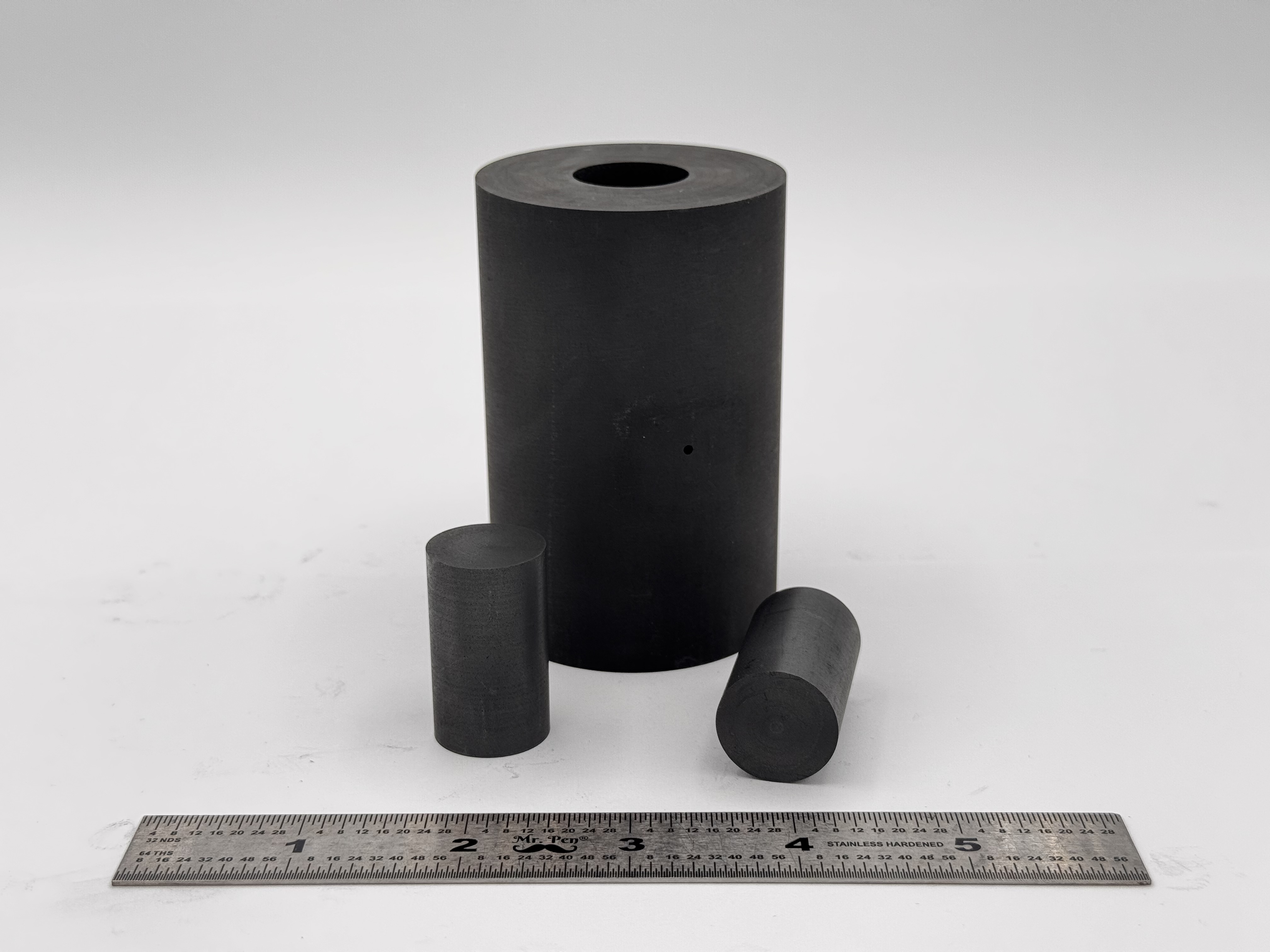
 High Strength SPS Graphite Tooling
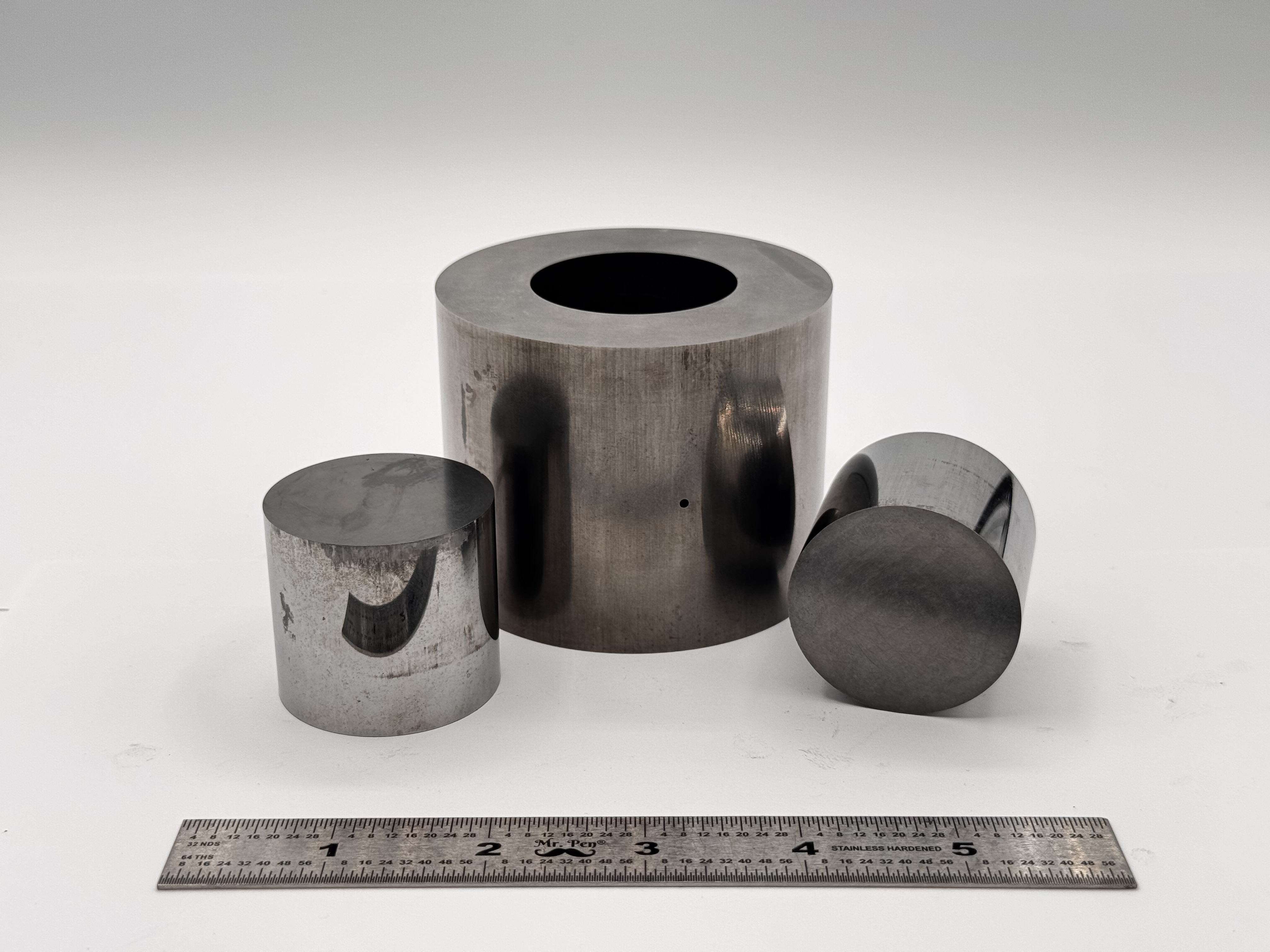 Tungsten Carbide Tooling
 Carbon Graphite Foil / Paper
 Carbon Felt and Yarn
 Spark Plasma Sintering Systems
 SPS/FAST Modeling Software
California Plasma Sintering Service: Where Advanced Materials Meet Next-Generation Manufacturing
In advanced manufacturing, the difference between a promising material and a breakthrough product often comes down to how that material is processed. Engineers can develop extraordinary powder compositions, experiment with innovative alloys, and design components for increasingly demanding applications. However, without the right consolidation technology, even the most promising materials may never achieve their intended performance.
That is where advanced plasma sintering technology is changing the possibilities.
For manufacturers, research institutions, and engineering teams searching for a reliable California plasma sintering service, California Nanotechnologies offers specialized expertise in Spark Plasma Sintering (SPS), also known as Field Assisted Sintering Technology (FAST). This advanced powder consolidation process creates opportunities to produce high-performance materials while addressing some of the limitations associated with traditional sintering methods.
From aerospace components and advanced ceramics to experimental alloys and specialized industrial materials, plasma sintering is helping bridge the gap between materials research and practical manufacturing.
Why Conventional Sintering Can Limit Advanced Material Performance
Traditional sintering has been used for decades to transform powdered materials into solid components. Generally, the process involves heating compacted powders to elevated temperatures, allowing particles to bond through diffusion without fully melting the bulk material.
Although conventional sintering remains valuable for numerous industrial applications, it presents challenges when processing materials with demanding structural or performance requirements.
Extended heating cycles can encourage excessive grain growth, potentially changing the properties that make an advanced material desirable. Certain compositions require extremely high processing temperatures, while others may be susceptible to unwanted chemical reactions, phase transformations, or incomplete densification.
These challenges become particularly significant when working with nanostructured materials, advanced ceramics, refractory metals, and specialized alloys.
Manufacturers increasingly need processing methods that provide greater control over material consolidation without unnecessarily compromising the original characteristics of the powder.
Spark Plasma Sintering offers an alternative by combining electrical current, controlled pressure, and rapid thermal processing to consolidate materials efficiently.
Rather than relying exclusively on conventional furnace heating, SPS introduces an electrically assisted approach that can shorten processing cycles and expand the possibilities for challenging material systems.
What Makes Spark Plasma Sintering Different?
Despite its name, Spark Plasma Sintering does not necessarily involve the formation of plasma within the material. The terminology is historically established, while the process itself is more accurately described as an electrically assisted pressure sintering technique.
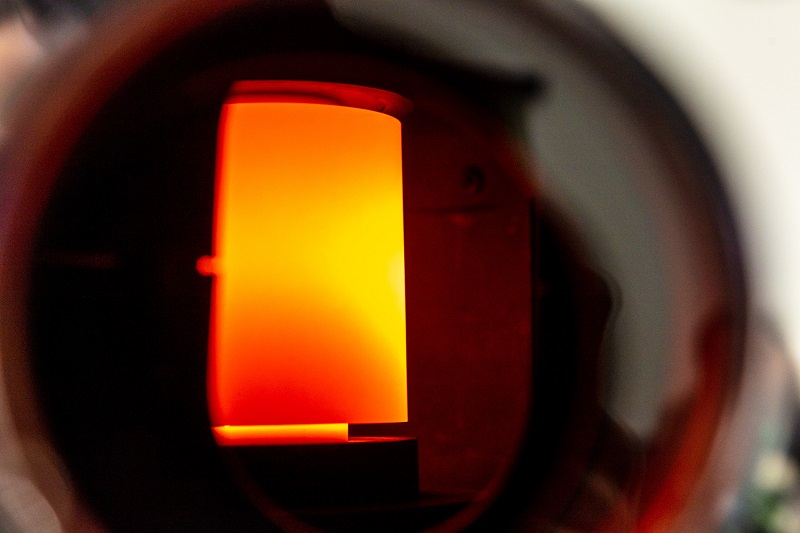
During SPS processing, powdered material is typically placed inside a conductive die assembly, often made from graphite. Uniaxial pressure is applied while pulsed direct current passes through the electrically conductive tooling and, depending on the material, potentially through the sample itself.
The resulting electrical resistance heating enables rapid temperature increases and controlled consolidation.
Unlike conventional furnace sintering, which may require lengthy heating and cooling cycles, SPS can achieve substantially faster processing under suitable conditions.
This difference is especially important when working with materials whose microstructures are sensitive to prolonged exposure to high temperatures.
By carefully controlling temperature, pressure, heating rate, and holding time, engineers can develop processing conditions tailored to the characteristics of individual powder systems.
The result is a versatile manufacturing approach that supports both established industrial materials and experimental compositions.
A California Plasma Sintering Service That Supports Material Innovation
California has long been a center for aerospace engineering, semiconductor development, advanced manufacturing, and materials science. These industries depend on specialized processing capabilities to develop components that can withstand demanding operating environments.
A qualified California plasma sintering service provides more than access to sophisticated equipment. It offers an opportunity to investigate how processing conditions influence the structure, density, and performance of advanced materials.
California Nanotechnologies works with organizations exploring specialized powder metallurgy and advanced material consolidation applications.
Through its expertise in SPS/FAST processing, the company supports projects that require careful consideration of material characteristics, processing parameters, and performance objectives.
For engineers developing new products, access to advanced sintering capabilities can help answer important questions.
Can a difficult-to-process powder be consolidated into a dense solid? Can processing conditions be adjusted to reduce unwanted grain growth? Is it possible to produce a specialized material composition without the extended thermal exposure associated with conventional methods?
These questions are central to the development of next-generation materials.
A knowledgeable processing partner can help organizations investigate potential solutions while reducing the need to establish specialized sintering capabilities internally.
Preserving Microstructure While Achieving High Material Density
One of the most compelling advantages of Spark Plasma Sintering is its potential to achieve high densification while limiting unnecessary microstructural changes.
For many advanced materials, performance depends not only on chemical composition but also on the arrangement and size of internal grains.
Fine-grained materials may exhibit desirable mechanical, electrical, magnetic, or thermal characteristics. However, extended exposure to elevated temperatures can cause grains to grow, potentially reducing the benefits associated with the original powder structure.
SPS offers opportunities to address this challenge through rapid heating and relatively short dwell times.
Because the material may spend less time at elevated temperatures, engineers can sometimes achieve substantial consolidation while limiting grain coarsening.
This capability is particularly valuable for nanostructured materials, where maintaining a refined microstructure may be essential to achieving desired properties.
The relationship between density, grain size, and performance varies by material. Nevertheless, the ability to carefully adjust sintering conditions provides engineers with additional flexibility during materials development.
For organizations evaluating a California plasma sintering service, this combination of densification and microstructural control can be a significant consideration.
Expanding Possibilities for Advanced Ceramics
Advanced ceramics are essential to industries that require exceptional hardness, wear resistance, thermal stability, or electrical performance.
However, their processing characteristics can make manufacturing particularly challenging.
Certain ceramic compositions require extremely high temperatures to achieve adequate densification. Others may experience undesirable grain growth or chemical changes during conventional sintering.
Spark Plasma Sintering provides an alternative approach for consolidating selected ceramic powder systems.
By combining pressure with rapid electrical heating, SPS can support densification at processing conditions that may differ substantially from those required by traditional furnace methods.
Applications may involve structural ceramics, electrically functional ceramics, thermal management materials, and specialized research compositions.
For example, ceramics intended for demanding industrial environments may require a combination of high density, controlled porosity, and specific mechanical characteristics.
SPS allows researchers and manufacturers to investigate processing strategies that help achieve these objectives.
As advanced ceramics continue to find applications in aerospace, electronics, energy systems, and industrial equipment, specialized sintering capabilities remain an important resource for materials development.
Creating New Opportunities for High-Performance Alloys
Advanced alloys represent another important application area for plasma sintering technology.
Traditional metal processing methods are not always suitable for materials containing elements with significantly different melting points, complex phase relationships, or unusual microstructural requirements.
Powder metallurgy offers an alternative by allowing engineers to combine selected materials in powdered form before consolidation.
Spark Plasma Sintering can then be used to investigate methods of transforming these powders into dense solid materials.
This approach is particularly relevant to refractory metals, high-entropy alloys, and other specialized metallic compositions.
High-entropy alloys, for example, may contain multiple principal elements rather than relying on a single dominant base metal. Their complex compositions create opportunities for developing materials with distinctive combinations of strength, thermal stability, corrosion resistance, and other properties.
However, achieving a desired composition does not automatically guarantee successful consolidation.
Processing conditions must be carefully selected to manage densification, phase development, and microstructural evolution.
SPS provides a valuable platform for investigating these relationships.
For aerospace and industrial engineering teams, the technology can help accelerate the evaluation of materials intended for demanding environments.
Supporting the Transition from Materials Research to Manufacturing
Developing a new material is only the beginning.
A composition that performs well in laboratory testing must eventually demonstrate that it can be processed consistently and manufactured into useful forms.
This transition often creates challenges for organizations working with advanced materials.
Research teams may successfully produce small powder batches but lack access to specialized equipment needed for consolidation. Manufacturers may identify promising materials but remain uncertain about processing requirements, achievable densities, or production feasibility.
A California plasma sintering service can help connect these stages of development.
Through controlled processing trials, engineers can evaluate how different sintering parameters influence material behavior.
Initial experiments may focus on determining whether a powder can be successfully consolidated. Subsequent work can investigate processing repeatability, microstructural characteristics, and the potential for larger or more complex components.
This progression is important because successful laboratory consolidation does not automatically establish commercial manufacturing readiness.
Tooling requirements, geometry, equipment capacity, material behavior, and quality expectations must all be considered when evaluating scalability.
California Nanotechnologies' experience with advanced powder processing and consolidation technologies makes the company a resource for organizations navigating these technical questions.
Why Processing Expertise Matters as Much as Equipment
Spark Plasma Sintering is a sophisticated technology, but successful results depend on more than the capabilities of the sintering system itself.
Each material presents unique processing considerations.
Powder particle size, morphology, chemical composition, surface condition, and packing behavior can influence consolidation. Die design, applied pressure, temperature measurement, heating rates, and cooling conditions also affect the final outcome.
A processing cycle suitable for one material may be inappropriate for another.
For example, certain ceramics may require carefully controlled heating profiles to achieve densification without excessive grain growth. Metallic systems may present different challenges involving phase stability, thermal expansion, or reactions with tooling materials.
Even small changes in processing conditions can affect density, microstructure, and subsequent material performance.
This is why selecting a California plasma sintering service should involve evaluating technical experience rather than equipment availability alone.
Organizations benefit from working with specialists who understand the relationships between powder characteristics, processing conditions, and final material properties.
California Nanotechnologies combines advanced processing capabilities with materials-focused expertise to support customers pursuing demanding research and manufacturing objectives.
Applications Across Demanding Industrial Sectors
The versatility of Spark Plasma Sintering makes it relevant to a wide range of industries.
In aerospace, advanced consolidation techniques support research into lightweight, high-strength, and temperature-resistant materials. Components exposed to thermal cycling, mechanical loading, or harsh operating environments often require carefully engineered material properties.
Within the energy sector, SPS can support development of specialized materials used in thermal management, energy conversion, and other demanding applications.
Electronics manufacturers and researchers may investigate electrically or thermally functional ceramics, composite materials, and specialized conductive systems.
Industrial tooling developers can explore advanced hard materials and wear-resistant compositions intended for challenging operating conditions.
Research institutions also rely on specialized sintering technologies to evaluate experimental materials that may not be practical to manufacture using conventional processing methods.
Although the requirements vary across industries, the underlying objective is often similar: transforming advanced material concepts into consolidated forms suitable for meaningful testing and further development.
A capable California plasma sintering service provides access to the processing technology needed to pursue these objectives.
The Future of Advanced Materials Depends on Better Processing
The next generation of manufacturing innovation will depend on more than discovering new chemical compositions.
It will require developing practical methods to transform those compositions into reliable, high-performance materials.
As industries pursue greater energy efficiency, improved thermal resistance, longer component service life, and increasingly specialized material properties, conventional processing methods may not always provide the flexibility required.
Spark Plasma Sintering is helping expand the available options.
Its combination of rapid heating, applied pressure, and adjustable processing conditions provides opportunities to consolidate materials that may be difficult or inefficient to process through traditional methods.
The technology also creates opportunities to investigate how processing conditions can be optimized for particular performance requirements.
For manufacturers, this means advanced materials development can become a more integrated process, connecting powder characteristics, consolidation techniques, and final component performance.
For researchers, it means greater flexibility to evaluate unconventional compositions and explore new material systems.
For industries that depend on technological advancement, these capabilities may help accelerate the journey from promising research to practical applications.
Partner with California Nanotechnologies for Advanced Plasma Sintering Services
When material performance is critical, the consolidation process deserves careful attention.
California Nanotechnologies provides advanced materials processing expertise, including Spark Plasma Sintering and Field Assisted Sintering Technology, for organizations developing specialized materials and investigating new manufacturing possibilities.
Whether the objective involves advanced ceramics, refractory metals, high-entropy alloys, or other challenging powder systems, selecting the right processing approach is an important part of successful materials development.
By combining specialized sintering technology with technical knowledge of advanced materials, California Nanotechnologies helps customers explore consolidation solutions for demanding applications.
Looking for a California plasma sintering service? Contact California Nanotechnologies to discuss your material requirements, processing objectives, and opportunities for SPS/FAST technology to support your next project.