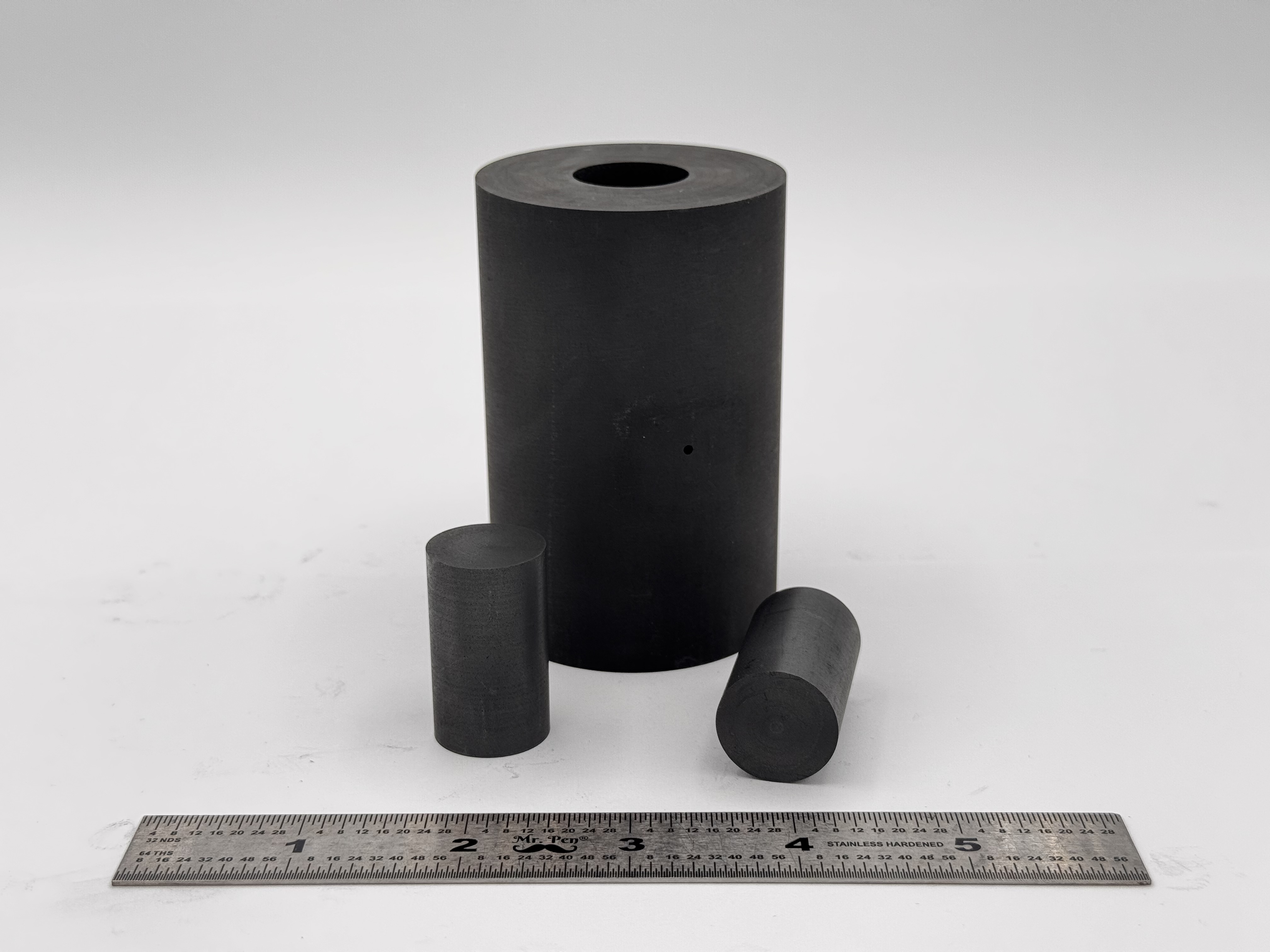
 High Strength SPS Graphite Tooling
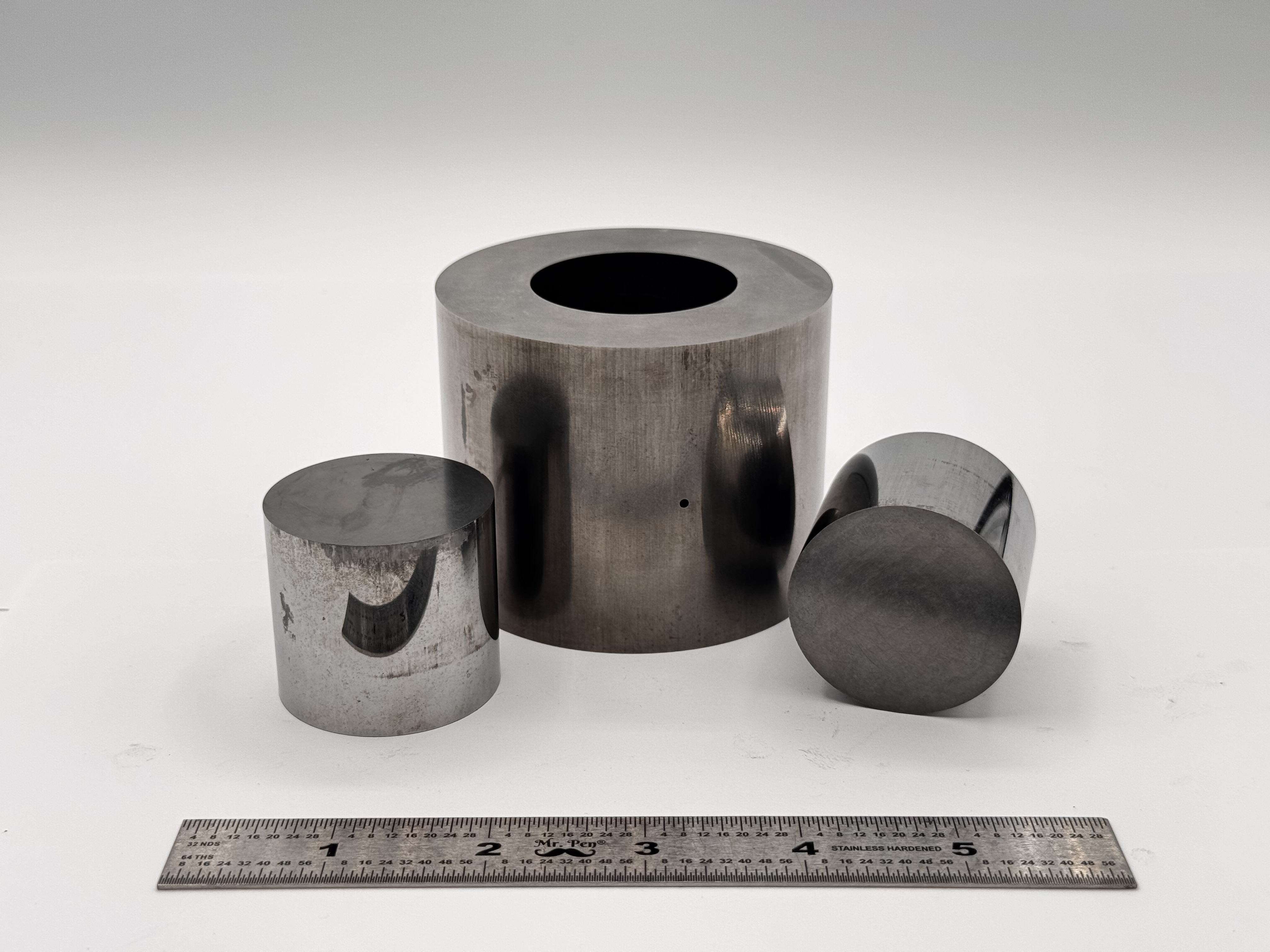 Tungsten Carbide Tooling
 Carbon Graphite Foil / Paper
 Carbon Felt and Yarn
 Spark Plasma Sintering Systems
 SPS/FAST Modeling Software
Ultra High Temperature Ceramics: Engineering Materials for Environments Where Metals Reach Their Limits
Modern engineering continues to push materials into environments once considered impossible. Hypersonic aircraft encounter extreme aerodynamic heating, advanced propulsion systems operate under intense thermal stress, and next-generation energy technologies demand components capable of surviving temperatures that would compromise conventional materials.
These challenges are accelerating interest in ultra high temperature ceramics (UHTCs), an advanced class of materials engineered to maintain critical properties under extraordinary thermal conditions.
Unlike conventional ceramics, which are commonly associated with insulation, wear resistance, or electrical applications, ultra high temperature ceramics are being developed for some of the most demanding environments in modern engineering. Their potential extends beyond simply withstanding heat. They can offer exceptional hardness, chemical stability, and resistance to deformation at temperatures where many traditional engineering materials lose their effectiveness.
However, realizing these advantages requires more than selecting the right ceramic composition. The manufacturing process itself plays a critical role in determining whether an ultra high temperature ceramic component can deliver the performance its application demands.
Through advanced powder processing and consolidation technologies such as Spark Plasma Sintering (SPS) and Field Assisted Sintering Technology (FAST), manufacturers and researchers are exploring new opportunities to produce dense, high-performance ceramic materials with carefully controlled microstructures.
What Are Ultra High Temperature Ceramics?
Ultra high temperature ceramics are a specialized group of refractory ceramic materials, generally characterized by melting temperatures exceeding 3,000°C. They are primarily composed of compounds formed from transition metals and elements such as boron, carbon, and nitrogen.
Among the most widely researched UHTCs are zirconium diboride (ZrB₂), hafnium diboride (HfB₂), zirconium carbide (ZrC), hafnium carbide (HfC), and tantalum carbide (TaC).
These materials possess combinations of properties that make them attractive for extreme-environment applications. Their high melting temperatures allow them to remain solid under extraordinary thermal exposure, while their hardness and chemical stability can contribute to performance in aggressive operating conditions.
Certain UHTCs also offer relatively high thermal conductivity, an important consideration when engineers need to distribute localized heat rather than allow extreme temperature gradients to develop.
Nevertheless, an exceptionally high melting point does not automatically guarantee superior performance in every high-temperature application. Oxidation, thermal shock, mechanical loading, and interactions with surrounding materials can all influence component reliability.
For this reason, the development of ultra high temperature ceramics requires a comprehensive understanding of composition, processing, microstructure, and operating environment.
Why Extreme Temperature Performance Is About More Than Melting Point
One of the most important distinctions between ultra high temperature ceramics and conventional high-temperature materials involves how they respond to combined environmental stresses.
A component operating at 1,800°C may experience challenges extending far beyond the temperature itself. It may also encounter rapid heating and cooling cycles, mechanical vibration, corrosive gases, oxidation, and substantial thermal gradients.
These conditions can create competing material requirements.
For example, a ceramic may possess outstanding hardness but remain susceptible to brittle fracture. Another composition may offer exceptional thermal stability yet experience oxidation that limits its usefulness in atmospheric environments.
In applications involving repeated thermal cycling, differences in thermal expansion can create internal stresses that lead to cracking or premature failure.
Consequently, the most effective ultra high temperature ceramic is not necessarily the material with the highest melting point. It is the material whose complete performance profile best matches the intended operating conditions.
This distinction has encouraged researchers to investigate ceramic composites, engineered microstructures, and advanced consolidation techniques capable of balancing multiple performance requirements.
The Manufacturing Challenge: Why Ultra High Temperature Ceramics Are Difficult to Produce
The same characteristics that make UHTCs attractive for extreme environments also make them challenging to manufacture.
Their exceptionally strong atomic bonds and high melting temperatures can limit atomic diffusion during conventional sintering. As a result, achieving the density required for demanding structural applications often requires elevated processing temperatures, extended heating cycles, or specialized consolidation techniques.
Incomplete densification can leave microscopic pores within the ceramic structure. These pores may become stress concentration points, reduce mechanical strength, and create pathways for oxidation or other environmental degradation.
Excessive grain growth presents another concern. When ceramic powders are exposed to prolonged high temperatures, their grains may grow substantially, potentially compromising certain mechanical properties.
Manufacturers must therefore balance several objectives: achieving high density, controlling grain size, maintaining chemical composition, and minimizing unwanted reactions during processing.
For ultra high temperature ceramics, manufacturing precision can be just as important as the original material formulation.
How Spark Plasma Sintering Advances Ultra High Temperature Ceramics
Spark Plasma Sintering has emerged as an important consolidation method for advanced ceramic materials, including UHTCs.
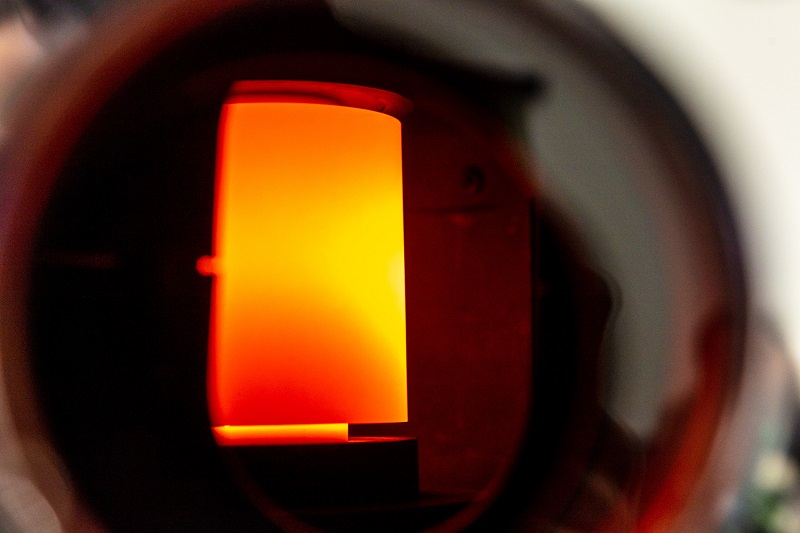
Also known as Field Assisted Sintering Technology, SPS uses electrical current to heat a conductive tooling assembly while applying mechanical pressure to a powder compact. This combination can produce rapid heating rates and relatively short consolidation cycles compared with many conventional furnace-based methods.
For difficult-to-sinter ceramic materials, these characteristics offer several potential advantages.
Rapid heating can reduce the time powders spend at elevated temperatures, helping limit grain growth under suitable processing conditions. Applied pressure promotes particle rearrangement and densification, while precisely controlled processing parameters allow researchers to investigate relationships between temperature, pressure, holding time, and final material properties.
The result can be a dense ceramic structure with a microstructure tailored to specific performance requirements.
SPS is not a universal solution for every UHTC composition. Tooling limitations, component geometry, powder characteristics, and potential chemical interactions must all be considered. Nevertheless, the technology provides an important pathway for developing ceramic materials that are particularly difficult to consolidate through traditional approaches.
Research published in 2026 has demonstrated the use of SPS to produce multicomponent hafnium- and zirconium-diboride composites for high-temperature oxidation studies, illustrating the technology's relevance to next-generation UHTC development.
Ultra High Temperature Ceramics in Aerospace and Hypersonic Applications
Aerospace engineering represents one of the most compelling areas of research for ultra high temperature ceramics.
Hypersonic vehicles traveling at speeds greater than Mach 5 can experience intense aerodynamic heating, particularly around leading edges, nose tips, and other exposed surfaces.
Traditional metallic materials may encounter severe limitations under these conditions. Even high-performance superalloys can experience reductions in strength, oxidation resistance, or dimensional stability as operating temperatures increase.
Ultra high temperature ceramics offer an alternative worth investigating.
Zirconium diboride and hafnium diboride, for example, combine high melting temperatures with thermal conductivity that can help distribute concentrated heat loads. These characteristics make them promising candidates for certain thermal protection components.
Other potential aerospace applications include rocket propulsion components, nozzle inserts, and specialized structures exposed to extreme thermal environments.
However, aerospace qualification requires much more than demonstrating temperature resistance in a laboratory. Components must also withstand thermal shock, oxidation, mechanical stresses, and potentially erosive gas flows.
This makes ceramic processing and microstructural control essential parts of the development process.
The Role of Ultra High Temperature Ceramics in Advanced Energy Systems
Although aerospace applications receive considerable attention, ultra high temperature ceramics also have potential value in emerging energy technologies.
Advanced nuclear systems, concentrated solar power technologies, and high-temperature industrial processes all present materials challenges involving prolonged thermal exposure and demanding operating conditions.
In certain reactor concepts, researchers are investigating refractory ceramics for their potential resistance to extreme temperatures and specialized environmental conditions. Material selection must also account for radiation effects, chemical compatibility, and long-term mechanical performance.
Concentrated solar power systems present a different set of challenges. Components may experience repeated thermal cycling and substantial temperature gradients as solar energy is collected, transferred, and stored.
For these applications, materials that maintain dimensional stability and resist thermal degradation could contribute to improved system designs.
Industrial heating systems may also benefit from continued research into ceramic components capable of operating in aggressive thermal and chemical environments.
While many of these uses remain application-specific research and development opportunities, they illustrate the broader importance of ultra high temperature ceramics beyond aerospace engineering.
Engineering Better Ceramics Through Composite Materials
One of the most promising developments in UHTC research involves combining multiple ceramic phases to achieve performance characteristics that are difficult to obtain from a single material.
For example, incorporating silicon carbide into zirconium diboride or hafnium diboride can improve oxidation behavior under certain conditions.
When exposed to oxygen at elevated temperatures, silicon-containing phases may contribute to the formation of protective oxide layers that slow further oxygen penetration.
However, the effectiveness of these protective layers depends on temperature, exposure time, gas composition, and other operating conditions. At sufficiently extreme temperatures, volatilization or erosion can reduce their protective benefits.
Researchers are also exploring combinations of carbides, diborides, and other refractory compounds to influence hardness, fracture behavior, thermal conductivity, and oxidation resistance.
These developments represent an important shift in ceramic engineering.
Rather than treating a ceramic composition as a fixed material with predetermined properties, engineers can increasingly approach UHTCs as customizable systems in which composition and processing are optimized together.
High-Entropy Ceramics: A New Frontier in Extreme-Temperature Materials
Another emerging direction involves high-entropy ultra high temperature ceramics.
These materials incorporate multiple principal elements into a ceramic crystal structure, creating opportunities to explore combinations of properties not readily available in traditional single-component systems.
High-entropy carbides and diborides are attracting interest because their complex compositions can influence phase stability, atomic diffusion, mechanical behavior, and oxidation response.
For example, researchers may investigate combinations of hafnium, zirconium, tantalum, niobium, and titanium within carbide-based systems.
The resulting materials can exhibit properties that differ from those of their individual constituent compounds.
High-entropy ceramic research remains an evolving field, and improved performance is not guaranteed for every composition. Nevertheless, recent studies highlight the potential of compositional engineering to address longstanding challenges involving oxidation resistance, thermal stability, and mechanical reliability.
Advanced powder processing and sintering technologies are particularly relevant to this research because they enable experimental compositions to be consolidated and evaluated.
Why Powder Processing and Microstructure Matter
The performance of an ultra high temperature ceramic begins long before the finished component enters service.
Powder characteristics, including particle size, purity, morphology, and chemical uniformity, influence how a ceramic responds during consolidation.
Fine powders may offer advantages for densification because they provide increased surface area and shorter diffusion distances. However, they can also introduce challenges involving agglomeration, contamination, and surface oxidation.
Uniform powder blending becomes especially important when manufacturing multiphase or multicomponent ceramics. Poorly distributed constituents may create localized differences in composition that affect material behavior.
Following consolidation, the resulting grain structure, residual porosity, and phase distribution influence mechanical and thermal performance.
This relationship between powder preparation and finished properties is one reason advanced materials manufacturers increasingly emphasize integrated processing strategies.
For UHTCs, the goal is not simply to create a solid ceramic component. It is to produce a carefully engineered material whose internal structure supports its intended operating conditions.
Moving Ultra High Temperature Ceramics From Research to Real-World Applications
Despite their considerable potential, ultra high temperature ceramics face important barriers to widespread commercial adoption.
Cost remains a concern, particularly for compositions containing expensive refractory elements. Manufacturing complexity can also make large-scale production difficult.
Component geometry presents another challenge. Certain advanced consolidation technologies are particularly well suited to relatively simple shapes, while complex components may require additional machining, joining, or alternative forming methods.
Quality assurance is equally important. Manufacturers must demonstrate that material properties remain sufficiently consistent across production batches and that components perform reliably under realistic operating conditions.
These challenges are encouraging closer collaboration between materials researchers, component designers, and specialized manufacturing partners.
Early-stage development frequently involves producing small samples, evaluating multiple compositions, and refining processing parameters before progressing toward larger components.
Advanced sintering services can support this process by allowing researchers to investigate difficult-to-consolidate materials without immediately committing to a dedicated production infrastructure.
The ability to move efficiently between material formulation, consolidation, testing, and process refinement can help accelerate the development of new ceramic technologies.
California Nanotechnologies and Advanced Ceramic Material Development
As demand for high-performance materials continues to expand, specialized manufacturing capabilities are becoming increasingly important.
California Nanotechnologies supports advanced materials development through specialized powder processing and consolidation technologies, including Spark Plasma Sintering and Field Assisted Sintering Technology.
These capabilities are relevant to researchers and manufacturers investigating ceramic materials, refractory compounds, and other advanced compositions requiring carefully controlled consolidation.
For organizations exploring ultra high temperature ceramics, access to specialized processing expertise can be valuable when evaluating powder characteristics, densification behavior, and the relationship between manufacturing conditions and material properties.
The development of next-generation ceramics often requires iterative experimentation, particularly when working with unfamiliar compositions or challenging material combinations.
Advanced processing technologies provide an opportunity to investigate these materials systematically and establish a stronger foundation for subsequent testing and application development.
The Future of Ultra High Temperature Ceramics Begins With Better Materials Processing
The next generation of aerospace, energy, and industrial technologies will continue to challenge the limits of conventional engineering materials.
Ultra high temperature ceramics represent an important opportunity to address these challenges, offering combinations of thermal stability, hardness, and other properties that make them attractive for extreme operating environments.
Yet their future depends on more than extraordinary melting temperatures.
The successful development of UHTCs requires careful attention to oxidation behavior, mechanical reliability, powder characteristics, and manufacturing processes capable of producing controlled microstructures.
Technologies such as Spark Plasma Sintering and Field Assisted Sintering are helping researchers investigate these relationships and develop increasingly sophisticated ceramic compositions.
As material science advances, the ability to engineer and consolidate ultra high temperature ceramics will remain essential to transforming promising laboratory discoveries into practical engineering solutions.
California Nanotechnologies provides advanced materials processing capabilities for organizations exploring the next generation of high-performance ceramics and other engineered materials. Contact California Nanotechnologies to discuss specialized sintering services and advanced material development requirements.