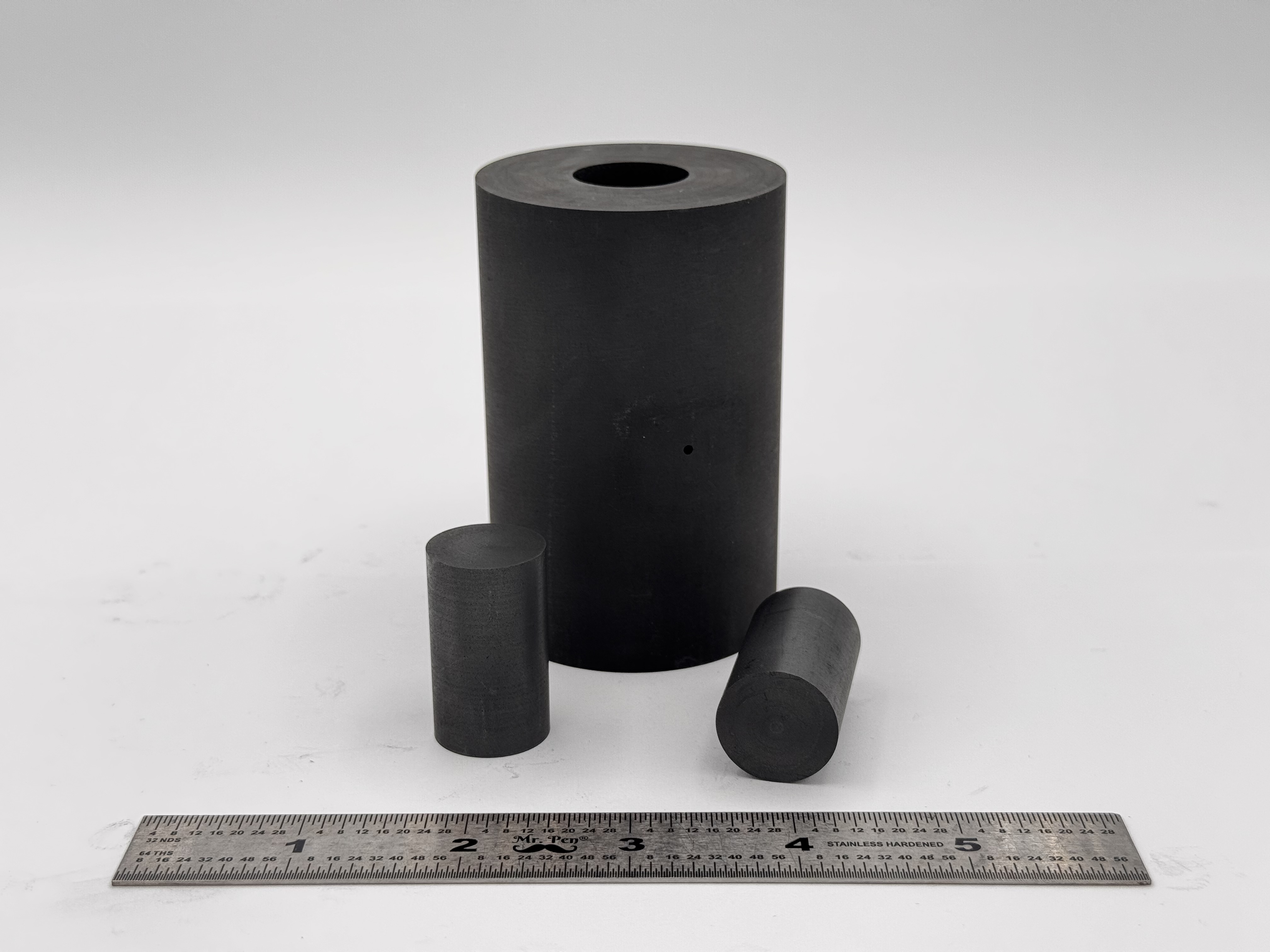
 High Strength SPS Graphite Tooling
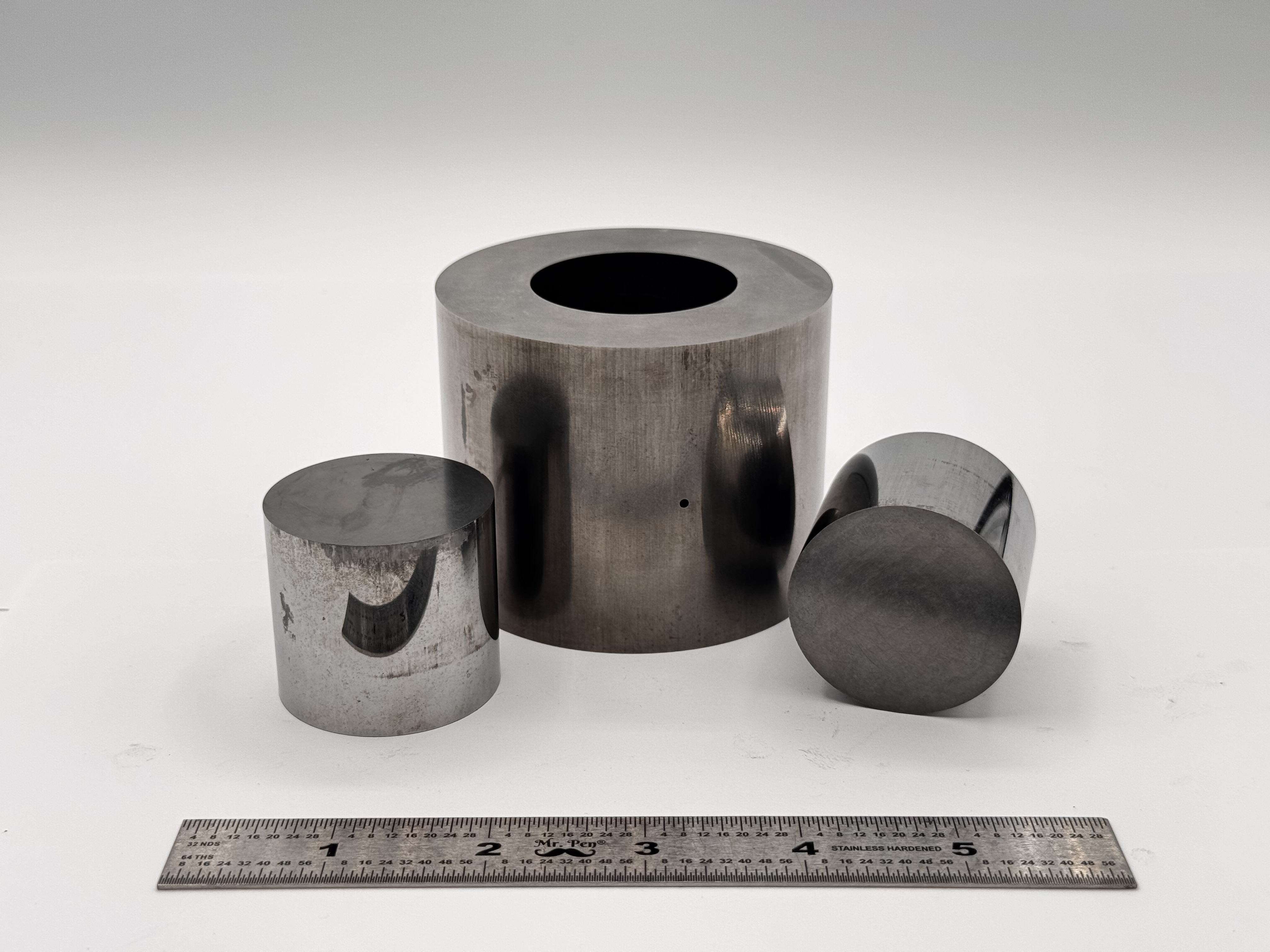 Tungsten Carbide Tooling
 Carbon Graphite Foil / Paper
 Carbon Felt and Yarn
 Spark Plasma Sintering Systems
 SPS/FAST Modeling Software
Advanced Hot Pressing: The Manufacturing Advantage Behind Stronger, Denser, and More Reliable Materials
As industries push the limits of material performance, conventional manufacturing processes are not always capable of producing the properties required for next-generation applications. Aerospace components must withstand extreme temperatures, industrial tooling must resist wear under demanding conditions, and advanced ceramics must deliver exceptional strength without compromising dimensional stability. Meeting these requirements often begins long before a component enters service. It starts with how the material itself is manufactured.
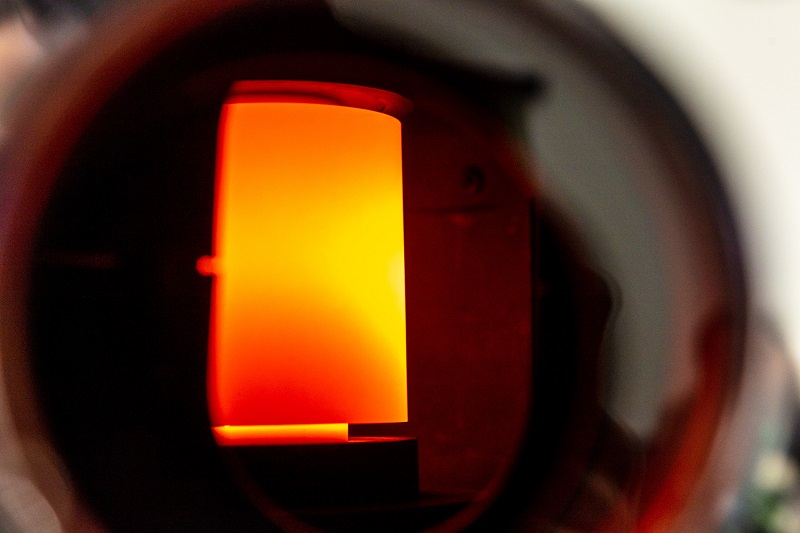
Advanced hot pressing is helping manufacturers overcome some of the most challenging limitations of traditional material processing. By combining elevated temperatures with controlled mechanical pressure, this specialized consolidation process can transform powdered materials into dense, high-performance solids with carefully engineered properties.
For companies developing sophisticated materials and components, advanced hot pressing offers more than a way to shape raw materials. It provides an opportunity to improve material quality, control microstructure, reduce internal porosity, and manufacture components that would otherwise be difficult to produce.
At California Nanotechnologies, advanced materials processing technologies support the development of specialized materials for demanding industrial and research applications.
Why Material Density Matters More Than Ever
When evaluating the performance of a manufactured component, material selection is only part of the equation. Two components made from the same nominal material can perform very differently depending on their processing history, internal structure, and degree of consolidation.
One of the most important considerations is density.
Powder-based manufacturing begins with individual particles that contain spaces between them. If these spaces are not adequately eliminated during consolidation, the finished material may contain residual porosity. Depending on the application, these internal voids can reduce strength, compromise thermal conductivity, affect electrical performance, and create potential sites for crack initiation.
Advanced hot pressing addresses this challenge by applying heat and pressure simultaneously. As the material reaches an appropriate processing temperature, the applied pressure encourages particle rearrangement, deformation, and bonding. Diffusion and other temperature-dependent mechanisms contribute to densification, reducing the voids between particles.
The result can be a material with significantly improved density and more consistent properties compared with inadequately consolidated alternatives.
For industries where reliability is critical, these improvements can make a substantial difference. A dense ceramic component may exhibit improved mechanical integrity, while a properly consolidated metal alloy may deliver more predictable behavior under demanding operating conditions.
However, density alone does not determine performance. Grain size, phase composition, impurities, and residual stresses also influence how a material behaves. Advanced hot pressing provides manufacturers with additional control over several of these important characteristics.
How Advanced Hot Pressing Works
Traditional manufacturing techniques often separate material shaping from thermal processing. Advanced hot pressing integrates heat and mechanical pressure into a controlled consolidation cycle.
Powdered material is typically loaded into a die assembly designed to withstand the required processing conditions. The material is then heated while pressure is applied, commonly through a uniaxial pressing system.
During processing, several important changes may occur within the material.
Initially, particles rearrange as pressure reduces the spaces between them. As temperatures increase, particle contacts develop and densification mechanisms become more active. Depending on the material, these mechanisms can include plastic deformation, diffusion, and grain-boundary movement.
Carefully controlling temperature, pressure, dwell time, and heating rate helps determine the resulting density and microstructure.
The process must also account for material-specific behavior. Some powders may oxidize readily, requiring a controlled atmosphere or vacuum environment. Others may react with die materials or experience undesirable grain growth when exposed to excessive temperatures.
Successful advanced hot pressing therefore requires more than powerful equipment. It demands an understanding of materials science, powder characteristics, tooling design, and the relationships between processing conditions and finished material performance.
Microstructure: The Hidden Factor Behind Material Performance
One of the most compelling advantages of advanced hot pressing is the ability to influence a material's internal structure during consolidation.
Microstructure refers to the arrangement and characteristics of grains, phases, interfaces, and defects within a material. Although these features are generally invisible to the naked eye, they play an essential role in determining mechanical, thermal, and electrical properties.
Consider a material designed for an extreme-temperature application. Its chemical composition may provide excellent theoretical heat resistance, but its actual performance can depend heavily on grain structure, residual porosity, and the distribution of secondary phases.
Poorly controlled processing can produce excessive grain growth, inconsistent density, or undesirable reactions between constituents. These defects may undermine the very properties that make the material attractive.
Advanced hot pressing allows manufacturers to tailor processing conditions to help achieve a more desirable microstructure.
For example, minimizing unnecessary exposure to elevated temperatures can help limit grain growth in certain materials. Carefully managing pressure and temperature can also promote densification without requiring the same thermal history as conventional pressureless sintering.
This balance is particularly important for advanced ceramics, engineered composites, and materials whose performance depends on maintaining specific microstructural characteristics.
The objective is not simply to produce a solid component. It is to create a material whose internal structure supports its intended function.
Advanced Hot Pressing for Technical Ceramics
Technical ceramics are among the materials that can benefit significantly from advanced hot pressing.
Unlike conventional ceramics used in everyday products, advanced technical ceramics are engineered for specialized applications involving high temperatures, abrasion, corrosion, electrical insulation, or demanding mechanical environments.
Materials such as boron carbide, silicon carbide, and certain oxide ceramics offer attractive performance characteristics, but their consolidation can be challenging.
Many ceramics have extremely high melting temperatures and limited plasticity. Conventional processing may require substantial thermal energy to achieve adequate densification, and some compositions remain difficult to consolidate through pressureless sintering alone.
Advanced hot pressing introduces mechanical pressure to assist the densification process.
For boron carbide, a material valued for its hardness and relatively low density, achieving high density is especially important in applications requiring mechanical performance. Silicon carbide components may also benefit from carefully controlled consolidation when thermal stability, wear resistance, or structural integrity is required.
The exact results depend on powder purity, particle size, additives, equipment capabilities, and processing conditions.
By helping manufacturers achieve suitable density and microstructural characteristics, advanced hot pressing expands the possibilities for technical ceramics in aerospace, industrial equipment, energy systems, and other demanding environments.
Supporting the Development of Advanced Metal Alloys
Although ceramics are frequently associated with hot pressing, advanced metal alloys also present important opportunities.
Modern materials development increasingly involves compositions that are difficult to manufacture through conventional melting and casting processes. Some contain elements with substantially different melting temperatures, while others are designed to preserve fine-scale structures or carefully distributed phases.
Powder metallurgy provides an alternative route for creating these materials.
Rather than relying entirely on liquid-state processing, manufacturers can blend, mill, or otherwise prepare powders before consolidating them into solid forms.
Advanced hot pressing can support this approach by providing controlled thermal and mechanical conditions during consolidation.
This capability is especially relevant to experimental alloys, refractory materials, and certain high-entropy alloy compositions.
High-entropy alloys, for example, contain multiple principal elements rather than relying on a single dominant base metal. Depending on their composition and processing, these alloys can exhibit combinations of strength, temperature resistance, and other desirable properties.
Producing them successfully requires careful attention to chemical homogeneity, phase formation, and microstructure.
Advanced hot pressing can provide a useful consolidation route for selected powder-based alloy systems, particularly when researchers want to evaluate material properties without relying exclusively on conventional casting.
This makes the technology valuable not only for manufacturing established materials but also for investigating entirely new compositions.
Advanced Hot Pressing Versus Other Consolidation Technologies
Advanced materials manufacturers have several consolidation technologies available, each offering distinct advantages.
Conventional hot pressing, hot isostatic pressing (HIP), and spark plasma sintering (SPS), also known as field-assisted sintering technology (FAST), all use heat and pressure to consolidate materials. However, their operating principles differ.
Traditional hot pressing generally uses externally supplied heat and uniaxial pressure. HIP applies high-temperature gas pressure from multiple directions, making it particularly useful for reducing internal porosity in appropriately prepared components. SPS/FAST uses electrical current to heat conductive tooling, enabling rapid thermal cycles and, in many cases, shorter consolidation times.
The differences matter because no single technology is ideal for every material or component.
A relatively simple ceramic geometry may be well suited to conventional hot pressing. A component requiring more uniform multidirectional pressure may benefit from HIP. A material that is sensitive to prolonged thermal exposure may be a candidate for SPS/FAST.
Research into pressure-assisted sintering continues to demonstrate the importance of selecting processing methods according to the material's composition, geometry, and desired microstructure.
For manufacturers and researchers, access to multiple consolidation technologies creates opportunities to evaluate different processing routes rather than forcing every material into the same manufacturing approach.
The Importance of Powder Preparation Before Hot Pressing
Even the most sophisticated consolidation equipment cannot fully compensate for poor starting materials.
Powder preparation is a critical part of advanced hot pressing because the physical and chemical characteristics of the feedstock influence the behavior of the material throughout processing.
Particle size is especially important. Smaller particles generally provide greater surface area and can promote sintering activity, but extremely fine powders may also be prone to agglomeration, contamination, or oxidation.
Particle size distribution influences packing behavior and the initial spaces between particles. Powder morphology can affect flowability and compaction, while chemical purity influences phase stability and final material properties.
For materials containing multiple constituents, achieving a consistent powder mixture is another significant challenge.
This is where complementary powder-processing technologies become particularly valuable.
Mechanical milling, cryogenic milling, and other specialized preparation techniques can help manufacturers modify powder characteristics before consolidation. Depending on the material system, these processes may improve mixing, refine particle or crystallite structures, or facilitate the development of specialized alloy compositions.
Combining appropriate powder preparation with advanced hot pressing allows manufacturers to approach material development as an integrated process.
Rather than treating consolidation as an isolated manufacturing step, engineers can evaluate how powder characteristics influence densification and how densification affects final performance.
This approach is especially useful when developing experimental materials or refining processing methods for demanding applications.
From Laboratory Development to Industrial Manufacturing
One of the most important challenges in advanced materials manufacturing is translating promising laboratory results into practical production processes.
A material may demonstrate exceptional performance when produced as a small research specimen. However, manufacturing larger components or increasing production volumes introduces additional challenges.
Temperature uniformity becomes increasingly important as component dimensions increase. Pressure distribution must be carefully managed, and tooling must withstand repeated exposure to demanding thermal and mechanical conditions.
Larger components may also exhibit different densification behavior because heat transfer, friction, and material movement vary throughout the die assembly.
These challenges make process development essential.
An effective manufacturing strategy begins by identifying the material properties that matter most. Engineers can then establish appropriate consolidation parameters, evaluate the resulting specimens, and refine the process based on testing.
Density measurements, microstructural analysis, hardness testing, and other characterization techniques help determine whether the finished material meets its intended requirements.
As development progresses, attention shifts toward repeatability, processing efficiency, tooling durability, and production economics.
Advanced hot pressing can play an important role in this progression by providing a controlled method for investigating material behavior and producing consolidated components.
However, successful scale-up requires verifying that the desired properties remain consistent as production conditions change.
Applications Where Advanced Hot Pressing Can Make a Difference
The versatility of advanced hot pressing makes it relevant to a broad range of industries.
In aerospace, engineers continually seek materials capable of operating under high temperatures, mechanical loads, and abrasive conditions. Dense ceramics, refractory materials, and specialized alloys may offer attractive properties for selected aerospace applications.
Industrial tooling presents another opportunity. Components used in abrasive or high-wear environments require materials that can maintain their integrity under repeated mechanical stress. Advanced hot pressing can support the production of selected hard materials and engineered composites designed for these conditions.
Energy applications also create demand for materials capable of withstanding challenging thermal and chemical environments. Depending on their composition, hot-pressed ceramics and alloys may be candidates for thermal management, wear-resistant components, and specialized energy-system hardware.
Research institutions and materials developers benefit from the technology's ability to consolidate experimental compositions. Researchers can evaluate new alloy systems, ceramic formulations, and composite materials without depending exclusively on traditional melting and casting.
Across these applications, the common objective is improved control over material properties.
Advanced hot pressing helps connect the design of a material with the practical requirements of its intended operating environment.
Why Process Expertise Is as Important as Equipment
Advanced hot pressing is not a universal solution to every manufacturing challenge.
Although the process can produce highly dense materials, its uniaxial pressure arrangement can limit component geometry and contribute to nonuniform density or directional properties in some materials. Tooling compatibility, thermal gradients, processing costs, and component size must also be considered.
These limitations make technical expertise particularly important.
Selecting the correct processing temperature involves balancing densification against the possibility of grain growth, chemical reactions, or phase changes. Increasing pressure may accelerate consolidation, but excessive loading can damage tooling or introduce unwanted stresses.
Similarly, extending processing time may improve density in one material while degrading microstructural characteristics in another.
The best processing strategy depends on understanding these competing effects.
Experienced materials specialists evaluate the complete relationship between starting powders, consolidation parameters, microstructure, and finished material properties.
This scientific approach helps reduce unnecessary experimentation and supports more informed manufacturing decisions.
Advanced Hot Pressing at California Nanotechnologies
As material requirements become more demanding, manufacturers increasingly need processing partners capable of supporting both established materials and emerging technologies.
California Nanotechnologies specializes in advanced materials processing, with capabilities that include powder preparation and specialized consolidation technologies such as spark plasma sintering, field-assisted sintering, and other high-temperature processing methods.
These capabilities provide a foundation for exploring the relationships between powder characteristics, processing conditions, and finished material performance.
For organizations investigating advanced ceramics, refractory materials, high-entropy alloys, or specialized composites, understanding the available consolidation options is an important part of selecting an effective manufacturing strategy.
Whether the objective involves improving material density, developing a new composition, or investigating a pathway toward larger-scale manufacturing, successful results begin with carefully matched processing methods and material requirements.
The Future of Advanced Hot Pressing and High-Performance Materials
The next generation of industrial materials will be defined not only by new chemical compositions but also by the technologies used to manufacture them.
As engineers pursue stronger ceramics, more sophisticated alloys, and materials capable of operating in increasingly extreme environments, the importance of controlled powder consolidation will continue to grow.
Advanced hot pressing represents an important part of this evolution.
By combining thermal energy with mechanical pressure, the process offers a means of improving densification, influencing microstructure, and supporting the development of materials that are difficult to manufacture through conventional methods.
Its greatest value lies in the ability to connect material design with practical manufacturing outcomes.
For companies seeking to push beyond the limitations of traditional material processing, advanced hot pressing is more than a consolidation technique. It is a pathway toward developing the high-performance materials that tomorrow's technologies will demand.
Learn more about the advanced materials processing capabilities available through California Nanotechnologies and explore how specialized powder consolidation technologies can support your next material development project.