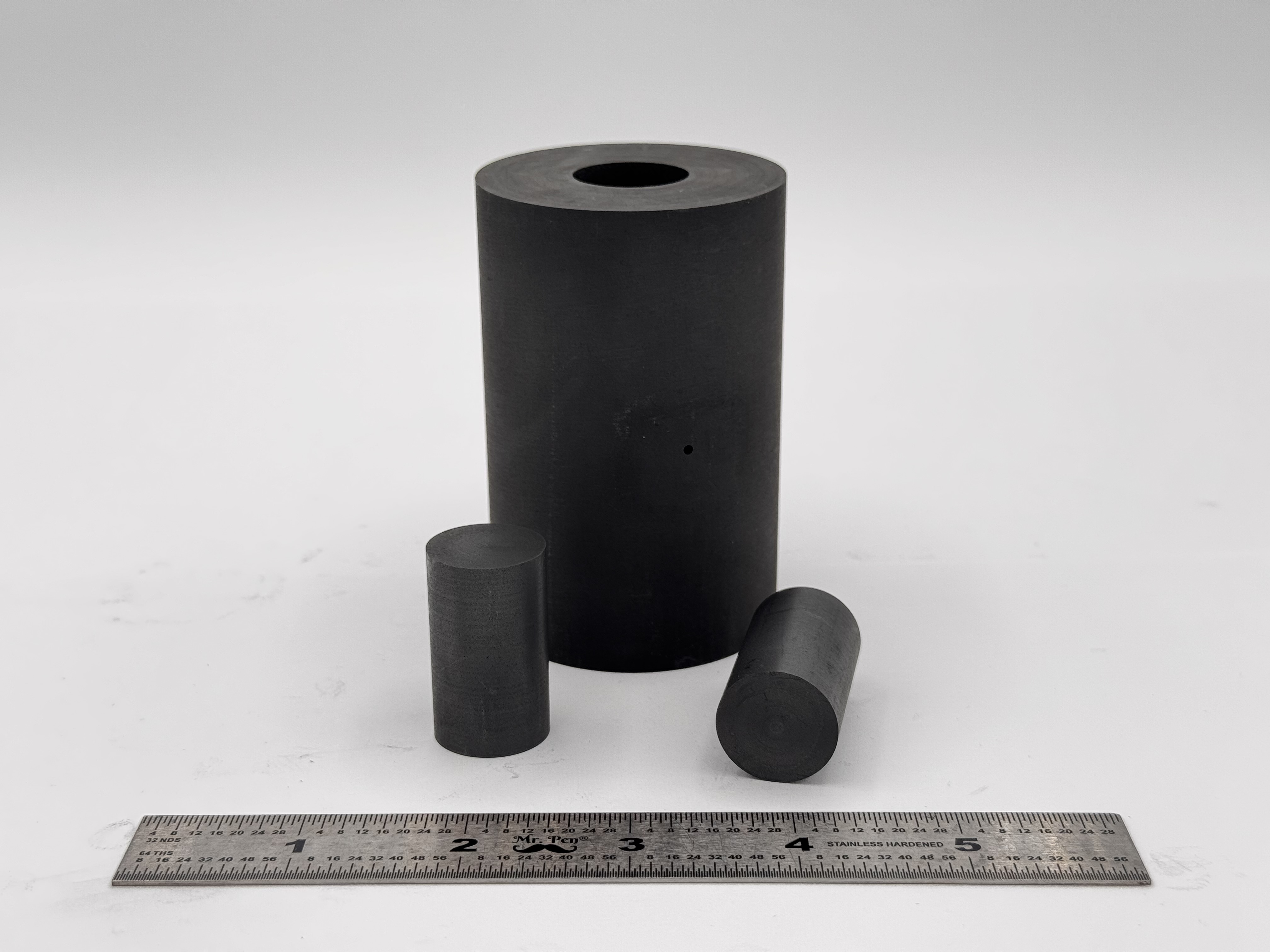
 High Strength SPS Graphite Tooling
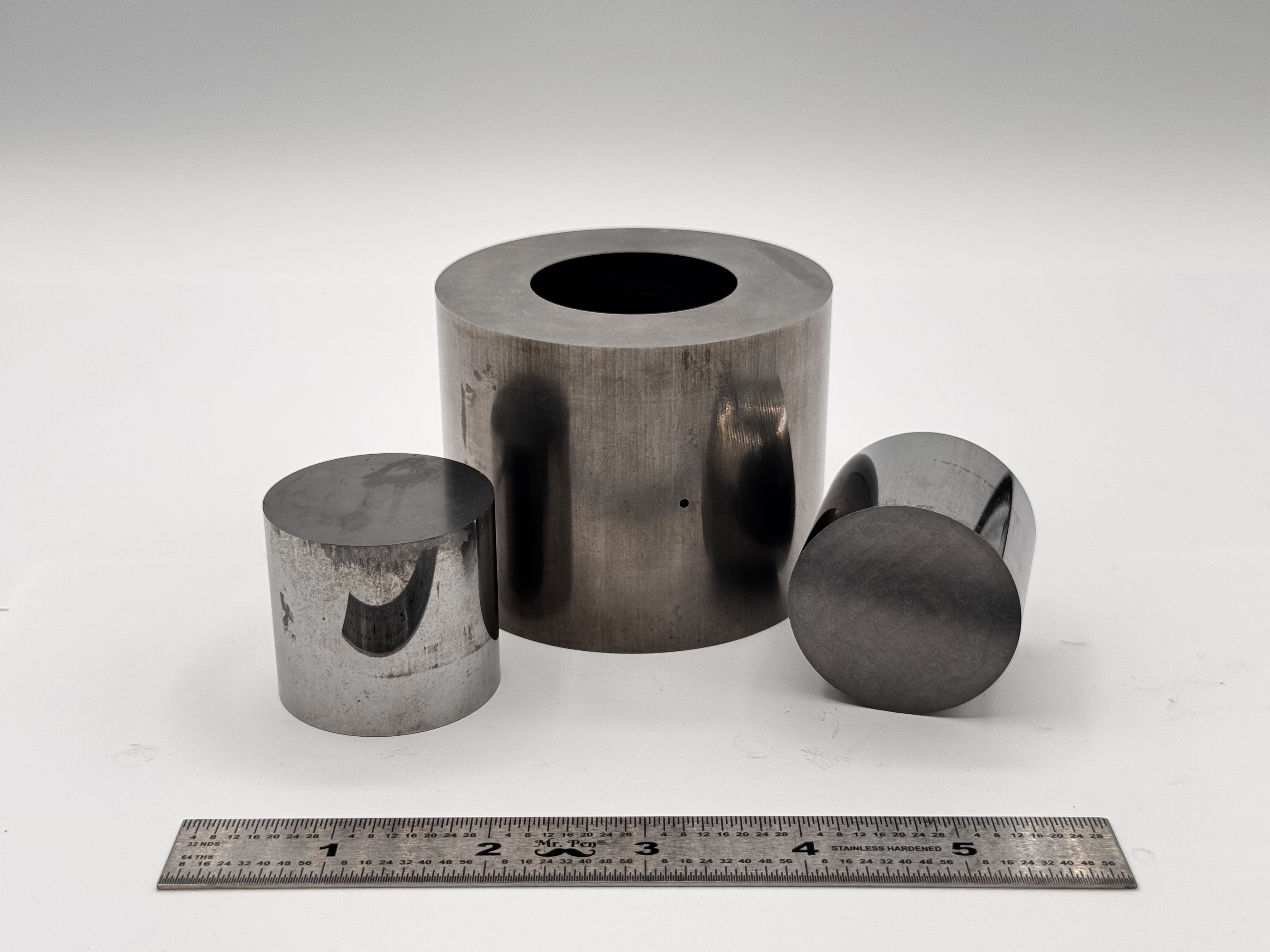 Tungsten Carbide Tooling
 Carbon Graphite Foil / Paper
 Carbon Felt and Yarn
 Spark Plasma Sintering Systems
 SPS/FAST Modeling Software
Diffusion Bonding: Creating High-Strength Material Bonds Without Melting
Joining advanced materials can become increasingly difficult as components become smaller, more complex and more demanding. Conventional welding methods work well for many applications, but melting the materials being joined can introduce distortion, unwanted microstructural changes, residual stresses and other complications.
Diffusion bonding offers a different approach.
Also known as diffusion welding, diffusion bonding is a solid-state joining process that uses elevated temperature and pressure to create a metallurgical bond between contacting surfaces without melting the bulk materials. Under carefully controlled conditions, atoms migrate across the interface between the materials, eventually creating a bond that can approach the strength and integrity of the materials themselves.
This combination of precision, strength and material compatibility has made diffusion bonding an important manufacturing technology for aerospace, energy, electronics, medical devices, advanced materials research and nanotechnology.
What Is Diffusion Bonding?
Diffusion bonding is a manufacturing process in which two carefully prepared surfaces are placed in direct contact and subjected to heat and pressure for a controlled period of time.
Unlike conventional fusion welding, the materials generally remain below their melting temperatures. Instead of creating a pool of molten material that later solidifies, diffusion bonding relies on atomic movement across the interface.
At sufficiently high temperatures, atoms become increasingly mobile. When two clean surfaces are brought into intimate contact under pressure, atoms can diffuse across the boundary separating them. As the process continues, the original interface becomes progressively less distinct and a strong metallurgical bond develops.
The process can be used to join similar materials, such as titanium to titanium, as well as certain dissimilar material combinations that may be difficult to join through conventional welding techniques.
How Does Diffusion Bonding Work?
Although the underlying concept is relatively straightforward, successful diffusion bonding depends on precise control of several variables.
Surface preparation is particularly important. At the microscopic level, even a surface that appears perfectly smooth contains peaks, valleys, oxides and contaminants. These imperfections can prevent complete contact between two components.
For this reason, surfaces intended for diffusion bonding may be machined, polished and thoroughly cleaned before processing.
The components are then positioned together and placed in specialized equipment capable of controlling temperature, pressure and atmosphere. Depending on the application, bonding may take place under vacuum or in an inert environment to minimize oxidation and contamination.
Heat increases atomic mobility, while pressure helps establish intimate contact between the mating surfaces. Initially, contact occurs primarily at microscopic high points. Under elevated temperature and pressure, these asperities deform and the true contact area increases.
Over time, diffusion occurs across the interface. Voids can shrink, grain boundaries may migrate and the original boundary between the two materials can become increasingly difficult to distinguish.
The result is not simply mechanical adhesion. Proper diffusion bonding produces an atomic-scale metallurgical connection between the materials.
Why Doesn't Diffusion Bonding Require Melting?
This is one of the characteristics that separates diffusion bonding from many traditional welding processes.
Fusion welding deliberately melts material along the joint. When that molten material cools, it solidifies to create the connection.
Diffusion bonding instead takes advantage of the fact that atoms can move through solid materials. Increasing temperature significantly accelerates diffusion without necessarily requiring the material to reach its melting point.
This solid-state approach can provide important manufacturing advantages.
Because large molten regions are avoided, diffusion bonding can reduce problems associated with solidification, including certain forms of cracking, porosity and significant heat-related distortion. It can also help preserve carefully engineered geometries and material characteristics that might otherwise be altered by melting and resolidification.
The Importance of Temperature, Pressure and Time
Successful diffusion bonding requires finding the correct relationship between temperature, pressure and processing time.
Higher temperatures generally increase diffusion rates, but excessive temperatures may cause unwanted grain growth, deformation or changes to material properties.
Pressure must also be carefully controlled. Sufficient pressure is necessary to bring surfaces into intimate contact and eliminate microscopic voids, but excessive pressure can distort delicate components or alter critical dimensions.
Time is the third major variable. Atomic diffusion does not occur instantaneously. The components must remain under the required processing conditions long enough for the interface to develop the desired properties.
Material composition, component geometry, surface finish, oxide behavior and the required final properties all influence the optimum processing conditions.
Why Surface Preparation Matters
One of the most important factors in diffusion bonding is the condition of the mating surfaces.
Contamination can act as a barrier to atomic diffusion. Oils, machining residues, particles and oxide layers can interfere with intimate material-to-material contact.
Surface roughness is equally important. Excessive roughness can leave microscopic gaps between components, increasing the distance atoms must travel before a continuous interface develops.
Manufacturers therefore place considerable emphasis on machining accuracy, surface finishing, cleaning, handling and environmental control before the bonding cycle even begins.
For extremely demanding applications, the quality of the finished bond can depend as much on what happens before the components enter the bonding equipment as what happens during the actual cycle.
Diffusion Bonding Similar and Dissimilar Materials
One of the most interesting characteristics of diffusion bonding is its ability to join a broad range of material systems.
Similar metals can often be joined to produce interfaces with excellent mechanical properties. Titanium alloys, nickel-based alloys, stainless steels and other engineering metals are among the materials associated with diffusion bonding applications.
Dissimilar-material bonding creates additional opportunities.
Modern engineering increasingly requires components that combine different properties within a single structure. One material might provide high-temperature resistance, another corrosion resistance and another desirable electrical, thermal or mechanical properties.
Direct fusion welding of these combinations may be difficult because the materials can have substantially different melting temperatures, thermal expansion behavior or metallurgical characteristics.
Because diffusion bonding occurs in the solid state, it can sometimes make combinations possible that would be challenging using conventional fusion welding.
However, dissimilar-material diffusion bonding requires careful process development. Unwanted intermetallic compounds, differences in thermal expansion and chemical interactions at the interface must all be considered.
Diffusion Bonding and Nanotechnology
Diffusion bonding becomes particularly interesting when considered alongside nanotechnology and advanced material development.
At increasingly small scales, controlling material interfaces becomes critical. The properties of a nanoscale or microstructured component can be heavily influenced by what happens where two materials meet.
Traditional joining processes may introduce heat-affected regions, filler materials or significant structural changes. Diffusion bonding provides an alternative when engineers need to create highly controlled interfaces without introducing a conventional weld.
The principles underlying diffusion bonding are also closely connected to materials science at the atomic level. Diffusion rates, grain boundaries, surface energy, crystal structure and interfacial chemistry all influence the development of the bond.
Researchers can therefore use advanced processing techniques to investigate and engineer material combinations whose properties depend heavily on precisely controlled interfaces.
Diffusion Bonding for Complex Internal Structures
Another significant advantage of diffusion bonding is its potential to manufacture components containing internal passages or complex layered geometries.
Individual sheets or layers can be machined with channels or other features before being stacked and diffusion bonded. Once bonded, the individual layers can effectively become an integrated structure while retaining the intentionally created internal geometry.
This approach is useful for components requiring intricate flow paths that would be difficult or impossible to machine into a conventional solid block.
Heat exchangers, cooling structures, fluid-handling components and specialized aerospace systems can benefit from this manufacturing strategy.
Microchannel devices are particularly noteworthy. Extremely small channels provide large surface-area-to-volume ratios, which can make them attractive for thermal management and chemical processing applications. Diffusion bonding can enable multiple patterned layers to become a consolidated device containing sophisticated internal networks.
Diffusion Bonding vs. Conventional Welding
Neither diffusion bonding nor fusion welding is universally superior. They solve different manufacturing problems.
Conventional welding is generally faster and more economical for a huge range of structural fabrication applications. It is therefore unlikely to be replaced by diffusion bonding for routine joining operations.
Diffusion bonding becomes attractive when material properties, dimensional precision or joint characteristics make conventional welding problematic.
Because the base materials remain solid, diffusion bonding can minimize certain types of distortion and eliminate the need for a conventional weld bead. Filler metals may not be necessary, and the final interface can be exceptionally uniform when the process is properly developed.
The tradeoff is that diffusion bonding typically requires specialized equipment, controlled environments, careful surface preparation and relatively long processing cycles.
It is therefore most valuable where the performance of the final component justifies that additional processing complexity.
Diffusion Bonding and Hot Isostatic Pressing
Diffusion bonding principles can also intersect with hot isostatic pressing, commonly known as HIP.
HIP simultaneously subjects materials to elevated temperature and high isostatic gas pressure. It is widely used to reduce internal porosity and improve the properties of castings, powder metallurgy components and additively manufactured parts.
Under appropriate conditions, HIP can also support diffusion-based joining processes. Pressure is applied uniformly around a component, which can be advantageous for complex geometries and assemblies that are difficult to load using conventional uniaxial pressing.
The combination of heat, pressure and time encourages intimate contact and atomic diffusion while potentially consolidating internal defects elsewhere in the component.
Applications for Diffusion Bonding
The capabilities of diffusion bonding make it attractive to industries in which material performance and manufacturing precision are particularly important.
Aerospace applications can take advantage of lightweight structures, high-temperature materials and complex internal geometries. Titanium diffusion bonding, for example, has long been associated with advanced aerospace manufacturing.
Energy technologies can use diffusion-bonded structures in demanding thermal and pressure environments. Compact heat exchangers are one important example because diffusion bonding can help create densely packed internal channels capable of handling significant operating conditions.
Electronics and semiconductor-related applications can benefit from precisely controlled material interfaces and thermal-management structures.
Medical and scientific equipment can also require small, clean and precisely manufactured assemblies where conventional joining methods may be undesirable.
As additive manufacturing, microfabrication and nanotechnology continue developing, the potential range of diffusion bonding applications is likely to expand as well.
Advantages of Diffusion Bonding
The primary appeal of diffusion bonding comes from the quality and precision of the interface it can create.
A properly engineered diffusion bond can offer excellent mechanical integrity without requiring the large molten zones associated with fusion welding. The process can reduce distortion, allow highly precise assemblies to be joined and support some difficult material combinations.
It can also enable manufacturing strategies that would otherwise be impractical, including laminated structures with complicated internal channels.
For advanced materials researchers, another advantage is control. Temperature, pressure, atmosphere, surface condition and processing time can all be adjusted to investigate how materials behave at their interfaces.
That level of control becomes increasingly important as engineering moves toward smaller features and increasingly sophisticated material systems.
Challenges of Diffusion Bonding
The process does have limitations.
Equipment capable of maintaining controlled temperature, pressure and atmosphere can represent a significant investment. Processing cycles may be much longer than conventional welding operations.
Surface preparation requirements can also be demanding. Even small amounts of contamination or oxidation can affect bond development.
Component geometry and size can influence how uniformly pressure is transferred across the interface, while dissimilar materials may create additional metallurgical challenges.
These factors mean that diffusion bonding requires a strong understanding of materials science as well as careful process control.
The Role of Diffusion Bonding in Advanced Manufacturing
Manufacturing is increasingly moving beyond simply shaping individual materials. Engineers are designing components around combinations of materials, engineered interfaces, internal microstructures and extremely small features.
That shift makes joining technology increasingly important.
A component may have extraordinary material properties, but those properties mean little if its interfaces become its weakest points. Diffusion bonding provides engineers and researchers with a way to create interfaces through controlled atomic movement rather than conventional melting.
This makes the process particularly relevant to advanced materials, nanotechnology, aerospace systems, energy technologies and next-generation thermal management.
As manufacturing tolerances become tighter and engineered structures become more complex, understanding processes such as diffusion bonding becomes increasingly important.
Diffusion Bonding Brings Materials Together at the Atomic Level
The defining feature of diffusion bonding is ultimately what happens at an extremely small scale.
Heat provides atoms with greater mobility. Pressure brings carefully prepared surfaces into intimate contact. Time allows diffusion to progressively transform two contacting surfaces into a metallurgically bonded interface.
The result can be a high-integrity component without ever conventionally melting the materials being joined.
For manufacturers and researchers working with advanced materials, complex internal geometries, microstructures and nanotechnology, diffusion bonding represents far more than another welding technique. It is a method of engineering the interface itself—creating material connections at the atomic level while preserving the characteristics that made those materials valuable in the first place.