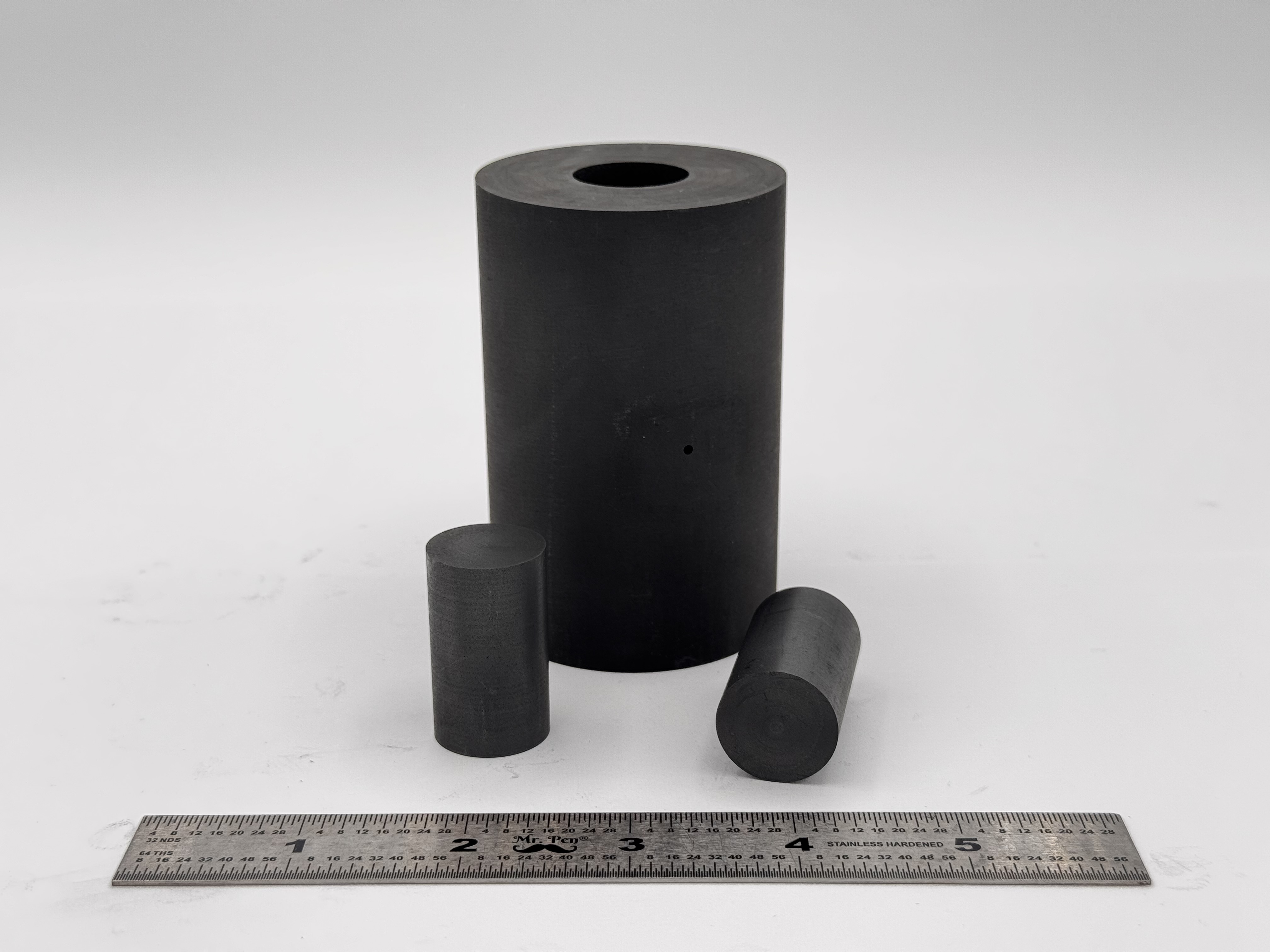
 High Strength SPS Graphite Tooling
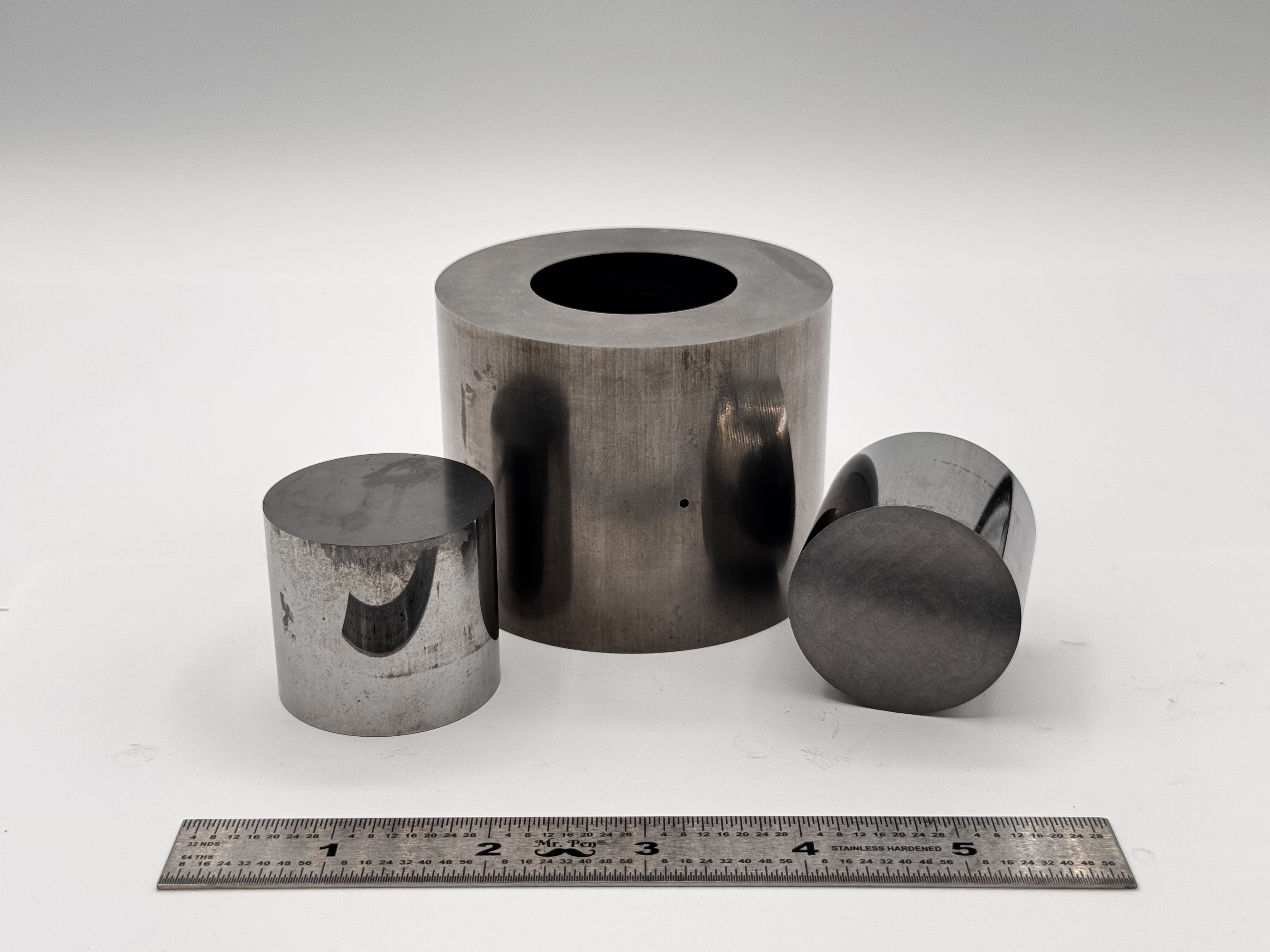 Tungsten Carbide Tooling
 Carbon Graphite Foil / Paper
 Carbon Felt and Yarn
 Spark Plasma Sintering Systems
 SPS/FAST Modeling Software
Diffusion Bonding: Advancing the Future of Advanced Materials Manufacturing
As advanced materials continue to reshape industries ranging from aerospace and defense to energy, medical technology, and semiconductor manufacturing, the challenge is no longer simply creating innovative materials—it is manufacturing them into usable components without sacrificing the properties that make them extraordinary. California Nanotechnologies (Cal Nano) addresses this challenge through a suite of cutting-edge materials processing technologies, with diffusion bonding serving as one of the company's most valuable capabilities for producing high-performance, precision-engineered assemblies.
Unlike conventional joining methods that rely on melting materials together, diffusion bonding joins components in the solid state through carefully controlled heat, pressure, and time. The result is an exceptionally strong, clean bond that preserves the carefully engineered microstructures of advanced materials. For organizations developing next-generation products, this capability opens new possibilities for performance, reliability, and design flexibility.
Joining Materials Without Compromise
Traditional welding has served manufacturing well for decades, but it presents significant limitations when working with advanced alloys, nanostructured materials, and precision-engineered components. Melting materials introduces heat-affected zones, residual stresses, distortion, and microstructural changes that can reduce performance. For many of today's high-performance materials, these effects are simply unacceptable.
Diffusion bonding offers an entirely different approach.
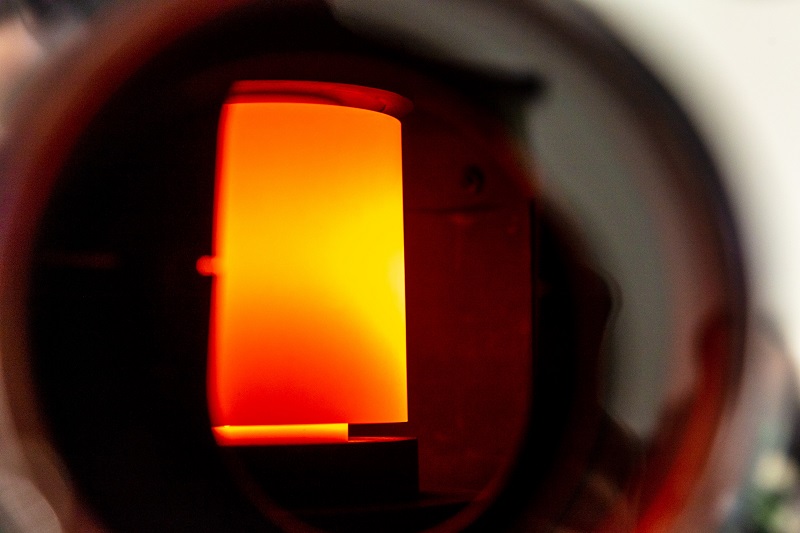
Instead of melting the materials, Cal Nano carefully brings two prepared surfaces into intimate contact under elevated temperature and controlled pressure inside a vacuum or inert atmosphere. Over time, atoms naturally diffuse across the interface, creating a permanent metallurgical bond. Because the materials remain in the solid state throughout the process, the finished component retains the properties that engineers worked so carefully to achieve during earlier processing.
The resulting bond often becomes virtually indistinguishable from the parent material, providing excellent mechanical strength, thermal conductivity, fatigue resistance, and dimensional stability.
A Perfect Complement to Advanced Materials Processing
What makes diffusion bonding especially valuable at California Nanotechnologies is how seamlessly it integrates with the company's broader portfolio of advanced manufacturing technologies.
Cal Nano has established itself as a leader in advanced materials processing through capabilities that include Spark Plasma Sintering (SPS), Hot Isostatic Pressing (HIP), cryomilling, high-energy powder processing, particle size analysis, vacuum brazing, and advanced hot pressing. Each of these technologies contributes to producing materials with exceptional properties. Diffusion bonding extends those capabilities by allowing individual components to be assembled into larger, more complex systems without degrading their performance.
Rather than viewing diffusion bonding as an isolated manufacturing process, Cal Nano incorporates it as part of a complete materials engineering workflow. Researchers can develop advanced powders, consolidate them into dense components, optimize their microstructures, and then join those components into finished assemblies while maintaining material integrity throughout the manufacturing process.
This integrated approach significantly reduces the compromises that often accompany traditional fabrication techniques.
Preserving Nanostructures That Matter
Many advanced materials derive their remarkable performance from structures measured in nanometers. Fine grain sizes, engineered particle distributions, and carefully controlled phase compositions can dramatically improve strength, wear resistance, thermal conductivity, corrosion resistance, or electrical performance.
Unfortunately, these same nanostructures are often vulnerable to high temperatures associated with conventional joining methods.
When materials are melted during welding, grains can grow significantly, reducing many of the advantages that nanotechnology provides. Heat can also trigger undesirable phase transformations, introduce residual stress, and alter the distribution of strengthening particles.
Diffusion bonding avoids these problems because the materials never become liquid.
For Cal Nano's customers, this means components produced through advanced powder metallurgy, cryomilling, or Spark Plasma Sintering can be assembled into larger structures while preserving the finely engineered microstructures that define their performance.
Maintaining these nanoscale characteristics is especially important for aerospace components, high-temperature alloys, advanced ceramics, defense systems, and research materials where even subtle microstructural changes can affect long-term reliability.
Expanding the Possibilities of Spark Plasma Sintering
Spark Plasma Sintering has become one of California Nanotechnologies' signature technologies. SPS enables rapid densification of powders while minimizing grain growth, making it particularly effective for manufacturing nanostructured materials and advanced ceramics.
However, every manufacturing process has practical size limitations.
Diffusion bonding provides an elegant solution.
Rather than attempting to manufacture a large complex component as a single SPS part, engineers can fabricate multiple precision components individually before joining them into a larger assembly using diffusion bonding.
This approach preserves the microstructural advantages achieved during SPS while enabling significantly larger and more sophisticated finished products.
For customers developing next-generation reactor components, aerospace hardware, defense systems, or advanced industrial equipment, the combination of SPS and diffusion bonding offers tremendous design flexibility that would be difficult to achieve through conventional manufacturing alone.
Enabling Multi-Material Engineering
Modern engineering increasingly relies on combining different materials within a single assembly to optimize overall performance.
One section of a component may require exceptional thermal conductivity. Another may prioritize corrosion resistance. A third may need high wear resistance or electrical insulation.
Diffusion bonding enables these multi-material solutions by joining compatible materials without introducing filler metals that could compromise performance.
California Nanotechnologies works with a wide variety of advanced materials, including titanium alloys, stainless steels, nickel superalloys, refractory metals, advanced ceramics, and experimental material systems. Diffusion bonding allows these materials to be incorporated into highly engineered assemblies while maintaining clean, reliable interfaces.
This capability supports the development of functionally graded materials, layered composites, advanced heat exchangers, electronic packaging, and specialized research components.
Precision Manufacturing for Complex Applications
Many of today's most advanced technologies depend on internal geometries that would have been nearly impossible to manufacture only a few decades ago.
Compact heat exchangers, microfluidic devices, cooling plates, and advanced reactor components frequently contain intricate internal channels that must remain perfectly sealed throughout years of operation.
Diffusion bonding allows multiple precision-machined or chemically etched layers to be permanently joined together without collapsing or deforming these delicate internal structures.
The result is exceptionally leak-tight assemblies capable of operating under demanding temperature and pressure conditions.
These manufacturing techniques are increasingly valuable across industries including semiconductor manufacturing, hydrogen energy, aerospace propulsion, advanced nuclear systems, and scientific instrumentation.
Supporting High-Entropy Alloy Research
California Nanotechnologies has become well known for its work with high-entropy alloys (HEAs), an emerging class of advanced materials composed of multiple principal elements rather than one dominant metal.
HEAs offer exciting combinations of strength, toughness, oxidation resistance, and high-temperature stability that are attracting significant interest across aerospace, defense, and energy applications.
Diffusion bonding plays an important supporting role in this research.
Researchers can join HEA components while preserving their carefully engineered microstructures, create layered experimental materials, evaluate interface behavior between different alloy systems, and manufacture test specimens for mechanical characterization.
The ability to produce clean, consistent joints allows researchers to better understand how these innovative materials behave under real-world service conditions.
Accelerating Innovation from Research to Production
One of Cal Nano's greatest strengths lies in helping customers move promising materials from laboratory-scale experiments toward commercial manufacturing.
Many organizations successfully develop new materials but struggle when those materials must be incorporated into larger, functional components. Traditional joining methods often become a bottleneck because they alter the very properties researchers worked so hard to create.
Diffusion bonding helps eliminate that obstacle.
Whether supporting government laboratories, universities, aerospace manufacturers, defense contractors, or commercial technology companies, Cal Nano provides a manufacturing pathway that preserves material performance while enabling increasingly sophisticated product designs.
This ability to bridge research and production shortens development timelines and reduces technical risk for organizations pursuing advanced materials innovation.
A Strategic Capability for Advanced Industries
The industries served by California Nanotechnologies demand manufacturing processes that deliver exceptional consistency, precision, and reliability.
In aerospace, every gram matters and every joint must withstand extreme environments.
In medical technology, contamination-free manufacturing and dimensional precision are essential.
In semiconductor manufacturing, ultra-clean assemblies support increasingly sophisticated processing equipment.
In energy systems, materials must endure high temperatures, corrosive environments, and decades of continuous operation.
Diffusion bonding addresses these demanding requirements while providing engineers with greater design freedom than many traditional joining methods can offer.
California Nanotechnologies: Integrating Advanced Manufacturing Technologies
While diffusion bonding is an impressive capability on its own, its greatest value comes from its integration with California Nanotechnologies' broader expertise in advanced materials engineering. The company offers customers a comprehensive set of processing technologies—including cryomilling, particle size analysis, Spark Plasma Sintering, Hot Isostatic Pressing, advanced hot pressing, vacuum brazing, and diffusion bonding—that can be combined into customized manufacturing solutions tailored to each application.
This end-to-end approach allows Cal Nano to support every stage of the product development cycle, from material characterization and prototype fabrication to full-scale production of complex, high-performance components. Rather than relying on multiple suppliers for different processing steps, customers benefit from a single partner with deep expertise in advanced materials and solid-state manufacturing.
As industries continue to push the boundaries of what materials can achieve, the ability to join complex components without compromising their performance becomes increasingly important. Diffusion bonding is one of the enabling technologies making this possible, and California Nanotechnologies has established itself at the forefront of this field. By combining diffusion bonding with its comprehensive portfolio of advanced processing capabilities, Cal Nano helps researchers, engineers, and manufacturers transform innovative material concepts into practical, high-performance solutions for some of the world's most demanding applications.