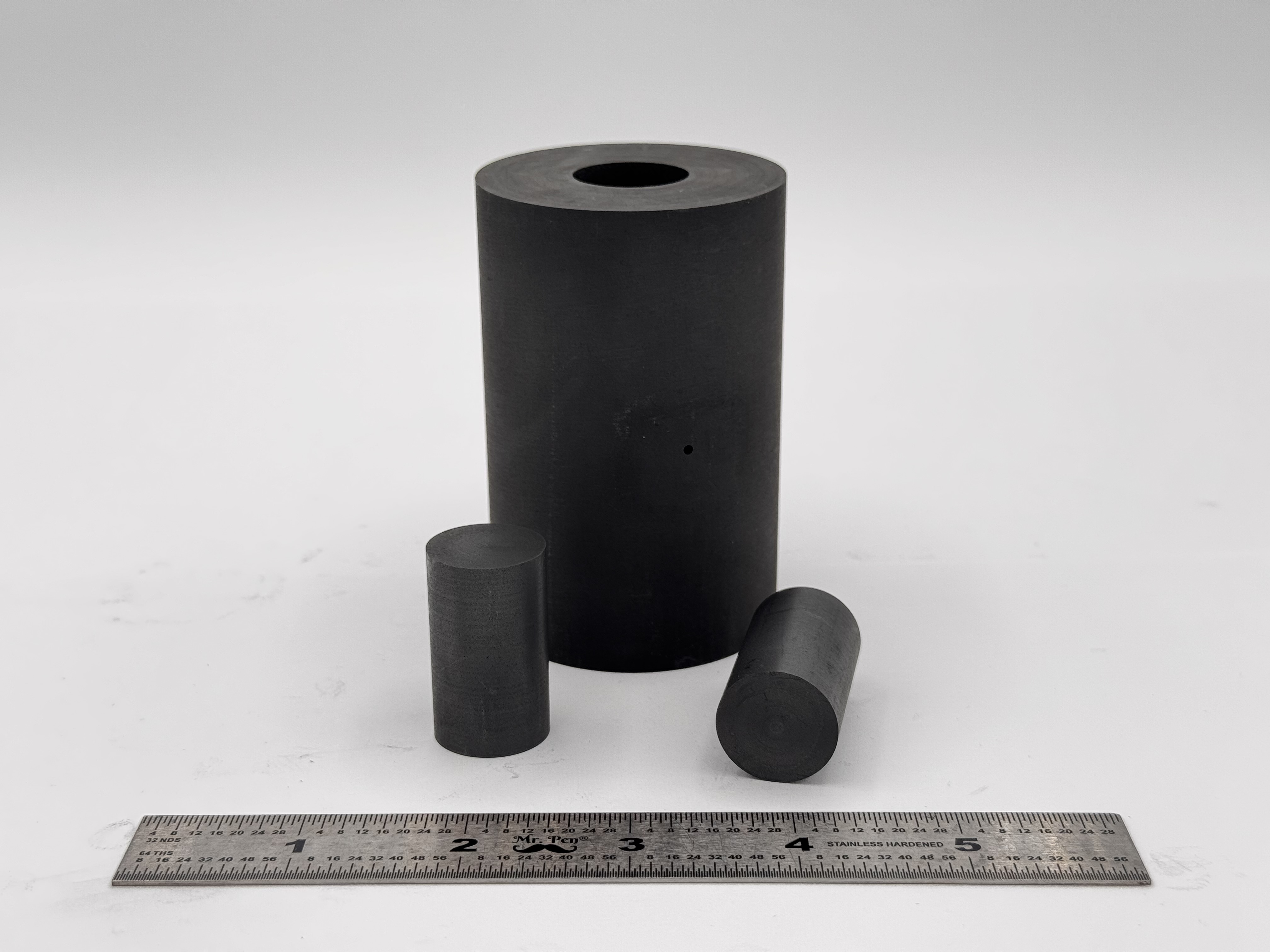
 High Strength SPS Graphite Tooling
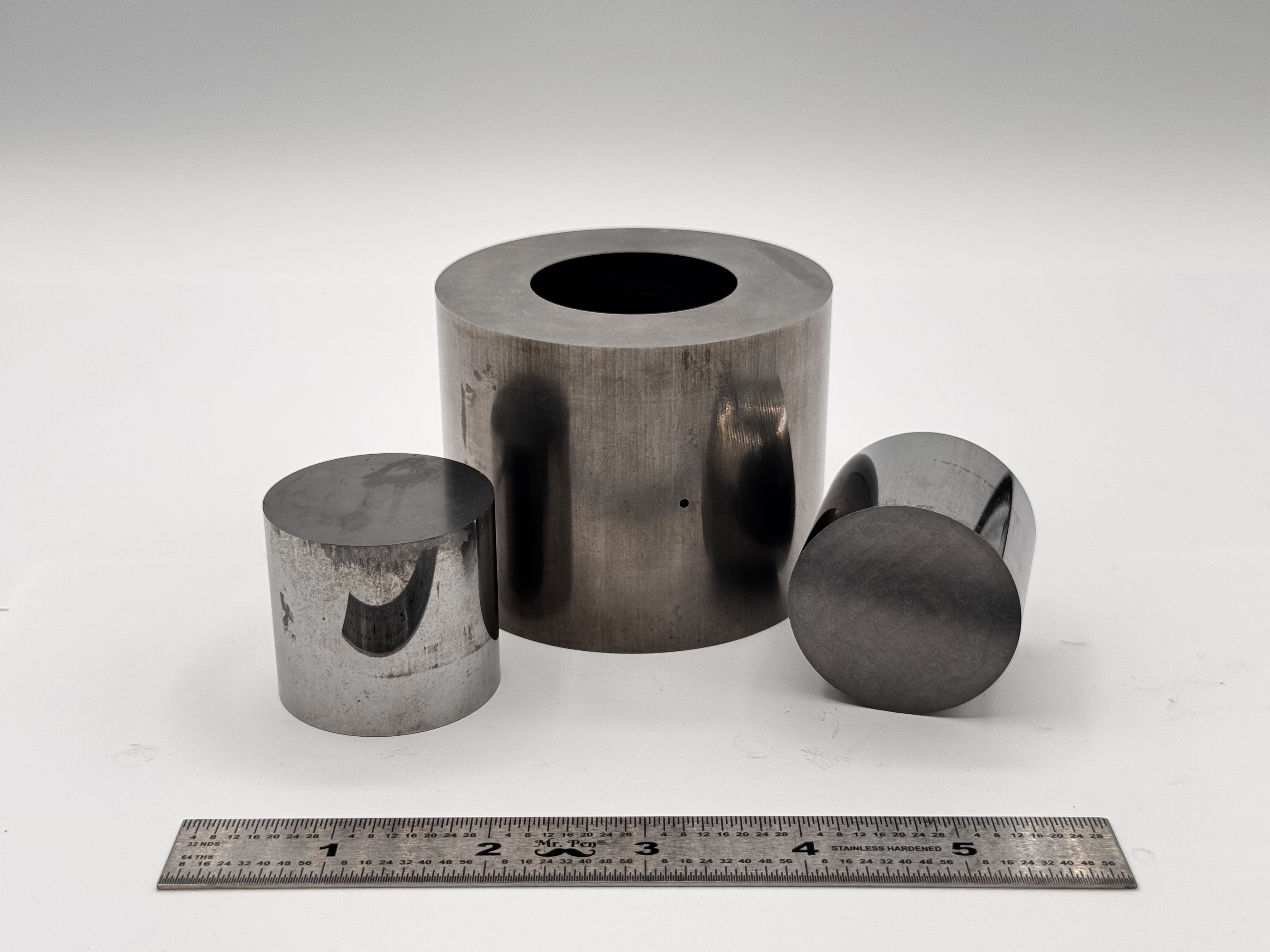 Tungsten Carbide Tooling
 Carbon Graphite Foil / Paper
 Carbon Felt and Yarn
 Spark Plasma Sintering Systems
 SPS/FAST Modeling Software
Direct Current Sintering (DCS): How It Works and Where It Is Used in Modern Manufacturing
The demand for stronger, lighter, and more heat-resistant materials has never been greater. Industries ranging from aerospace and defense to clean energy and medical technology are constantly searching for manufacturing methods that can produce advanced materials with exceptional performance while reducing production time and energy consumption. One of the technologies helping meet these demands is Direct Current Sintering (DCS).
Direct Current Sintering is an advanced powder consolidation process that uses electrical current and pressure to rapidly transform powdered materials into fully dense, high-performance components. By dramatically reducing processing time while preserving the material's microstructure, DCS has become an important manufacturing technology for research institutions and commercial manufacturers working with advanced ceramics, refractory metals, high-entropy alloys, and metal matrix composites.
For organizations such as California Nanotechnologies (Cal Nano), Direct Current Sintering represents an important capability for developing next-generation materials that can withstand extreme temperatures, high mechanical loads, and demanding operating environments.
What Is Direct Current Sintering?
Direct Current Sintering is a field-assisted powder metallurgy process in which powdered material is placed inside a conductive graphite die and compressed under uniaxial pressure. A high direct electrical current passes through the tooling—and, when the material is electrically conductive, through the powder itself—creating rapid internal heating through electrical resistance.
Unlike traditional furnace sintering, which slowly heats an entire chamber over several hours, DCS generates heat directly within the tooling and material. This allows heating rates of several hundred degrees per minute and enables full densification in a fraction of the time required by conventional methods.
The result is a dense, high-quality component with excellent mechanical properties and minimal grain growth.
How Direct Current Sintering Works
Although the technology is highly sophisticated, the manufacturing process follows a straightforward sequence.
The desired powder is first loaded into a precision graphite die. Depending on the application, this powder may consist of metals, ceramics, composites, or specially engineered alloy blends.
Once the powder is loaded, pressure is applied using hydraulic rams while a high direct current flows through the graphite tooling. The electrical resistance of the tooling and material rapidly converts electrical energy into heat through Joule heating.
As the temperature rises, the powder particles begin to bond together. Pressure simultaneously forces the particles into closer contact, eliminating pores and increasing density. Because heating occurs internally rather than from an external furnace, the entire process happens remarkably quickly.
Once the desired temperature and density are achieved, the current is stopped, the component cools under controlled conditions, and the finished part is removed from the die.
The entire cycle often takes minutes instead of hours.
Why Rapid Heating Matters
One of the greatest advantages of Direct Current Sintering is its ability to minimize grain growth.
During conventional sintering, materials spend long periods at elevated temperatures. While this promotes bonding between particles, it also allows crystal grains to grow larger. Excessive grain growth can reduce strength, toughness, hardness, and wear resistance.
Because DCS reaches processing temperatures rapidly and maintains them only briefly, materials retain much finer grain structures. This often translates directly into improved mechanical performance.
The shorter processing cycle also reduces oxidation, minimizes unwanted chemical reactions, lowers energy consumption, and allows manufacturers to process temperature-sensitive materials that might otherwise degrade.
Materials Commonly Processed Using DCS
One reason Direct Current Sintering has gained widespread attention is its versatility. It is capable of processing an extensive range of advanced materials that are difficult to manufacture using traditional methods.
Advanced Ceramics
Engineering ceramics require extremely high temperatures and careful process control to achieve full density.
Common examples include:
Boron carbide
Silicon carbide
Alumina
Zirconia
Titanium diboride
These materials are widely used in armor systems, cutting tools, wear components, aerospace hardware, and high-temperature industrial equipment.
Refractory Metals
Metals such as tungsten, molybdenum, tantalum, and niobium possess extraordinarily high melting temperatures. Conventional processing methods can be slow and energy intensive.
DCS enables these materials to reach high densities while reducing processing time and preserving desirable mechanical properties.
High-Entropy Alloys
High-entropy alloys (HEAs) represent one of the fastest-growing areas of materials science. Instead of relying on one primary metal, HEAs combine multiple principal elements in nearly equal concentrations.
These alloys often exhibit exceptional strength, corrosion resistance, and thermal stability.
Direct Current Sintering allows manufacturers to consolidate HEA powders while preserving the carefully engineered microstructures responsible for these unique properties.
Metal Matrix Composites
Many advanced structural materials combine metallic matrices with ceramic reinforcements, carbon nanotubes, or graphene.
Rapid consolidation minimizes unwanted chemical reactions between reinforcement materials and the surrounding metal, resulting in stronger and more reliable composite structures.
Nanostructured Materials
Nanomaterials derive much of their performance from extremely small grain sizes.
Since DCS limits exposure to elevated temperatures, it helps preserve nanoscale features that would otherwise disappear during conventional processing.
Where Direct Current Sintering Is Used
As industries demand increasingly specialized materials, Direct Current Sintering has become an enabling technology across numerous sectors.
Aerospace Manufacturing
Aircraft engines, spacecraft, satellites, and hypersonic vehicles all operate in environments where conventional materials often reach their limits.
DCS enables the production of components capable of surviving:
Extreme temperatures
Rapid thermal cycling
High mechanical stress
Aggressive oxidation environments
Applications include thermal protection systems, turbine components, lightweight structural materials, and advanced ceramic parts.
Defense Applications
Military systems frequently require materials that combine lightweight construction with exceptional durability.
Direct Current Sintering is used to manufacture:
Ballistic armor ceramics
Penetrator materials
Wear-resistant components
High-temperature structural materials
Hypersonic vehicle components
Because many defense materials rely on ultra-fine microstructures, the rapid processing offered by DCS provides a significant advantage.
Nuclear and Clean Energy
Energy technologies continue to push materials beyond conventional operating conditions.
Direct Current Sintering supports manufacturing for:
Nuclear reactor materials
Fusion energy research
Hydrogen production systems
Solid oxide fuel cells
Advanced battery research
Thermal management systems
Many of these applications require dense materials with exceptional thermal conductivity, corrosion resistance, and dimensional stability.
Electronics and Semiconductor Manufacturing
Electronic systems increasingly rely on specialized ceramics and conductive materials capable of operating reliably under high temperatures and electrical loads.
DCS is commonly used for:
Conductive ceramics
Magnetic materials
Electrical contacts
Semiconductor substrates
Heat spreaders
Thermal interface materials
Rapid densification helps maintain the precise microstructures necessary for predictable electrical performance.
Medical Technology
Medical devices require materials that combine strength, wear resistance, and biocompatibility.
Direct Current Sintering supports production of:
Implant materials
Surgical instruments
Dental components
Bioceramics
Specialized orthopedic materials
The process enables excellent density while minimizing defects that could affect long-term performance.
Industrial Manufacturing
Industrial equipment often operates in abrasive, corrosive, or high-temperature environments.
DCS-produced materials are found in:
Cutting tools
Wear plates
Dies
Molds
Industrial bearings
Heat-resistant fixtures
The improved hardness and wear resistance achieved through rapid sintering often extend component life while reducing maintenance costs.
Advantages Over Conventional Manufacturing
Direct Current Sintering offers numerous benefits that continue to drive adoption throughout advanced manufacturing.
Compared to traditional sintering, DCS provides:
Faster production cycles
Higher material density
Reduced grain growth
Lower processing temperatures
Improved mechanical properties
Greater energy efficiency
Better dimensional control
Enhanced material consistency
Reduced oxidation
Improved retention of nanoscale microstructures
These advantages allow manufacturers to produce materials that may not be feasible using conventional furnace processing.
California Nanotechnologies' Direct Current Sintering Expertise
As advanced materials become increasingly important across high-performance industries, manufacturing partners must possess both sophisticated equipment and deep materials expertise.
California Nanotechnologies leverages Direct Current Sintering as part of its broader advanced materials manufacturing capabilities, helping customers develop and produce innovative materials for research, prototyping, and commercial production. Whether processing advanced ceramics, refractory metals, high-entropy alloys, or complex composite systems, Cal Nano works closely with customers to optimize process parameters for each unique material and application.
By combining DCS with complementary capabilities such as Spark Plasma Sintering (SPS), Hot Isostatic Pressing (HIP), diffusion bonding, cryomilling, vacuum brazing, and advanced materials characterization, Cal Nano provides comprehensive solutions for organizations developing the next generation of high-performance materials.
Advancing the Future of Materials Manufacturing
Direct Current Sintering has emerged as one of the most important manufacturing technologies for advanced materials because it addresses one of the industry's greatest challenges: producing dense, high-performance components without compromising the microstructures that give those materials their exceptional properties.
Its ability to rapidly consolidate powders while reducing energy consumption, shortening production cycles, and preserving fine grain structures makes DCS an increasingly valuable tool for industries pushing the boundaries of engineering performance.
As aerospace, defense, clean energy, electronics, and medical technologies continue to evolve, Direct Current Sintering will play an increasingly significant role in transforming innovative material concepts into reliable, high-performance products. Companies like California Nanotechnologies are helping lead that transformation by providing the expertise and advanced processing capabilities needed to bring these next-generation materials from the laboratory to real-world applications.