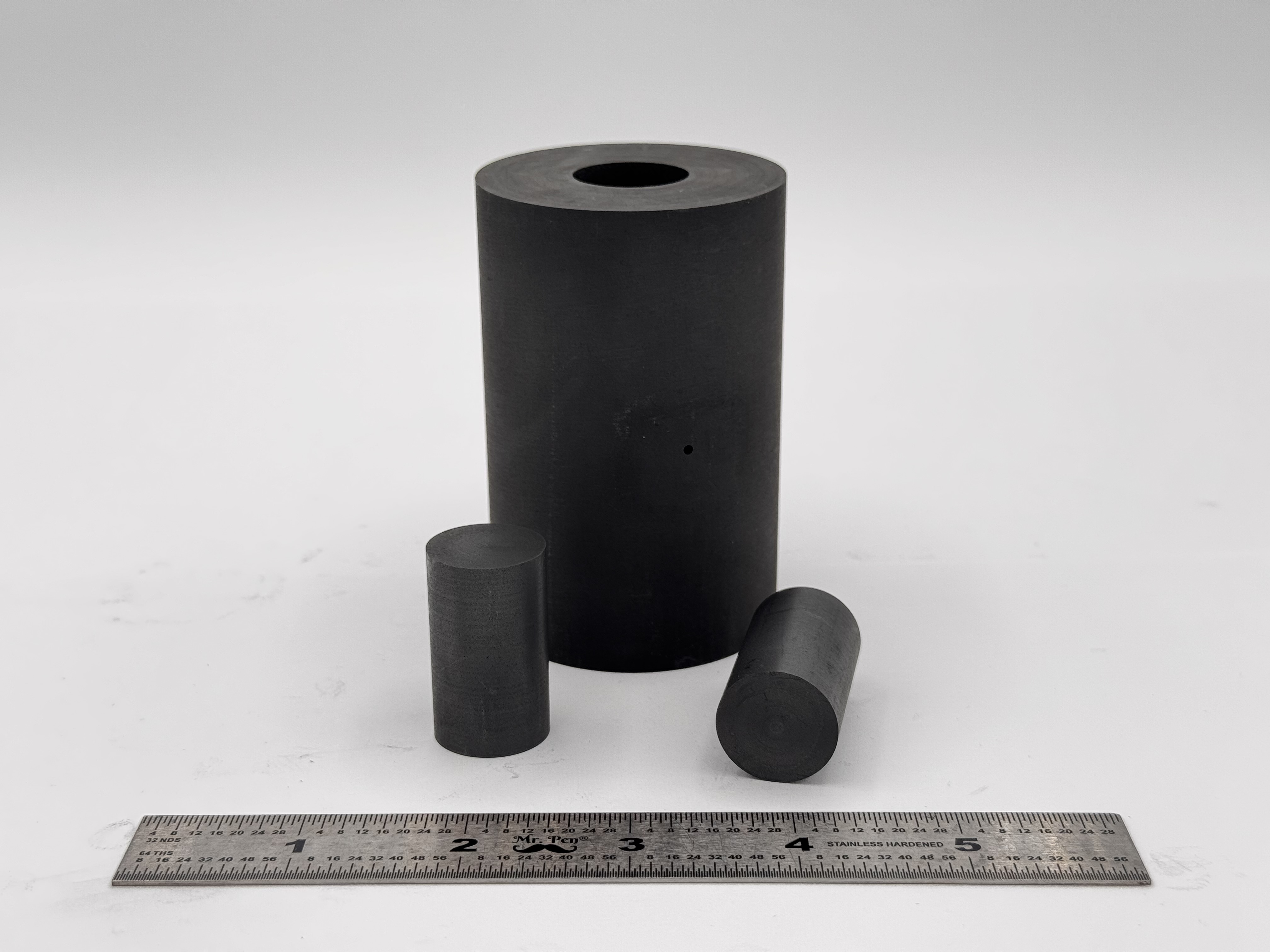
 High Strength SPS Graphite Tooling
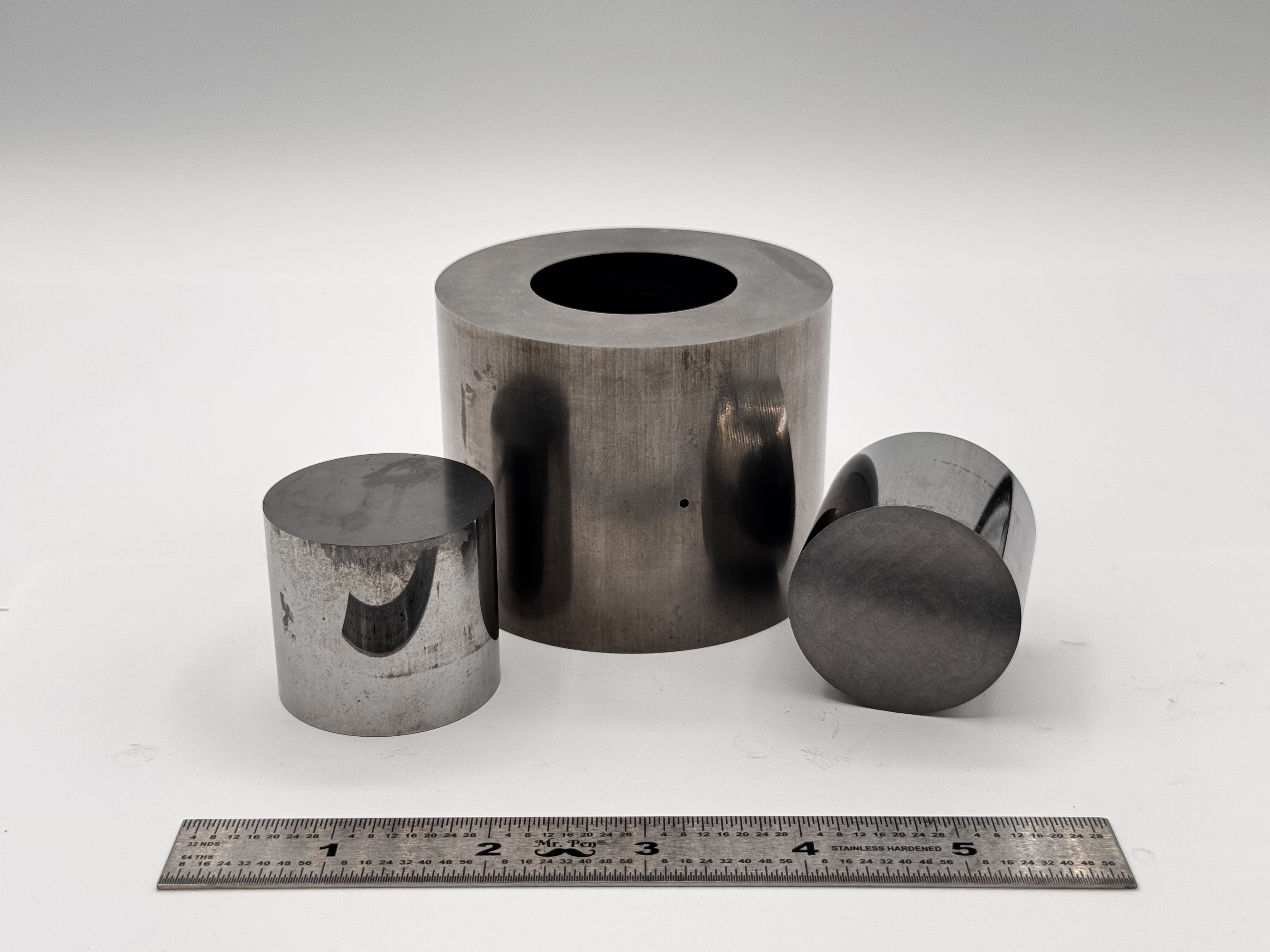 Tungsten Carbide Tooling
 Carbon Graphite Foil / Paper
 Carbon Felt and Yarn
 Spark Plasma Sintering Systems
 SPS/FAST Modeling Software
Tungsten Carbide Tooling: The Foundation of Precision Manufacturing for Advanced Materials
As manufacturers push the boundaries of material science, the demand for stronger, lighter, and more durable materials continues to grow. Industries ranging from aerospace and defense to medical devices and renewable energy increasingly rely on advanced manufacturing processes capable of producing components with microscopic precision. At the center of many of these processes is tungsten carbide tooling, a material renowned for its exceptional hardness, wear resistance, and dimensional stability.
While tungsten carbide itself is not a nanomaterial, tungsten carbide tooling is indispensable in the production of advanced materials, nanostructured components, and high-performance engineered products. Companies specializing in advanced manufacturing, such as California Nanotechnologies (Cal Nano), use precision tooling alongside innovative technologies like Spark Plasma Sintering (SPS), Hot Isostatic Pressing (HIP), diffusion bonding, vacuum brazing, and Direct Current Sintering (DCS) to transform advanced powders into components that meet demanding industrial specifications.
What Is Tungsten Carbide Tooling?
Tungsten carbide tooling refers to dies, punches, molds, inserts, cutting tools, and wear components manufactured from tungsten carbide—a composite material made by combining tungsten carbide particles with a metallic binder, typically cobalt or nickel.
This unique combination produces tooling that offers remarkable mechanical properties, including exceptional hardness, high compressive strength, outstanding wear resistance, and the ability to maintain precise dimensions even under extreme pressures and elevated temperatures. Compared to conventional tool steels, tungsten carbide tooling delivers significantly longer service life while maintaining consistent manufacturing accuracy throughout extended production runs.
These qualities make it an ideal solution for manufacturing applications where precision is measured in microns rather than millimeters.
Why Tungsten Carbide Tooling Matters
Modern manufacturing is increasingly focused on materials that are more difficult to machine than traditional metals. Advanced ceramics, titanium alloys, superalloys, metal matrix composites, and nanostructured materials often exhibit extreme hardness and abrasion resistance.
Producing these materials requires tooling capable of withstanding enormous mechanical stresses without wearing or deforming. Even slight changes in tool geometry can introduce dimensional errors that affect the performance of the finished product.
Tungsten carbide tooling addresses these challenges by maintaining its cutting edges, forming surfaces, and dimensional accuracy far longer than conventional tooling materials. This consistency helps manufacturers reduce scrap, improve repeatability, and achieve the tight tolerances required for today's most advanced engineering applications.
Supporting Nanotechnology and Advanced Materials
Although tungsten carbide is not itself considered a nanotechnology material, it serves as an essential manufacturing enabler throughout the advanced materials industry.
Many nanotechnology products begin as ultrafine powders. These powders must be compacted into carefully controlled shapes before undergoing high-temperature densification processes. Tungsten carbide dies and punches are commonly used during powder compaction because they can withstand extremely high pressures without distortion.
This capability is particularly valuable when manufacturing:
Nanoceramics
Metal matrix composites
Advanced magnetic materials
Battery components
High-performance structural materials
Maintaining precise dimensions during powder pressing helps ensure consistent density throughout the compact, ultimately improving the mechanical properties of the finished component.
Tungsten Carbide Tooling in Spark Plasma Sintering
One of the fastest-growing manufacturing technologies for advanced materials is Spark Plasma Sintering (SPS), also known as Field Assisted Sintering Technology (FAST).
SPS rapidly consolidates powders by simultaneously applying heat, pressure, and electrical current, allowing manufacturers to achieve full density while minimizing grain growth. Preserving these fine microstructures is often critical for maintaining the unique properties of nanomaterials.
Although graphite dies are used directly during the SPS process, tungsten carbide tooling plays an important supporting role throughout production. Precision carbide tools are frequently used to prepare powder compacts, machine tooling components, finish sintered parts, and fabricate fixtures used in advanced materials research.
Organizations like California Nanotechnologies utilize SPS to produce dense, high-performance materials for aerospace, defense, energy, and research applications where precision tooling is essential for successful processing.
Precision Machining of Difficult Materials
Advanced engineering materials often present significant machining challenges due to their hardness and abrasion resistance.
Industries increasingly depend on tungsten carbide tooling to machine:
Titanium alloys
Nickel-based superalloys
High-entropy alloys (HEAs)
Refractory metals
Advanced ceramics
Composite materials
These materials quickly wear conventional cutting tools, leading to poor surface finishes, inconsistent dimensions, and increased production costs.
Carbide tooling allows manufacturers to maintain tighter tolerances while extending tool life, reducing downtime, and improving overall machining efficiency.
Manufacturing Advanced Ceramics
Ceramic materials continue to play an expanding role in electronics, medical devices, semiconductor manufacturing, aerospace, and energy production.
Materials such as zirconia, aluminum oxide, silicon nitride, silicon carbide, and boron carbide are extremely abrasive, making them difficult to process using traditional tooling.
Tungsten carbide tooling provides the durability required to machine these ceramics while maintaining the precision necessary for demanding applications. The result is improved dimensional consistency, higher-quality surface finishes, and greater manufacturing efficiency throughout production.
Battery and Energy Applications
The transition toward electrification has accelerated demand for advanced battery materials and energy storage technologies.
Many battery components begin as carefully engineered powders that require precise forming before sintering. Tungsten carbide tooling supports the production of:
Solid-state battery materials
Fuel cell components
Hydrogen storage materials
Battery electrodes
Advanced energy ceramics
Because carbide tooling resists wear over long production runs, manufacturers can maintain consistent part geometry and material density—both of which are critical for battery performance and reliability.
Medical Device Manufacturing
Medical technologies increasingly rely on advanced materials capable of delivering exceptional strength, corrosion resistance, and biocompatibility.
Tungsten carbide tooling helps manufacture precision components used in:
Orthopedic implants
Dental devices
Surgical instruments
Medical sensors
Microfluidic systems
Maintaining extremely tight dimensional tolerances is particularly important in the medical industry, where even microscopic deviations can affect product performance or patient safety.
Electronics and Semiconductor Manufacturing
As electronic devices continue to shrink while becoming more powerful, manufacturing tolerances become increasingly demanding.
Tungsten carbide tooling supports the production of miniature components used in:
Semiconductor packaging
Electronic connectors
MEMS devices
Precision housings
Sensor components
Its exceptional wear resistance helps ensure that microscopic features remain consistent throughout long production runs, reducing variation and improving product quality.
The Benefits of Tungsten Carbide Tooling
Manufacturers across numerous industries choose tungsten carbide tooling because it offers a combination of performance characteristics that few other materials can match.
Its exceptional hardness allows it to withstand highly abrasive materials, while its superior compressive strength enables extremely high forming pressures during powder compaction. Excellent dimensional stability ensures repeatable precision, even during demanding manufacturing cycles. Longer tool life reduces replacement costs, minimizes production downtime, and improves overall manufacturing efficiency.
Perhaps most importantly, tungsten carbide tooling provides the consistency necessary for producing advanced materials where precision is essential rather than optional.
California Nanotechnologies and Precision Manufacturing
As a leader in advanced materials processing, California Nanotechnologies (Cal Nano) understands that successful manufacturing depends not only on innovative processing technologies but also on the precision of the tooling used throughout production.
Through advanced capabilities including Spark Plasma Sintering (SPS/FAST), Hot Isostatic Pressing (HIP), diffusion bonding, vacuum brazing, Direct Current Sintering (DCS), and advanced materials engineering, Cal Nano helps customers develop and manufacture next-generation materials for aerospace, defense, energy, medical, and industrial applications.
The company's expertise in processing challenging materials is supported by the use of high-performance tooling capable of maintaining the tight tolerances required for advanced manufacturing.
Why Tungsten Carbide Tooling Will Continue to Shape the Future
The future of manufacturing is increasingly defined by advanced materials that deliver greater strength, lower weight, improved efficiency, and enhanced performance. As these materials become more sophisticated, the importance of precision tooling grows alongside them.
Tungsten carbide tooling provides the durability, dimensional accuracy, and reliability necessary to manufacture the next generation of nanostructured materials, engineered ceramics, superalloys, and advanced composites. Whether forming powders, machining difficult materials, or supporting cutting-edge research, carbide tooling remains a cornerstone of modern precision manufacturing.
For organizations developing tomorrow's materials, investing in high-quality tungsten carbide tooling—and partnering with experienced advanced materials specialists like California Nanotechnologies—helps ensure that innovation can move from the laboratory to full-scale production with the consistency and precision today's industries demand.