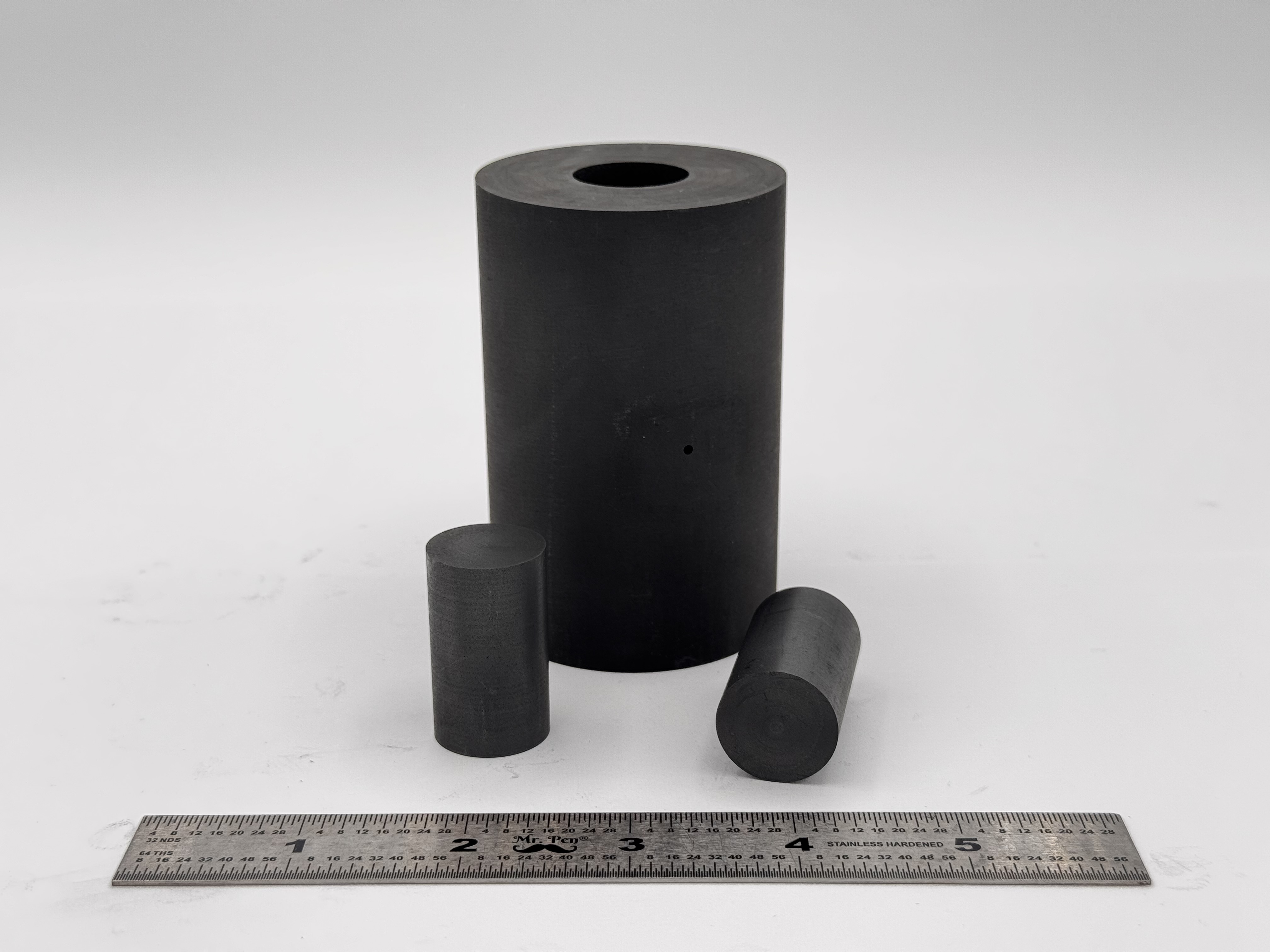
 High Strength SPS Graphite Tooling
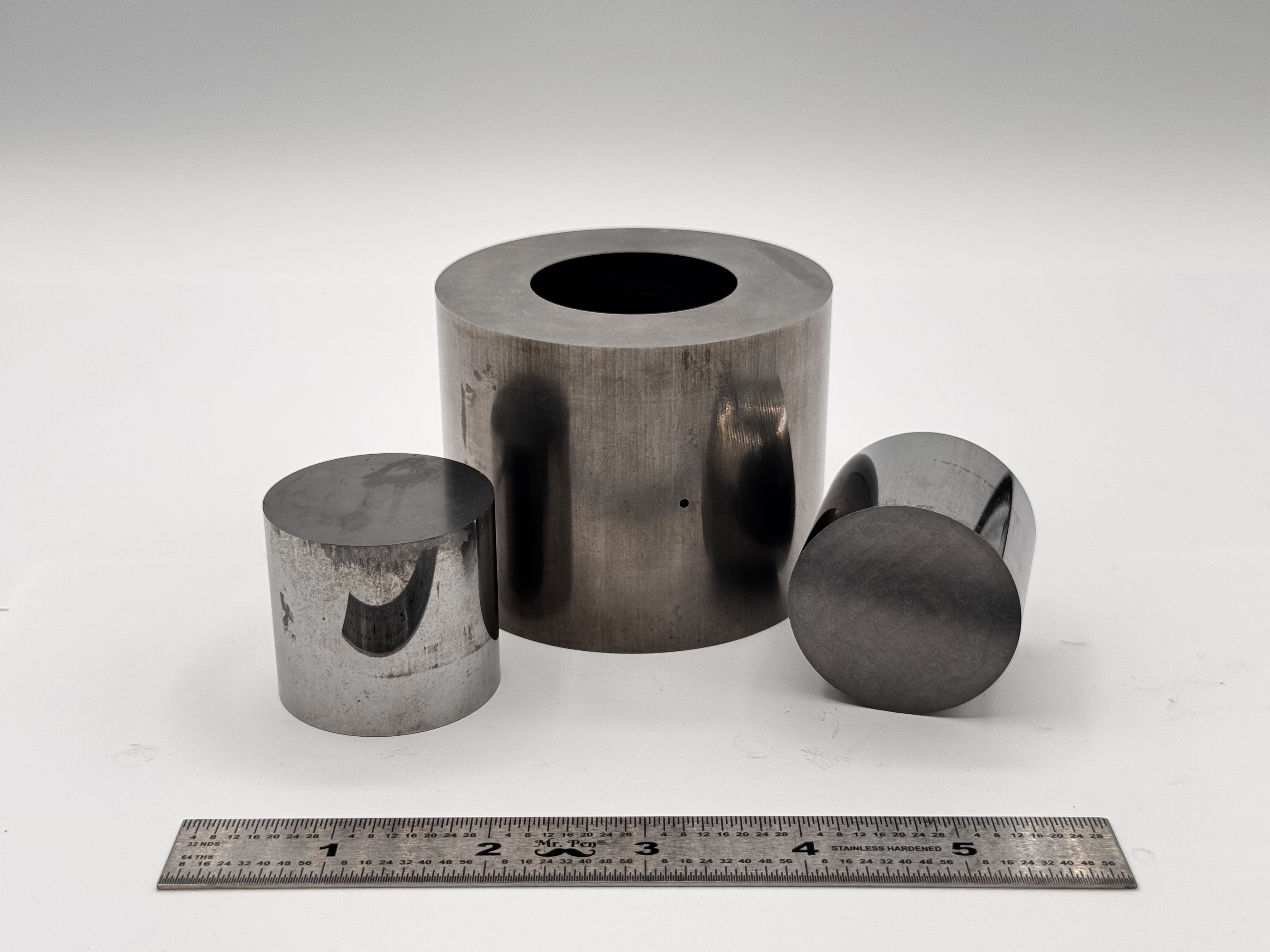 Tungsten Carbide Tooling
 Carbon Graphite Foil / Paper
 Carbon Felt and Yarn
 Spark Plasma Sintering Systems
 SPS/FAST Modeling Software
The Growing Importance of Hot Isostatic Pressing (HIP) in Advanced Manufacturing
Manufacturing has entered an era where material performance often determines the success—or failure—of entire industries. Whether producing jet engine components, medical implants, nuclear reactor materials, semiconductor equipment, or next-generation defense technologies, manufacturers are continually being asked to create parts that are lighter, stronger, longer-lasting, and capable of operating in increasingly extreme environments. Meeting these expectations requires more than traditional manufacturing techniques. It requires advanced processing technologies that can eliminate material defects while maximizing strength and reliability.
One of the most valuable technologies helping manufacturers meet these demands is Hot Isostatic Pressing (HIP). Once considered a specialized process reserved for only the most demanding aerospace applications, HIP has rapidly become a critical manufacturing solution across numerous industries. As advanced materials, powder metallurgy, additive manufacturing, and complex engineered components continue to evolve, HIP is playing an increasingly central role in transforming innovative material concepts into production-ready components.
Companies like California Nanotechnologies (Cal Nano) are helping lead this evolution by providing sophisticated HIP processing capabilities that enable customers to produce dense, high-performance materials with exceptional structural integrity and consistent mechanical properties.
What Is Hot Isostatic Pressing?
Hot Isostatic Pressing, commonly referred to as HIP, is an advanced materials processing technology that combines extremely high temperatures with high-pressure inert gas to improve the internal structure of metals, ceramics, composites, and other advanced materials.
Unlike conventional pressing methods that apply force from one or two directions, HIP applies pressure uniformly from every direction inside a sealed pressure vessel. Components are surrounded by an inert gas—typically argon—and exposed to temperatures that may exceed 2,000°C while pressures can reach well over 15,000 psi.
The combination of heat and pressure causes microscopic internal voids to collapse while promoting atomic diffusion throughout the material. As these pores disappear, particles bond together, producing an exceptionally dense structure with significantly improved mechanical properties.
The result is a component that is stronger, more reliable, and capable of performing in environments where material failure simply isn't acceptable.
Why Internal Defects Matter More Than Ever
Modern manufacturing places extraordinary demands on engineered materials.
Aircraft engines operate at temperatures that continue to increase with every generation. Medical implants must survive decades of repeated loading inside the human body. Nuclear components are expected to function safely for years under extreme pressure and radiation exposure. Electric vehicle systems require lightweight components capable of enduring millions of stress cycles.
In each of these applications, even microscopic internal defects can eventually become crack initiation points that shorten component life or lead to catastrophic failure.
These flaws are often invisible during routine inspection because they exist beneath the surface of the material. Traditional machining cannot remove them, and many conventional heat treatment processes cannot eliminate them.
HIP directly addresses this challenge by removing internal porosity throughout the entire component—not just at the surface.
Eliminating Porosity Improves Performance
One of HIP's greatest strengths is its ability to virtually eliminate internal porosity.
Tiny pores naturally form during casting, powder metallurgy, and many additive manufacturing processes. Although these voids may be microscopic, they interrupt the material's internal structure and create areas where stress can concentrate.
During HIP processing, uniform gas pressure compresses these pores while elevated temperatures encourage atoms to diffuse across particle boundaries. Over time, the internal voids disappear, creating a material that approaches theoretical density.
This improvement produces measurable gains in:
Tensile strength
Fatigue resistance
Fracture toughness
Impact resistance
Ductility
Wear resistance
Long-term reliability
Perhaps even more importantly, these improvements occur throughout the entire component rather than only on exposed surfaces.
HIP and Powder Metallurgy Are a Powerful Combination
As powder metallurgy continues to gain popularity, HIP has become an increasingly valuable complementary technology.
Powder metallurgy allows manufacturers to produce alloys and material combinations that would be difficult—or even impossible—to manufacture through traditional casting or forging. Fine metal powders can be blended, engineered, and consolidated into highly specialized components with carefully controlled chemistry.
However, achieving full density remains one of the primary challenges of powder processing.
HIP solves this problem exceptionally well.
By applying heat and isostatic pressure simultaneously, HIP transforms loose or partially consolidated powder into a nearly fully dense material while maintaining precise control over the final microstructure.
This capability has opened new possibilities for manufacturing advanced alloys, refractory metals, ceramic composites, and other engineered materials that require exceptional performance.
Supporting the Growth of Metal Additive Manufacturing
Perhaps no industry has accelerated HIP adoption more rapidly than additive manufacturing.
Metal 3D printing has revolutionized component design by allowing engineers to create geometries that were previously impossible to manufacture. Internal cooling channels, lightweight lattice structures, and highly optimized components are now becoming common in aerospace, medical, and defense applications.
Despite these advantages, additive manufacturing often introduces microscopic porosity during the printing process.
Without post-processing, these internal defects can reduce fatigue performance and create variability between otherwise identical components.
HIP has become one of the industry's preferred solutions for addressing this challenge.
After printing, components are placed inside a HIP vessel where heat and pressure eliminate internal pores while strengthening the overall microstructure. The finished parts exhibit dramatically improved mechanical properties and far greater consistency—qualities that are essential for safety-critical applications.
For many aerospace and medical manufacturers, HIP is no longer considered optional. It has become an integral part of the additive manufacturing workflow.
Enabling Next-Generation Materials
The materials being developed today are significantly more sophisticated than those used even a decade ago.
Researchers are creating high-entropy alloys, ultra-high-temperature ceramics, metal matrix composites, ceramic matrix composites, and functionally graded materials designed to outperform conventional metals under extreme conditions.
These advanced materials often require equally advanced processing technologies.
HIP enables researchers to consolidate difficult material systems while preserving carefully engineered microstructures. It also allows manufacturers to produce dense materials with fewer defects, improving both experimental consistency and production scalability.
As advanced material research accelerates worldwide, HIP continues to become more valuable as a bridge between laboratory innovation and commercial manufacturing.
Industries Driving HIP Demand
Although aerospace remains one of the largest users of HIP technology, adoption has expanded dramatically across numerous industries.
Medical manufacturers rely on HIP to improve orthopedic implants, spinal devices, surgical instruments, and dental implants where long-term fatigue performance directly affects patient outcomes.
Energy companies utilize HIP for turbine components, heat exchangers, pressure vessels, and nuclear systems that must withstand years of continuous operation.
Defense contractors process armor systems, missile components, propulsion hardware, and specialized alloys where reliability is mission-critical.
Semiconductor manufacturers increasingly require advanced materials capable of maintaining dimensional stability in highly controlled production environments.
Automotive manufacturers are also embracing HIP for high-performance engines, turbocharger components, electric vehicle technologies, and lightweight structural systems designed to improve efficiency without sacrificing durability.
Each of these industries shares one common requirement: dependable materials that perform exactly as expected under demanding operating conditions.
HIP helps make that possible.
The Value of Working with an Experienced HIP Partner
Although the concept behind HIP is straightforward, achieving consistent results requires significant expertise.
Every material behaves differently under elevated temperatures and pressures. Processing parameters—including temperature, pressure, heating rates, hold times, and cooling profiles—must all be carefully optimized for each application.
Selecting the wrong processing cycle can alter grain structure, affect dimensional stability, or limit the performance improvements that HIP is intended to provide.
This is why manufacturers increasingly seek partners with extensive materials science knowledge rather than simply access to HIP equipment.
California Nanotechnologies offers customers not only advanced HIP capabilities but also deep expertise in powder processing, advanced ceramics, diffusion bonding, Spark Plasma Sintering (SPS), and materials characterization. This broad technical foundation allows Cal Nano to develop optimized processing strategies tailored to each material system and application.
Rather than treating HIP as a standalone service, Cal Nano integrates it into comprehensive materials development and manufacturing solutions that help customers move from research and prototyping to scalable production.
HIP's Future Is Only Getting Stronger
The future of manufacturing is being shaped by increasingly demanding applications that require stronger materials, higher performance, and greater reliability. Lightweight aerospace structures, clean energy technologies, advanced medical devices, quantum technologies, and next-generation defense systems all depend on materials capable of performing under extraordinary conditions.
Hot Isostatic Pressing has become one of the enabling technologies making these innovations possible.
As additive manufacturing expands, powder metallurgy advances, and new classes of engineered materials emerge, HIP will continue to play an essential role in eliminating defects, maximizing density, and unlocking the full performance potential of advanced materials.
For organizations seeking to develop components that combine exceptional mechanical properties with long-term reliability, partnering with an experienced HIP provider is increasingly becoming a competitive advantage. California Nanotechnologies stands at the forefront of this field, combining advanced processing technologies with world-class materials expertise to help customers transform innovative material concepts into high-performance, production-ready solutions.
As manufacturing continues to evolve, the importance of HIP will only continue to grow—and so will the opportunities for companies that know how to harness its full potential.