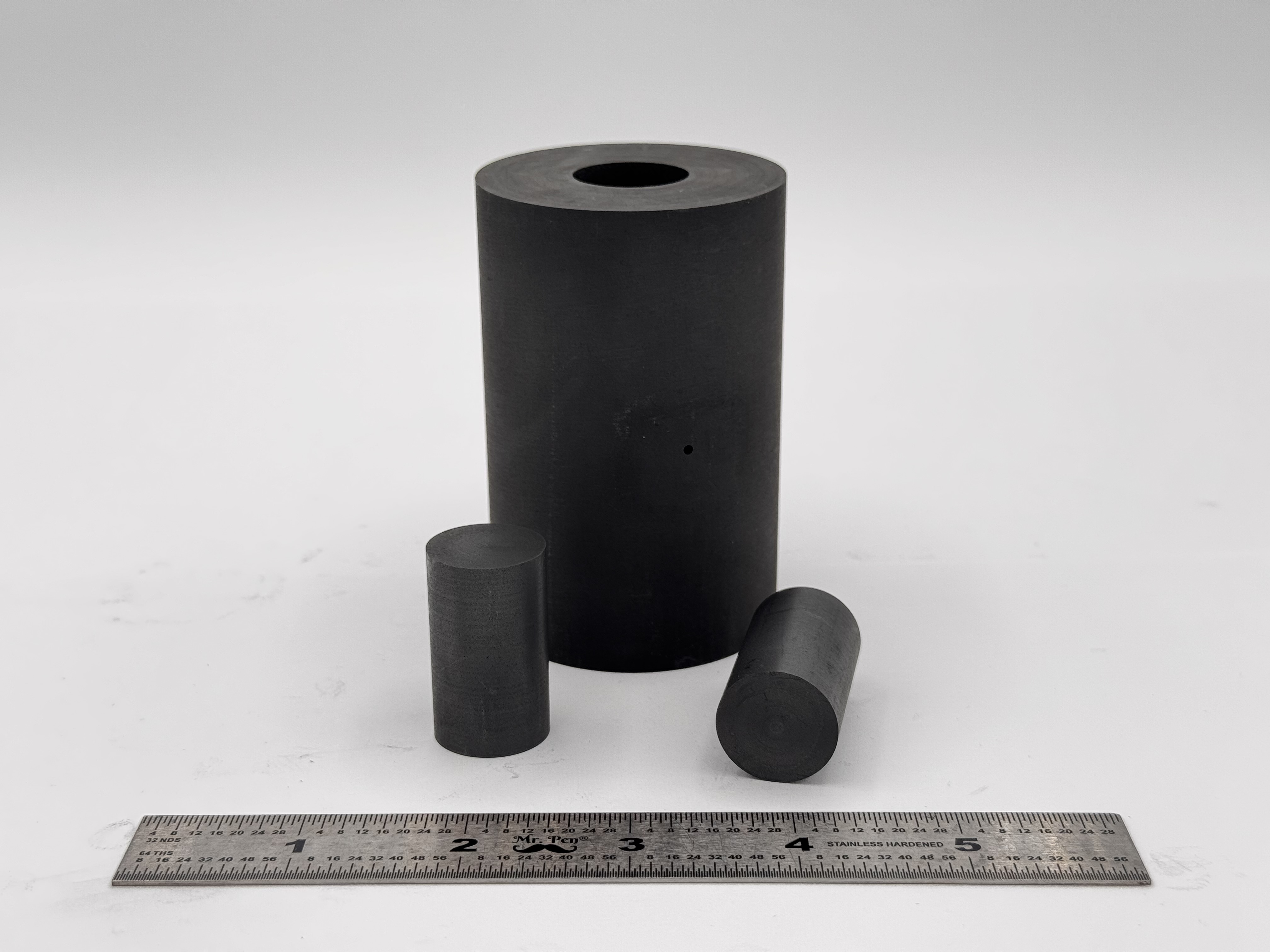
 High Strength SPS Graphite Tooling
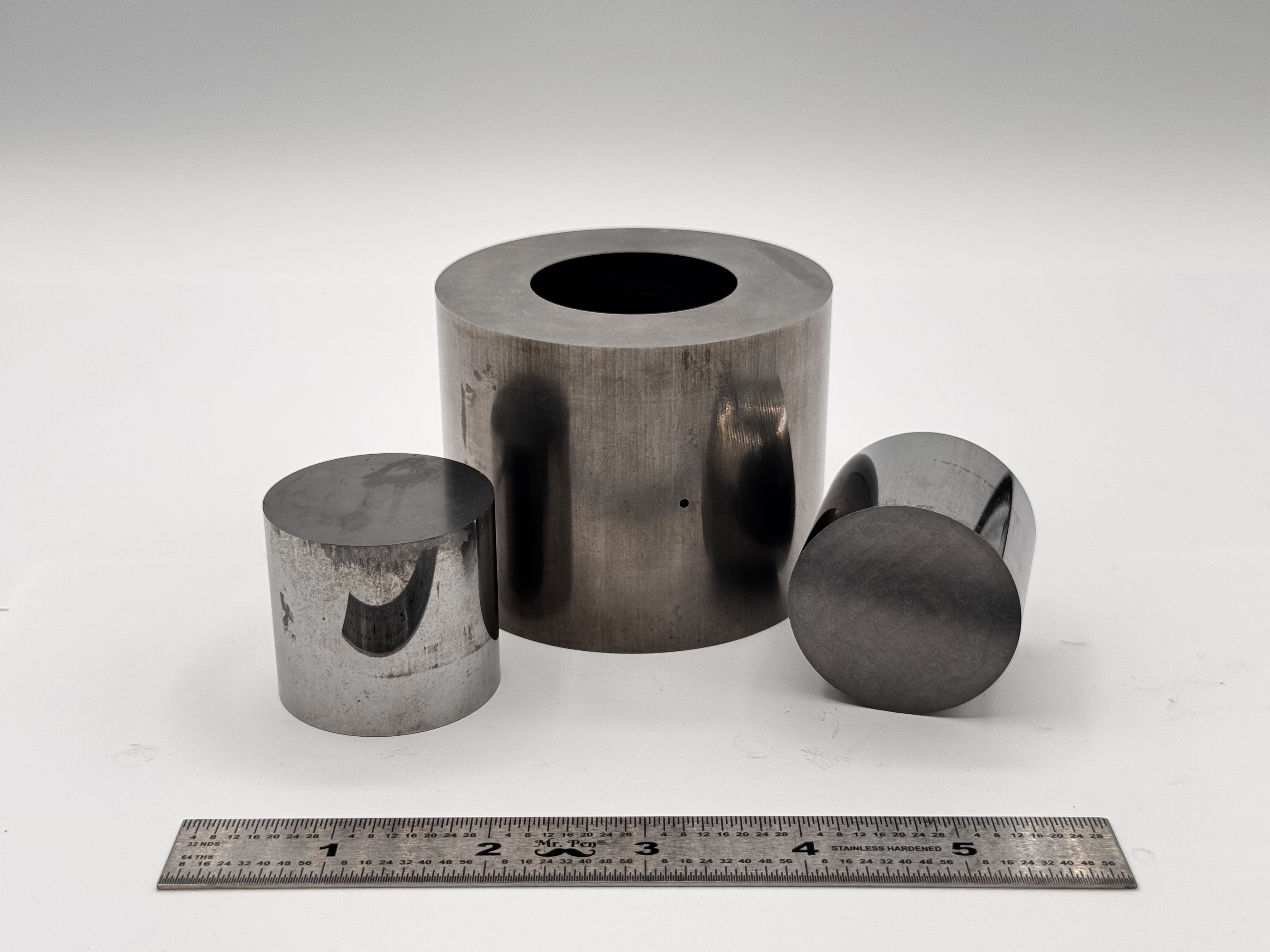 Tungsten Carbide Tooling
 Carbon Graphite Foil / Paper
 Carbon Felt and Yarn
 Spark Plasma Sintering Systems
 SPS/FAST Modeling Software
Field-Assisted Sintering: Advanced Technology for High-Performance Materials
As industries push materials to perform under increasingly demanding conditions, conventional manufacturing methods do not always provide the necessary control over density, grain structure, strength, and other critical properties. Field-assisted sintering offers an advanced alternative for transforming specialized powders into dense, high-performance materials while providing precise control over the consolidation process.
Also known as Field-Assisted Sintering Technology (FAST), this approach combines heat, pressure, and electrical current to rapidly consolidate powdered materials. Spark Plasma Sintering (SPS) is one of the most widely recognized technologies associated with FAST and has become an important processing method in advanced ceramics, nanotechnology, refractory materials, high-entropy alloys, composites, and materials research.
For organizations developing next-generation materials, field-assisted sintering can provide something particularly valuable: a practical way to take an innovative powder formulation and turn it into a dense bulk material suitable for testing, characterization, prototyping, and specialized applications.
What Is Field-Assisted Sintering?
Field-assisted sintering is a powder consolidation process that uses a combination of electrical current, heat, and uniaxial pressure to promote rapid densification.
To understand why this is significant, it helps to consider conventional sintering. Traditional sintering generally involves placing a powder compact inside a furnace and heating it to an elevated temperature below the material's melting point. The material remains at temperature long enough for diffusion and other mechanisms to bond particles together and reduce porosity.
While highly effective for many applications, conventional sintering may require long heating and holding cycles. Extended exposure to elevated temperatures can also encourage grain growth and other microstructural changes.
Field-assisted sintering takes a different approach.
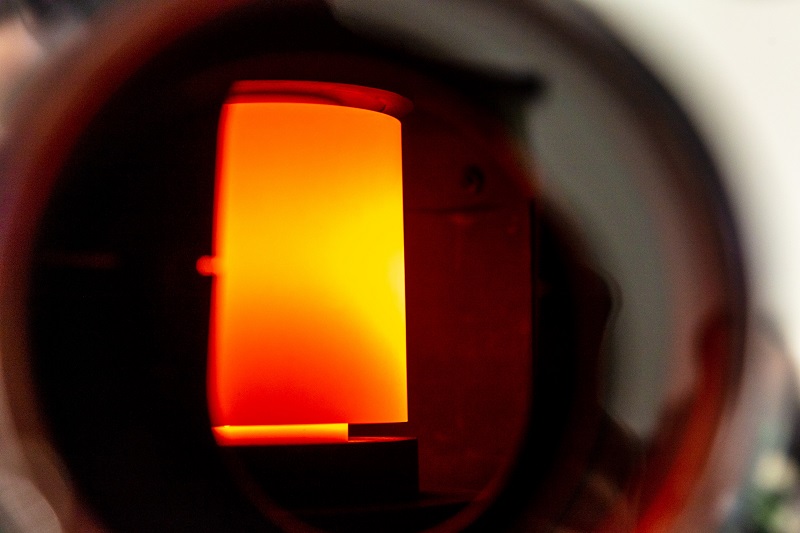
During a typical FAST/SPS process, powder is loaded into tooling, commonly a conductive graphite die. Pressure is applied while electrical current produces rapid resistive heating within the tooling and, for electrically conductive materials, potentially within the material itself.
Because heating can occur extremely quickly, field-assisted sintering can dramatically shorten the overall thermal cycle.
This combination of rapid heating, applied pressure, and controlled processing conditions can produce dense materials in substantially less time than many traditional furnace-based sintering methods.
How Does Field-Assisted Sintering Work?
The field-assisted sintering process begins with a powdered material. Depending on the project, that powder could be a metal, ceramic, composite, refractory material, nanostructured powder, or experimental formulation.
The powder is loaded into a die and positioned within the FAST/SPS system. Uniaxial pressure is applied to the material while a controlled electrical current passes through the conductive tooling.
Electrical resistance generates heat rapidly. FAST/SPS systems can achieve very high heating rates—potentially hundreds of degrees Celsius per minute under certain processing conditions.
Pressure assists consolidation as the temperature rises. Particle contacts evolve, pores are reduced, and densification occurs. Once the desired processing temperature and dwell conditions have been reached, the material is cooled and removed from the tooling.
The resulting compact can achieve high density while undergoing a much shorter thermal cycle than would typically be associated with conventional sintering.
That shortened processing window is one of the primary reasons field-assisted sintering has attracted so much attention in advanced materials development.
FAST and Spark Plasma Sintering: What Is the Difference?
The terms field-assisted sintering and spark plasma sintering are frequently used together, which can make the terminology confusing.
Field-Assisted Sintering Technology, or FAST, is generally considered a broader and more technically neutral description of processes that use electrical current or an electric field along with pressure to assist material consolidation.
Spark Plasma Sintering, or SPS, is a widely recognized name for a FAST processing technology.
Despite the term "spark plasma," the exact physical mechanisms responsible for the enhanced densification observed during SPS have been the subject of considerable research and discussion. In particular, the role of sparks or plasma in the process has been debated. As a result, FAST is often used as a broader description of electrically assisted pressure sintering.
Regardless of terminology, the fundamental advantage remains similar: FAST/SPS enables rapid consolidation of powders using precisely controlled thermal and mechanical conditions.
Why Field-Assisted Sintering Matters for Nanomaterials
One of the most compelling applications of field-assisted sintering is the consolidation of nanostructured materials.
Creating an advanced nanopowder is only part of the materials-development process. In many applications, that powder eventually needs to become a dense bulk material that can be machined, tested, characterized, or incorporated into a functional component.
That transition can present a major challenge.
Nanopowders possess extremely small particles and high surface areas. When exposed to elevated temperatures for extended periods, significant grain growth can occur. A powder that begins with nanoscale characteristics may develop a much coarser microstructure during conventional consolidation.
This matters because many desirable material properties are connected to microstructure.
The rapid heating rates and short dwell times possible with field-assisted sintering can help limit excessive grain growth while achieving substantial densification. Although the final microstructure depends heavily on the material and processing parameters, FAST/SPS gives materials engineers another tool for balancing density against grain growth.
For nanotechnology applications, that degree of control can be extremely valuable.
Producing Dense Materials in Less Time
Speed is another major advantage of field-assisted sintering.
Traditional furnace sintering may involve lengthy heating ramps, extended dwell periods, and gradual cooling cycles. FAST/SPS can significantly shorten the heating and consolidation portions of the process.
Reducing processing time can offer benefits beyond productivity.
Every minute a material spends at an elevated temperature creates an opportunity for microstructural evolution, chemical reactions, phase transformations, or grain growth. By achieving densification more rapidly, field-assisted sintering can reduce the total thermal exposure experienced by the material.
This makes FAST particularly interesting for materials that are temperature sensitive, difficult to densify, prone to grain growth, or dependent upon carefully engineered microstructures.
Materials Used in Field-Assisted Sintering
The versatility of field-assisted sintering has led to its use across a remarkably broad range of advanced material systems.
Advanced ceramics are a major area of interest. Carbides, borides, nitrides, oxides, and other ceramic systems may require extremely demanding consolidation conditions using conventional methods. FAST/SPS can provide an alternative pathway for achieving high density while controlling processing time and temperature.
Refractory metals and alloys are another important category. Materials designed for high-temperature environments often have extremely high melting temperatures and can be challenging to manufacture through conventional routes.
FAST/SPS has also become important in the development of high-entropy alloys, where researchers explore materials containing multiple principal elements rather than relying on one dominant base metal.
Other applications include metal matrix composites, ceramic matrix composites, thermoelectric materials, nanostructured alloys, functionally graded materials, ultra-high-temperature ceramics, and experimental material formulations.
The exact temperature, pressure, current profile, atmosphere, tooling, and dwell time must be tailored to the individual material system. That flexibility is precisely what makes field-assisted sintering useful as an advanced materials-development platform.
Field-Assisted Sintering for Ultra-High-Temperature Ceramics
One particularly interesting application is the development of ultra-high-temperature ceramics (UHTCs).
UHTCs are engineered to maintain useful properties in exceptionally demanding thermal environments. Materials based on refractory carbides and borides can possess extremely high melting temperatures, making them candidates for aerospace, defense, energy, and other extreme-environment applications.
Those same characteristics can make them difficult to consolidate.
Field-assisted sintering provides researchers and manufacturers with a powerful processing route for densifying these difficult material systems. The combination of rapid heating and pressure can facilitate consolidation while minimizing the length of time the material must remain at extreme temperatures.
As interest grows in materials capable of surviving harsher environments, FAST/SPS is becoming increasingly relevant to UHTC research and manufacturing.
The Importance of Grain Structure and Density
The goal of sintering is not simply to make loose powder stick together. The way a material is consolidated can have a profound influence on its final properties.
Residual porosity, grain size, grain boundaries, phase distribution, and density can affect characteristics such as strength, hardness, fracture behavior, electrical conductivity, thermal conductivity, and wear resistance.
This relationship between processing, microstructure, and properties is fundamental to materials science.
Field-assisted sintering provides engineers with significant control over processing variables that influence the resulting microstructure. Temperature, pressure, heating rate, dwell time, cooling conditions, and atmosphere can all be adjusted based on the material and desired outcome.
This makes FAST/SPS particularly valuable during research and development, when the objective may be to determine which combination of processing parameters produces the best-performing material.
From Advanced Powder to Bulk Material
Field-assisted sintering also solves an important practical problem in materials development.
Suppose a research team develops an innovative alloy powder, nanostructured ceramic, high-entropy alloy, or composite formulation. Initial powder characterization may show considerable promise, but a powder sample alone cannot reveal every property relevant to a real-world application.
Researchers may need a dense specimen to perform mechanical testing, thermal analysis, electrical measurements, microscopy, wear testing, or other forms of characterization.
FAST/SPS provides a pathway between powder development and bulk-material evaluation.
The powder can be consolidated into a dense specimen while carefully controlling the processing conditions. Researchers can then characterize the finished material and compare its performance against alternative compositions or sintering parameters.
That capability can significantly accelerate the development of new materials.
Field-Assisted Sintering and Advanced Materials Research
The value of field-assisted sintering extends well beyond producing finished components. FAST/SPS is an important research tool for exploring how new materials behave.
A development program may begin with multiple powder formulations. Each formulation can be consolidated using different combinations of temperature, pressure, heating rate, and dwell time. The resulting samples can then be examined to determine how processing influences density, grain size, phases, hardness, strength, or other properties.
Researchers can use these results to refine both the material composition and the manufacturing process.
This iterative approach is especially useful when working with novel alloys, nanomaterials, ceramics, composites, and other emerging material systems where conventional manufacturing parameters may not yet be well established.
Advantages of Field-Assisted Sintering
The growing adoption of field-assisted sintering is largely driven by the combination of speed and microstructural control it can offer.
Rapid heating can reduce overall processing time. Applied pressure can support densification. Shorter thermal cycles may help minimize undesirable grain growth. The process can also make it possible to investigate materials that are difficult to consolidate using conventional furnace sintering.
For research organizations and advanced manufacturers, another important advantage is flexibility. FAST/SPS can be used to explore new material compositions without immediately committing to large-scale conventional production processes.
Researchers can manufacture test specimens, evaluate properties, adjust processing parameters, and continue optimizing the material before moving toward larger-scale production.
Field-Assisted Sintering Services at California Nanotechnologies
Successfully using field-assisted sintering requires more than access to specialized equipment. The results depend heavily on understanding how powder characteristics, tooling, pressure, temperature, heating rate, atmosphere, and dwell time interact with the material being processed.
California Nanotechnologies (Cal Nano) specializes in advanced materials processing and works with organizations developing materials for demanding applications. Field-assisted sintering and SPS capabilities can support projects involving advanced ceramics, metals, composites, refractory materials, nanostructured materials, high-entropy alloys, and other specialized material systems.
Cal Nano's broader expertise in powder processing and advanced material consolidation can be especially valuable for projects that require more than a standard sintering cycle. Material development often requires experimentation, characterization, process optimization, and an understanding of how each processing step affects the final microstructure.
For companies, universities, national laboratories, and research organizations that do not maintain dedicated FAST/SPS capabilities internally, working with an experienced field-assisted sintering partner can provide access to both specialized equipment and advanced materials expertise.
Advancing Materials Through Field-Assisted Sintering
Modern engineering increasingly depends on materials that can withstand conditions conventional materials were never designed to encounter. Higher temperatures, greater mechanical loads, extreme wear environments, and demanding electrical and thermal requirements continue to drive the development of new ceramics, alloys, composites, and nanostructured materials.
Manufacturing those materials is often just as challenging as discovering them.
Field-assisted sintering provides an important connection between advanced powder technology and usable bulk materials. By combining rapid electrical heating with pressure and carefully controlled processing conditions, FAST/SPS can achieve high levels of densification while reducing processing time and helping engineers manage microstructural evolution.
Whether the goal is to preserve a fine-grained structure, consolidate a difficult refractory material, investigate a new high-entropy alloy, develop an ultra-high-temperature ceramic, or transform an experimental nanopowder into a testable specimen, field-assisted sintering offers a powerful platform for advanced materials development.
For organizations pushing the limits of materials performance, California Nanotechnologies' field-assisted sintering capabilities can help move promising materials from powder formulation toward dense, functional materials ready for evaluation and future applications.