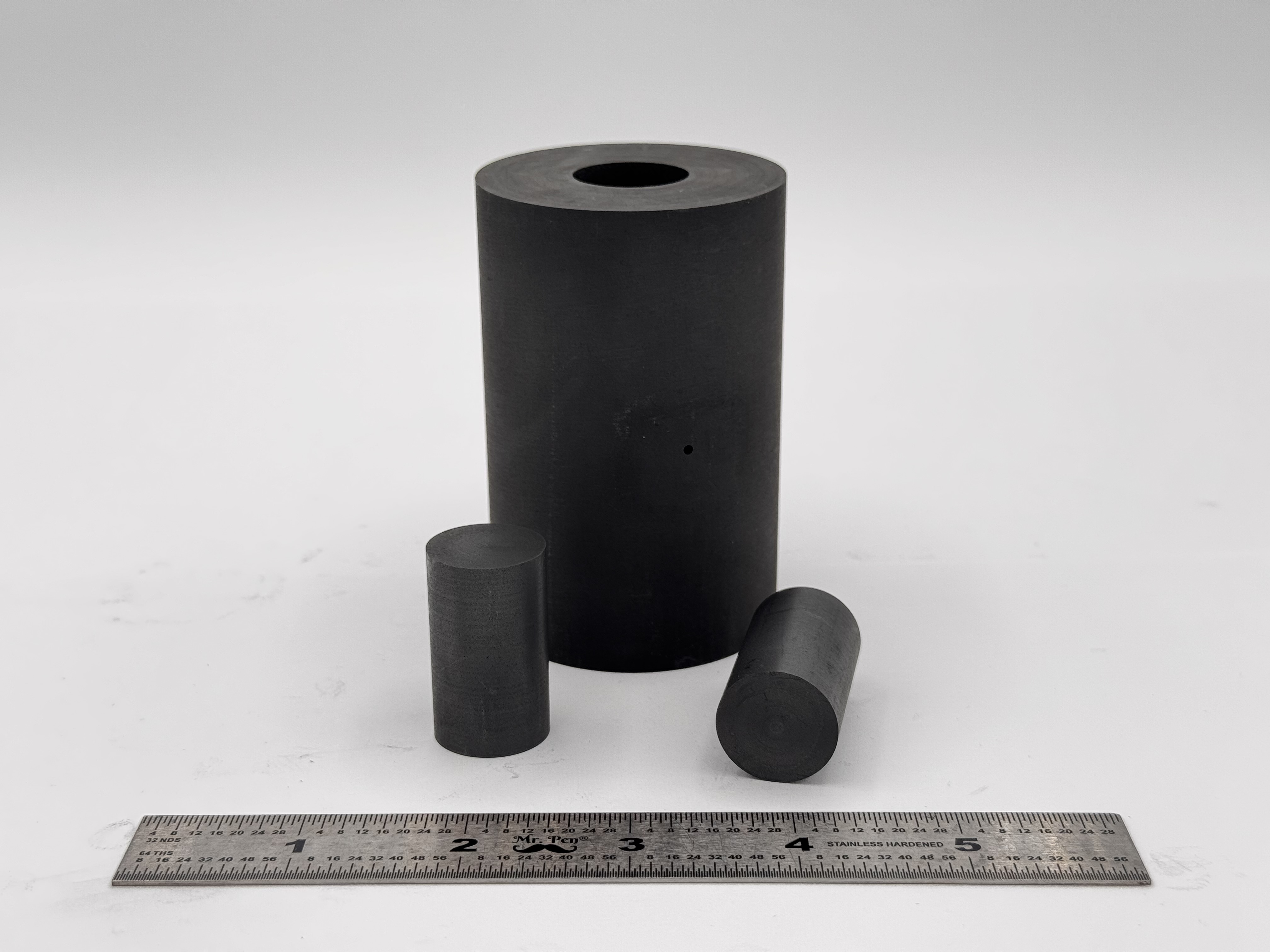
 High Strength SPS Graphite Tooling
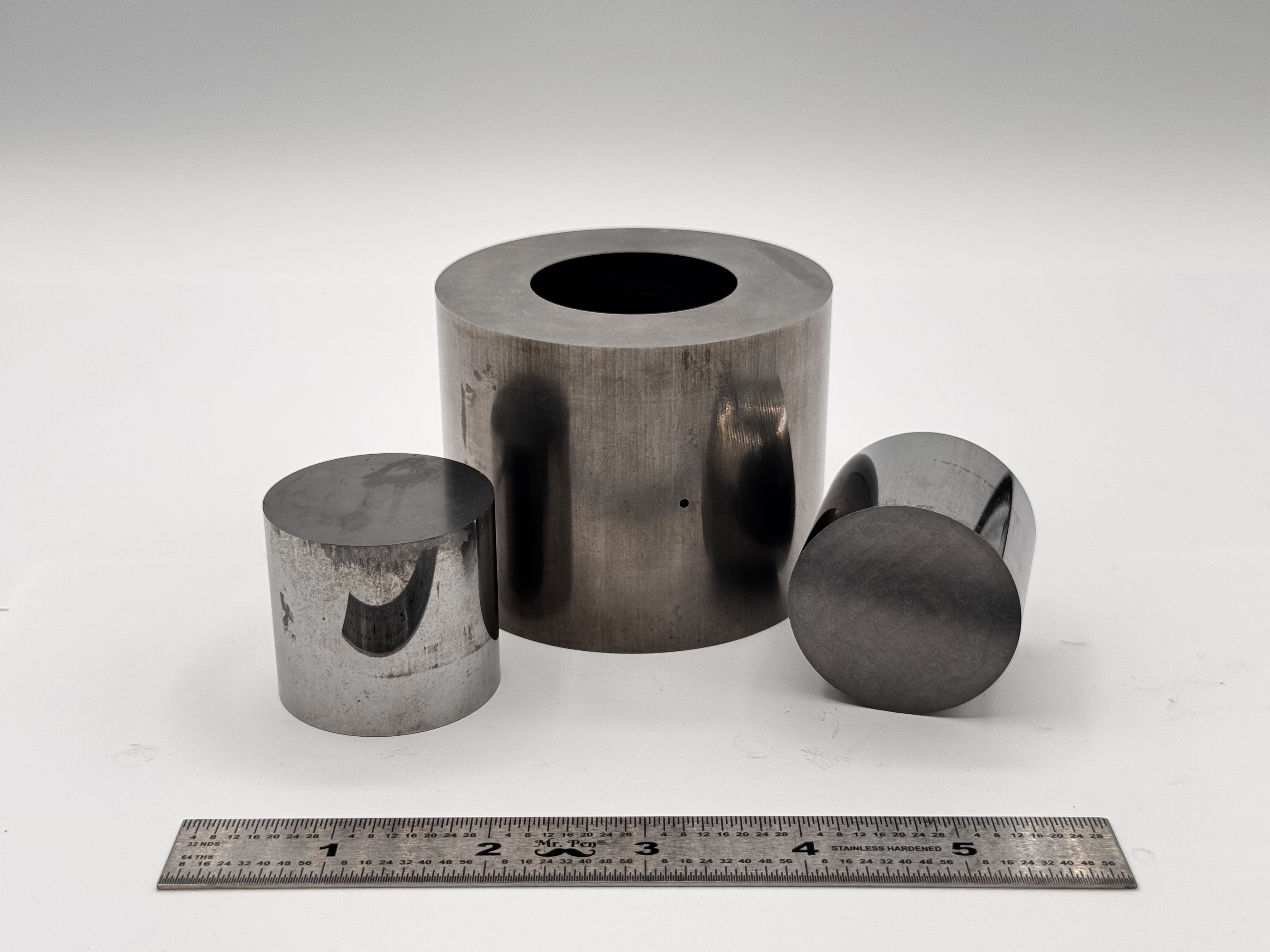 Tungsten Carbide Tooling
 Carbon Graphite Foil / Paper
 Carbon Felt and Yarn
 Spark Plasma Sintering Systems
 SPS/FAST Modeling Software
High Entropy Alloys: Engineering the Next Generation of Advanced Materials
Materials engineering has traditionally followed a familiar formula: start with one primary metal and add relatively small quantities of other elements to improve its properties. Steel is based primarily on iron. Aluminum alloys are dominated by aluminum. Titanium alloys rely primarily on titanium.
High entropy alloys (HEAs) challenge that conventional approach.
Instead of building an alloy around a single dominant element, high entropy alloys combine multiple principal elements in significant concentrations. The result is an enormous range of possible compositions, microstructures, and material properties that researchers can explore for some of the world's most demanding applications.
The possibilities become even more interesting when high entropy alloys are combined with nanotechnology, advanced powder processing, cryomilling, and Field Assisted Sintering Technology (FAST), also known as Spark Plasma Sintering (SPS).
For organizations developing next-generation materials, high entropy alloys represent an exciting intersection between alloy design and advanced materials processing.
What Are High Entropy Alloys?
A conventional alloy typically consists of one primary metal combined with smaller quantities of additional elements. A high entropy alloy takes a fundamentally different approach by incorporating several elements at substantial concentrations.
A well-known example is the CoCrFeMnNi system, which combines cobalt, chromium, iron, manganese, and nickel in comparable proportions.
The term "high entropy" refers primarily to the relatively high configurational entropy that can result from mixing several elements. This increased configurational complexity can influence which phases form within the material.
However, entropy alone does not determine the final structure or properties of an HEA. Atomic size differences, chemical interactions, thermodynamics, processing temperature, cooling conditions, and manufacturing methods can all influence the resulting material.
That complexity is part of what makes high entropy alloys so compelling.
Rather than working within the relatively narrow composition ranges of conventional alloy systems, researchers have a vast compositional landscape available for developing materials with specialized properties.
Why Are High Entropy Alloys Important?
Interest in high entropy alloys has grown because certain HEA compositions can exhibit impressive combinations of mechanical, chemical, and thermal properties.
Depending on their composition and processing, researchers can develop HEAs with characteristics such as high strength, hardness, wear resistance, corrosion resistance, oxidation resistance, thermal stability, and performance at exceptionally high or low temperatures.
Some compositions are also being investigated for radiation tolerance and other characteristics required in extreme environments.
These properties are not inherent to every high entropy alloy. In fact, one of the most important characteristics of HEAs is their variability. Changing just one element, its concentration, or the processing route can significantly alter the material's phases, microstructure, and performance.
This makes high entropy alloy development both challenging and valuable.
How Do High Entropy Alloys Relate to Nanotechnology?
The connection between high entropy alloys and nanotechnology lies largely in the ability to manipulate materials at extremely small structural scales.
An HEA does not necessarily have to be nanoscale to qualify as a high entropy alloy. However, advanced powder-processing techniques can be used to create extremely fine or nanostructured microstructures within these materials.
Grain size matters because a material's internal structure can have a major effect on its mechanical and physical properties. Refining that structure may change characteristics such as strength, hardness, wear behavior, and thermal response.
This gives materials engineers two major variables to explore simultaneously: composition and microstructure.
Researchers can investigate which elements should be combined and in what proportions while also examining how powder size, grain size, processing temperature, pressure, and consolidation affect the final material.
That combination creates an extraordinary number of possibilities for advanced materials research.
Creating High Entropy Alloy Powders
Powder metallurgy offers an important pathway for producing and studying high entropy alloys.
Rather than melting all of the constituent elements together, researchers can begin with elemental or pre-alloyed powders. Those powders can then undergo mechanical processing to promote mixing, refinement, and alloy development.
One particularly valuable technique is cryogenic milling, or cryomilling.
Cryomilling mechanically processes powders at cryogenic temperatures. During milling, particles undergo repeated deformation, fracture, and welding. Over time, this process can refine the powder's internal structure while promoting intimate mixing of its constituent materials.
For high entropy alloy development, this can provide researchers with considerable control over the starting material used for subsequent consolidation.
Cryomilling may also help produce very fine-grained or nanostructured materials that would be difficult to achieve through conventional melting and casting.
Consolidating High Entropy Alloys with FAST/SPS
Creating an advanced HEA powder is only part of the process. Researchers frequently need to transform that powder into a dense bulk specimen or component that can be characterized and tested.
This is where Field Assisted Sintering Technology (FAST), also commonly called Spark Plasma Sintering (SPS), becomes particularly relevant.
FAST/SPS uses pressure and rapid heating to consolidate powdered materials. Compared with many conventional furnace-based processes, the relatively rapid heating and shorter processing cycles can help limit excessive grain growth.
For nanostructured and fine-grained HEAs, preserving that refined microstructure can be extremely important.
The combination of powder processing and FAST/SPS therefore provides researchers with a powerful development pathway:
powder selection → mechanical alloying or cryomilling → powder characterization → FAST/SPS consolidation → material characterization and testing.
Researchers can adjust variables throughout this process to investigate how processing conditions influence density, phases, grain structure, hardness, mechanical properties, and overall material performance.
Hot Isostatic Pressing for High Entropy Alloys
Hot isostatic pressing (HIP) provides another potential consolidation route for high entropy alloy powders.
HIP simultaneously applies elevated temperature and isostatic gas pressure to a material. The process is widely used to increase density, reduce internal porosity, and consolidate powder-based materials.
Whether FAST/SPS, HIP, or another consolidation technology is most appropriate depends on the particular HEA, starting material, desired geometry, microstructure, and performance objectives.
Having access to multiple processing technologies gives researchers greater flexibility when developing new alloy systems.
High Entropy Alloy Nanoparticles, Thin Films, and Coatings
The potential of high entropy materials extends beyond bulk structural components.
Researchers are also investigating HEA nanoparticles, thin films, and coatings.
At the nanoscale, combining several metallic elements can produce highly complex surface chemistry. This is particularly interesting for catalysis because nanoparticle surfaces may contain numerous different atomic environments and potential reaction sites.
High entropy coatings and thin films are also being studied for applications requiring specialized combinations of hardness, wear resistance, corrosion resistance, oxidation resistance, or thermal stability.
This demonstrates an important aspect of HEA technology: the concept can be applied across several material formats rather than being limited to traditional bulk alloys.
Refractory High Entropy Alloys for Extreme Temperatures
One particularly interesting branch of HEA research involves refractory high entropy alloys.
Refractory metals such as tungsten, molybdenum, tantalum, niobium, and vanadium are known for their ability to withstand extremely high temperatures. Combining selected refractory elements into high entropy systems creates opportunities to investigate materials intended for exceptionally demanding thermal environments.
These materials are of particular interest in fields where conventional alloys may approach their performance limits.
Developing refractory HEAs is not simple. High melting temperatures and difficult processing conditions can make traditional manufacturing challenging, which is another reason advanced powder processing and consolidation technologies are valuable to this field.
Potential Applications for High Entropy Alloys
High entropy alloys remain an active area of research, but their unusual design flexibility has created interest across numerous advanced industries.
Aerospace and hypersonics are obvious areas of interest because materials may need to withstand combinations of heat, mechanical loading, oxidation, and severe environmental conditions.
Energy and nuclear technologies are investigating certain HEAs for high-temperature stability, corrosion behavior, and radiation tolerance.
Defense applications may benefit from specialized combinations of strength, hardness, wear resistance, and temperature performance.
Advanced tooling and wear components represent another potential application for hard and wear-resistant high entropy materials.
Meanwhile, catalysis and energy conversion are creating opportunities for nanoscale high entropy materials, where complex surface chemistry can potentially be engineered for specific reactions.
The ultimate suitability of an HEA depends on its exact composition, processing history, microstructure, and application requirements.
An Enormous Materials Design Space
Perhaps the most exciting characteristic of high entropy alloys isn't any single property. It is the number of materials that could potentially be developed.
When several elements can be combined at different concentrations, the number of possible compositions becomes enormous. Processing introduces even more variables.
Researchers can alter powder characteristics, milling conditions, grain size, consolidation temperature, pressure, heating rate, hold time, and post-processing treatments.
Each variable can potentially affect the finished material.
Modern HEA research therefore isn't simply about discovering one extraordinary alloy. It is about exploring a massive new materials design space and identifying compositions and processing routes that deliver the properties required for specific applications.
Advanced High Entropy Alloy Processing at California Nanotechnologies
Developing a promising high entropy alloy requires more than selecting an interesting combination of elements. Processing those materials successfully can be equally important.
California Nanotechnologies (Cal Nano) provides advanced materials processing capabilities that can support the research, development, and production of sophisticated powder-based materials, including high entropy alloy systems.
Capabilities such as cryogenic milling, advanced powder processing, FAST/SPS, and hot isostatic pressing can support multiple stages of HEA development.
Cryomilling can be used to process and refine powders, while FAST/SPS offers a route for rapidly consolidating those powders into dense materials. HIP can provide another consolidation option depending on the objectives of the project.
This combination is especially valuable for researchers attempting to connect processing parameters with final material properties.
Instead of considering alloy composition alone, developers can investigate the complete relationship between composition, powder processing, consolidation, microstructure, and performance.
Building the Materials of the Future
High entropy alloys represent a major shift in the way scientists and engineers think about metallic materials.
Rather than relying primarily on a dominant base metal, HEAs open the door to multi-element systems with tremendous compositional flexibility. Combine that flexibility with nanostructured powder processing and advanced consolidation technologies, and researchers gain new ways to pursue materials engineered for demanding environments.
There is still much to learn. Not every high entropy alloy will outperform conventional materials, and the best composition depends heavily on its intended application.
That is precisely what makes the field so interesting.
For organizations investigating high entropy alloys, nanostructured materials, advanced powders, cryomilling, FAST/SPS, or HIP, California Nanotechnologies provides specialized processing capabilities that can help move innovative materials from an experimental concept toward dense, testable, and potentially scalable material systems.
As aerospace, defense, energy, nuclear, tooling, and other advanced industries continue pushing materials to greater extremes, high entropy alloys offer an increasingly important question for materials engineers:
Instead of modifying the alloys we already have, what entirely new materials can we create?