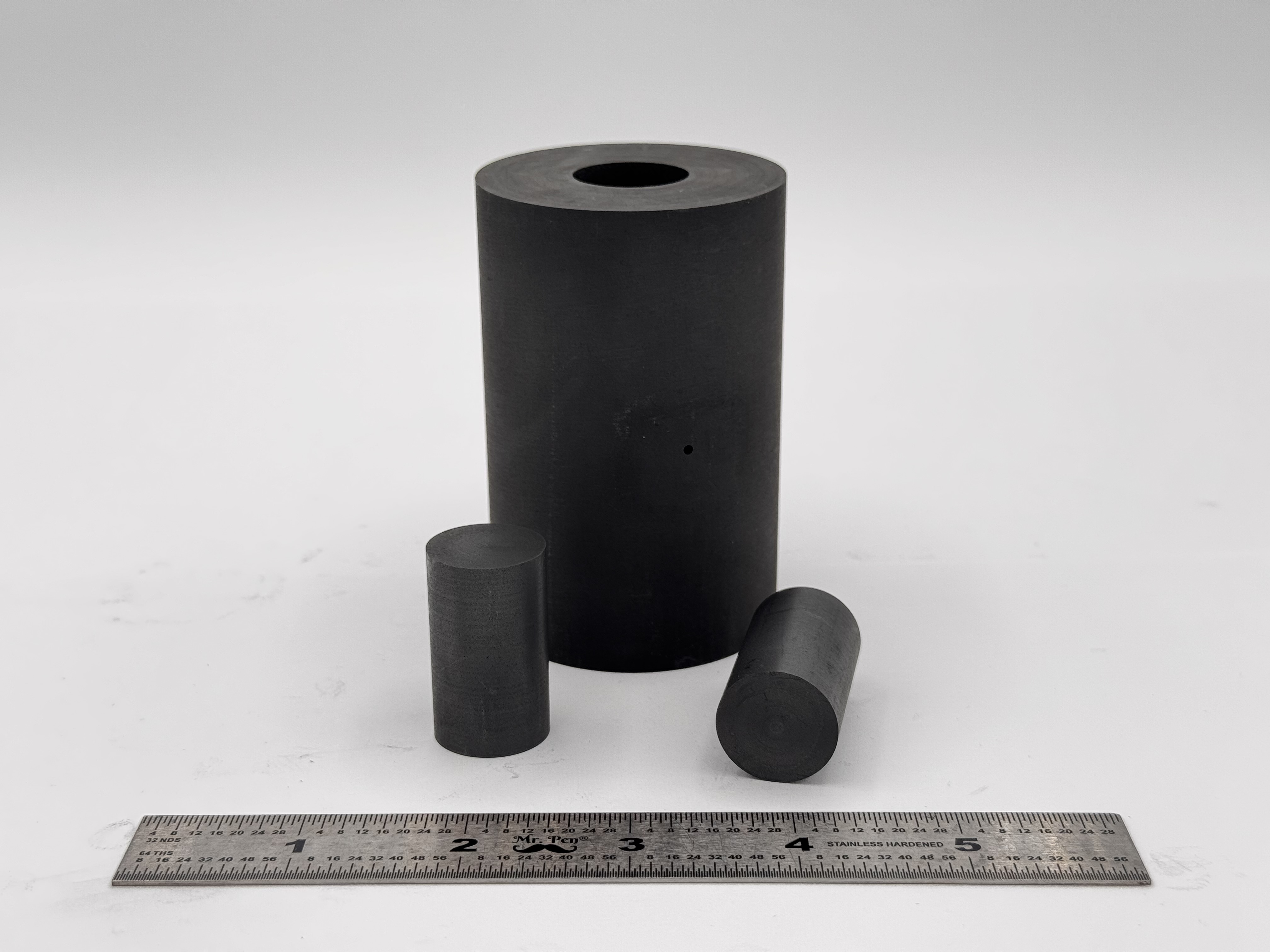
 High Strength SPS Graphite Tooling
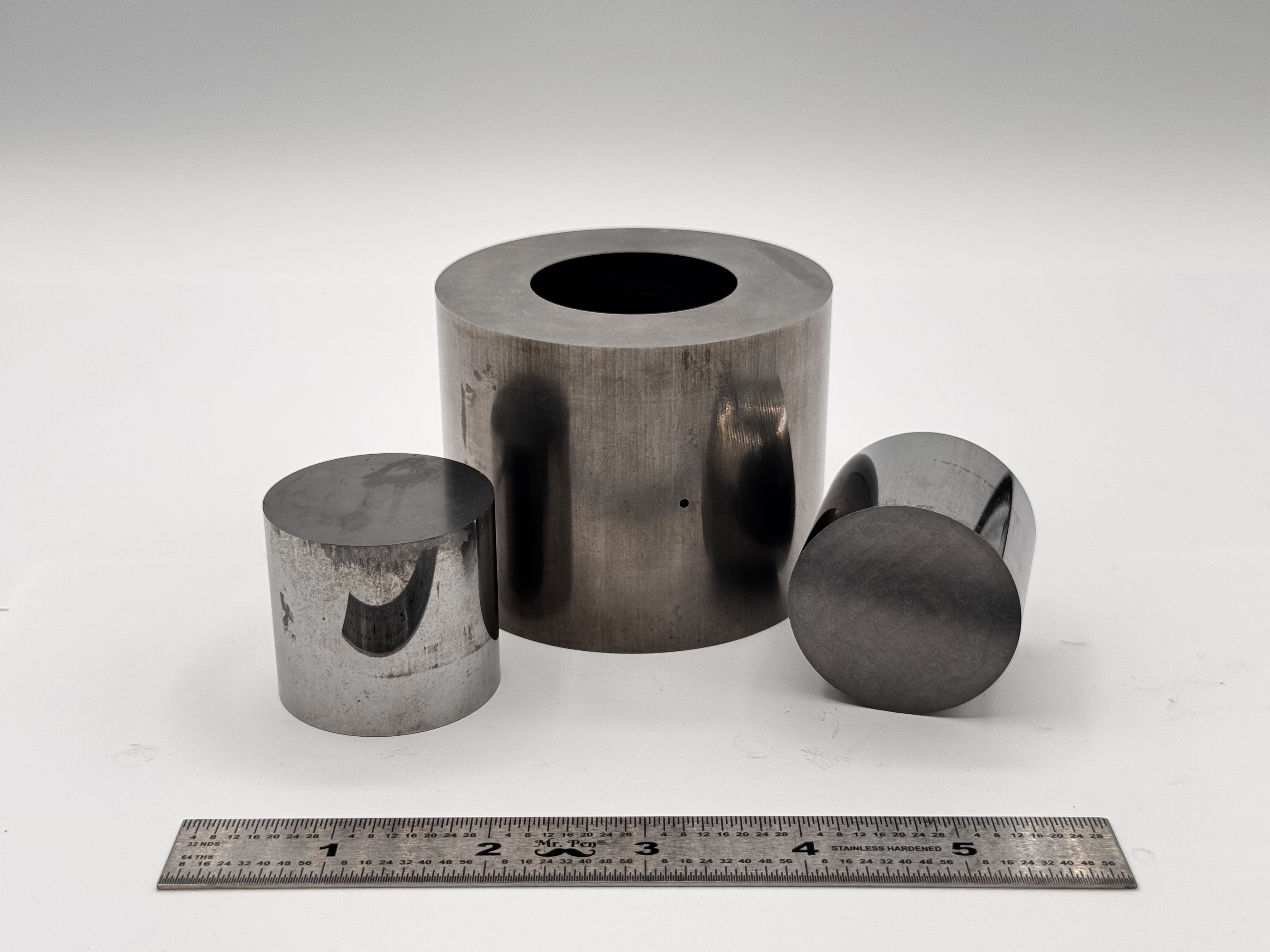 Tungsten Carbide Tooling
 Carbon Graphite Foil / Paper
 Carbon Felt and Yarn
 Spark Plasma Sintering Systems
 SPS/FAST Modeling Software
Particle Size Analysis: Understanding a Critical Tool in Materials Science and Manufacturing
Particle size analysis is the process of measuring and characterizing the size distribution of particles within a powder, suspension, emulsion, or granular material. It is one of the most important analytical techniques used across industries including nanotechnology, powder metallurgy, pharmaceuticals, ceramics, additive manufacturing, mining, chemicals, and advanced materials development.
Rather than simply determining the average particle size, particle size analysis provides detailed information about the complete distribution of particle sizes within a sample. This information directly influences material behavior, processing characteristics, and final product performance.
Why Particle Size Matters
Particle size affects virtually every aspect of how a material behaves. Even small changes in particle size can significantly alter:
- Surface area
- Flowability
- Packing density
- Reactivity
- Dissolution rate
- Sintering behavior
- Mechanical properties
- Thermal conductivity
- Electrical conductivity
- Optical properties
For example, in powder metallurgy and field-assisted sintering (FAST/SPS), fine powders typically sinter faster and achieve higher densities because their increased surface area provides a greater driving force for densification.
In pharmaceutical applications, reducing particle size increases the dissolution rate of drugs, improving bioavailability.
In battery materials, particle size influences ion diffusion, electrode density, and charging performance.
What Is Measured?
Particle size analysis typically measures:
Particle Size Distribution (PSD)
A PSD shows the percentage of particles falling within specific size ranges.
Instead of reporting a single value, analysts often use percentile measurements such as:
- D10: 10% of particles are smaller than this size.
- D50: Median particle size.
- D90: 90% of particles are smaller than this size.
For example:
ParameterSizeD105 μmD5018 μmD9042 μm
This indicates a relatively broad distribution of particle sizes.
Mean Particle Size
Several averages may be reported:
- Arithmetic mean
- Volume mean diameter
- Surface area mean diameter
- Mass mean diameter
The choice depends on the application.
Distribution Width
The span or breadth of the distribution indicates how uniform the particles are.
A narrow distribution typically produces more consistent processing behavior.
Common Particle Size Analysis Methods
Several techniques are used depending on the particle size range and material type.
Laser Diffraction
Laser diffraction is the most widely used particle size analysis technique.
How It Works
A laser beam passes through a dispersed sample.
Particles scatter light at angles related to their size:
- Large particles scatter light at small angles.
- Small particles scatter light at larger angles.
Software analyzes the scattering pattern to calculate the particle size distribution.
Typical Range
Approximately:
- 0.01 μm to 3,500 μm
Advantages
- Fast analysis
- Wide measurement range
- High repeatability
- Suitable for powders and suspensions
Applications
- Metal powders
- Ceramic powders
- Pharmaceutical ingredients
- Additive manufacturing feedstock
- Nanomaterials
Dynamic Light Scattering (DLS)
DLS is commonly used for nanoparticles.
How It Works
Particles suspended in a liquid undergo Brownian motion.
A laser monitors fluctuations in scattered light intensity.
These fluctuations are used to calculate particle size.
Typical Range
- 1 nm to 1 μm
Applications
- Nanoparticles
- Colloids
- Quantum dots
- Drug delivery systems
Advantages
- Excellent for nanoscale measurements
- Rapid testing
- Minimal sample requirements
Sieve Analysis
One of the oldest particle sizing methods.
How It Works
A stack of sieves with decreasing mesh sizes separates particles by size.
Material retained on each sieve is weighed.
Typical Range
- 20 μm to several centimeters
Applications
- Mining
- Aggregates
- Powders
- Construction materials
Advantages
- Simple
- Inexpensive
- Industry standard for coarse materials
Image Analysis
Image analysis uses microscopes and cameras to directly measure particles.
Techniques
- Optical microscopy
- Scanning Electron Microscopy (SEM)
- Automated image analysis systems
Advantages
- Provides particle shape information
- Visual confirmation
- Useful for irregular particles
Applications
- Nanotechnology
- Research laboratories
- Advanced powder characterization
Sedimentation Analysis
This method measures how particles settle in a liquid.
Principle
Larger particles settle faster than smaller particles.
The settling rate is related to particle diameter through Stokes' Law.
Applications
- Ceramic powders
- Fine mineral particles
- Pigments
Particle Size Analysis in Nanotechnology
Particle size analysis is especially critical in nanotechnology because nanoscale materials exhibit unique behaviors not observed in larger particles.
As particles become smaller:
- Surface area increases dramatically.
- Chemical reactivity increases.
- Quantum effects emerge.
- Mechanical properties change.
- Thermal properties shift.
Researchers often use DLS, SEM, TEM, and laser diffraction to characterize nanoparticles.
Applications include:
- Nanocomposites
- Energy storage materials
- Medical nanoparticles
- Catalyst powders
- Advanced ceramics
Importance in Powder Metallurgy and Sintering
Particle size distribution is one of the most important variables affecting sintering performance.
Smaller Particles
Benefits include:
- Higher surface energy
- Faster diffusion
- Lower sintering temperatures
- Improved densification
Challenges include:
- Agglomeration
- Oxidation
- Poor flowability
Larger Particles
Benefits include:
- Better handling
- Improved flow characteristics
- Lower cost
Challenges include:
- Slower densification
- Higher sintering temperatures
Engineers often optimize particle size distributions to balance these factors.
Role in Field-Assisted Sintering Technology (FAST/SPS)
For companies such as California Nanotechnologies, particle size analysis plays a crucial role in Field-Assisted Sintering Technology (FAST), also known as Spark Plasma Sintering (SPS).
FAST processing relies on:
- Rapid heating rates
- Applied pressure
- Electrical current-assisted densification
Powder particle size directly affects:
- Current flow through the powder compact
- Densification kinetics
- Grain growth behavior
- Final density
- Mechanical performance
Fine, well-controlled powders often enable:
- Near-theoretical densities
- Reduced processing times
- Enhanced microstructural control
For advanced materials such as:
- High entropy alloys
- Tungsten composites
- Boron carbide
- Silicon carbide
- Nuclear materials
- Nanostructured metals
particle size analysis is often performed before every major processing step to ensure consistency and quality.
Key Challenges
Agglomeration
Nanoparticles frequently clump together.
A measured particle may actually represent an agglomerate rather than an individual particle.
Non-Spherical Particles
Many techniques assume particles are spherical.
Fibers, flakes, and irregular powders can produce misleading results.
Sample Preparation
Improper dispersion can significantly affect results.
Careful preparation is often as important as the measurement itself.
Standards and Quality Control
Particle size analysis is frequently performed according to industry standards such as:
- ISO 13320 (Laser Diffraction)
- ASTM B822 (Metal Powder Particle Size Analysis)
- ASTM E2651
- ISO 9276
- USP standards for pharmaceuticals
These standards help ensure consistency and comparability across laboratories and manufacturers.
Conclusion
Particle size analysis is a foundational characterization technique used to understand and control the behavior of powders, nanoparticles, suspensions, and granular materials. By measuring particle size distributions, engineers and scientists can predict processing performance, optimize manufacturing methods, and improve final product quality.
In advanced materials manufacturing, including nanotechnology, powder metallurgy, additive manufacturing, and Field-Assisted Sintering Technology (FAST/SPS), particle size analysis is often one of the first and most important steps in developing high-performance materials. Accurate particle characterization enables better densification, improved microstructural control, enhanced material properties, and ultimately more reliable products for demanding applications ranging from aerospace and energy systems to medical devices and next-generation nuclear technologies.